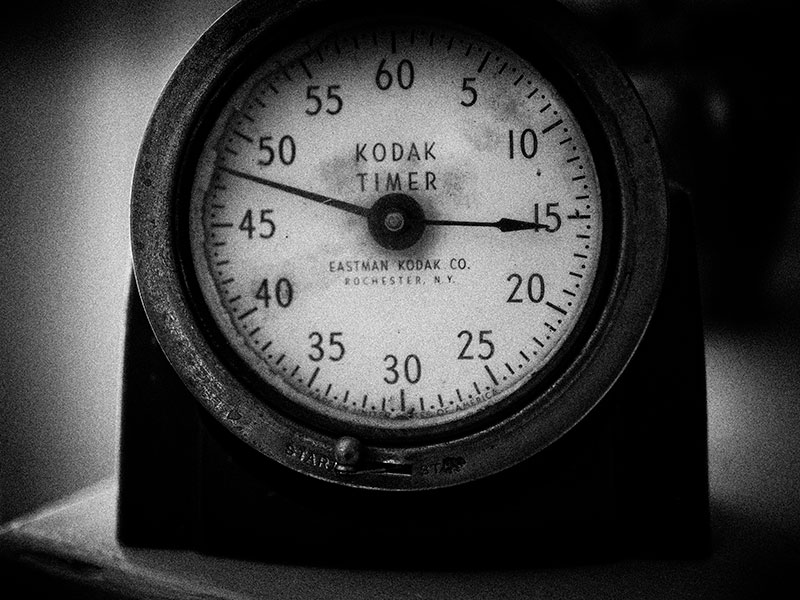
I’ll be putting the brakes on the blogging wheel for a spell. As always, thanks. Peace out.
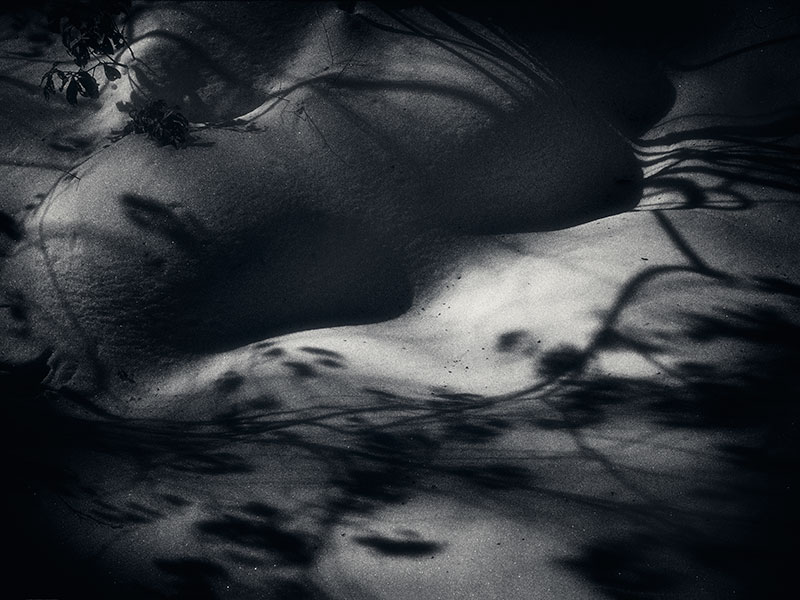
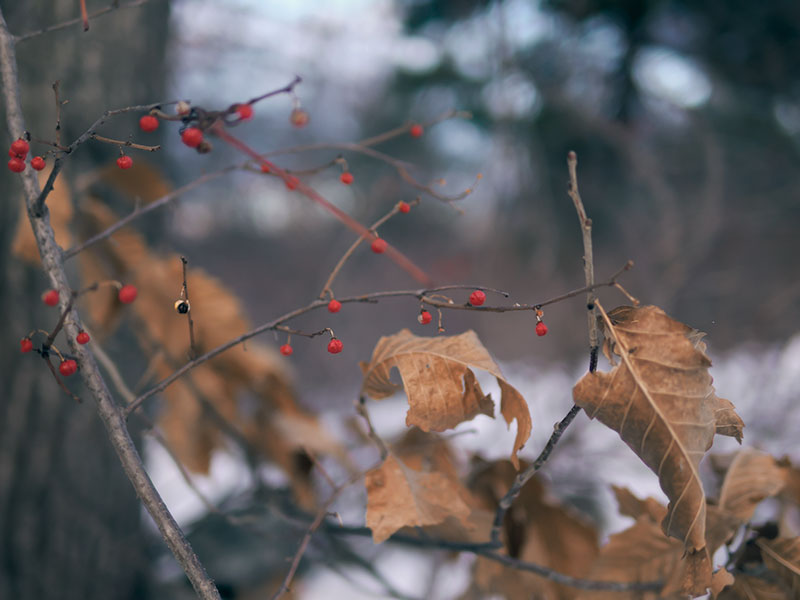
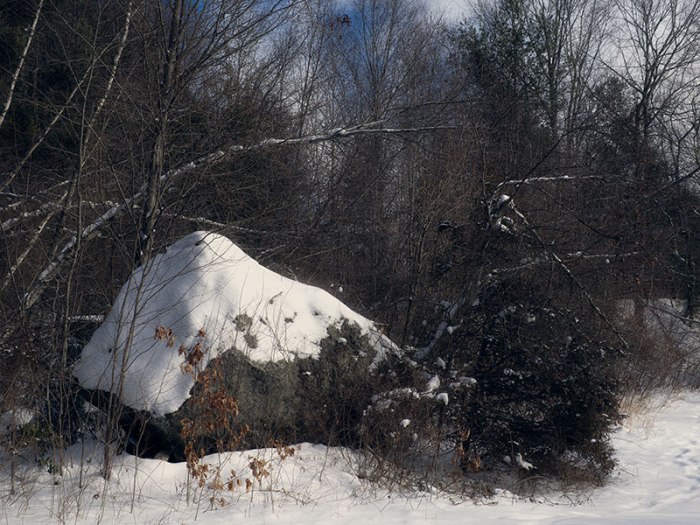
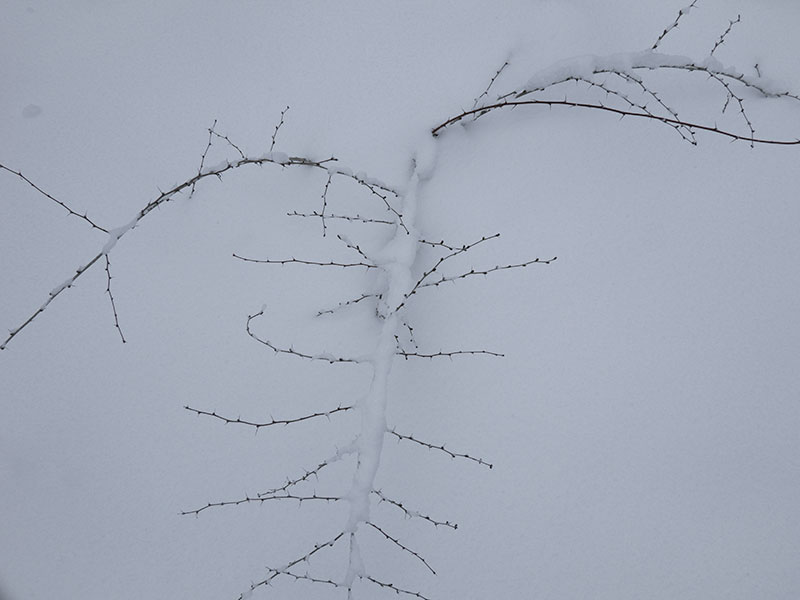
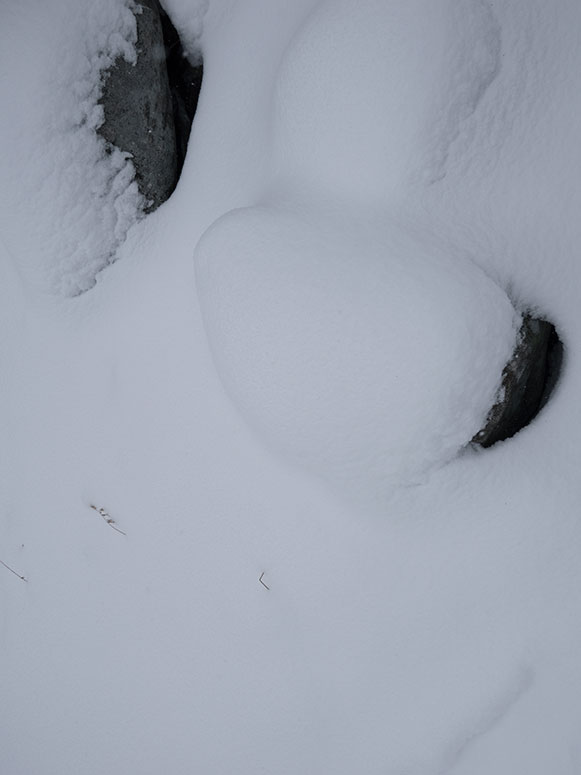
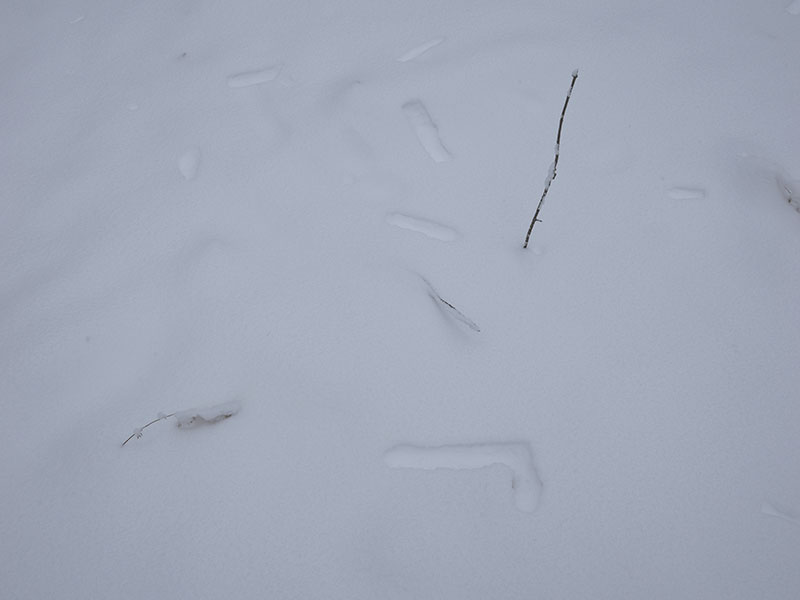
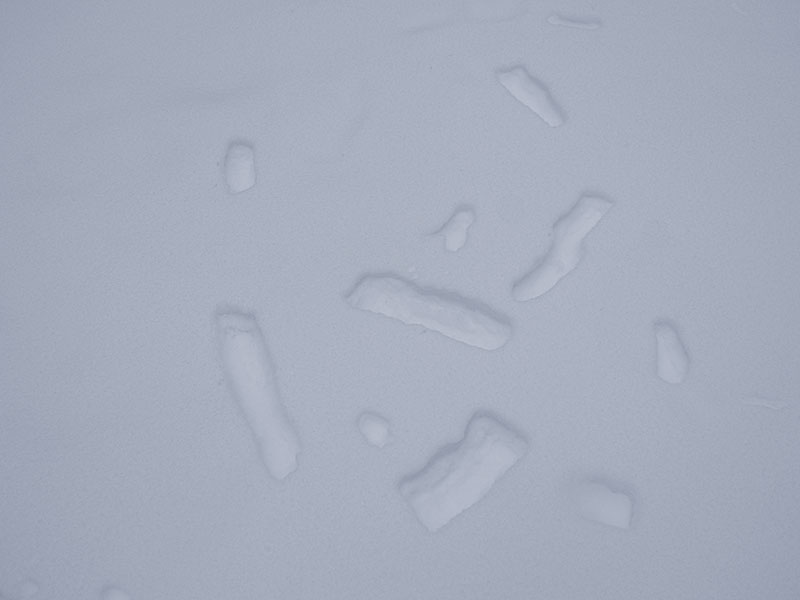
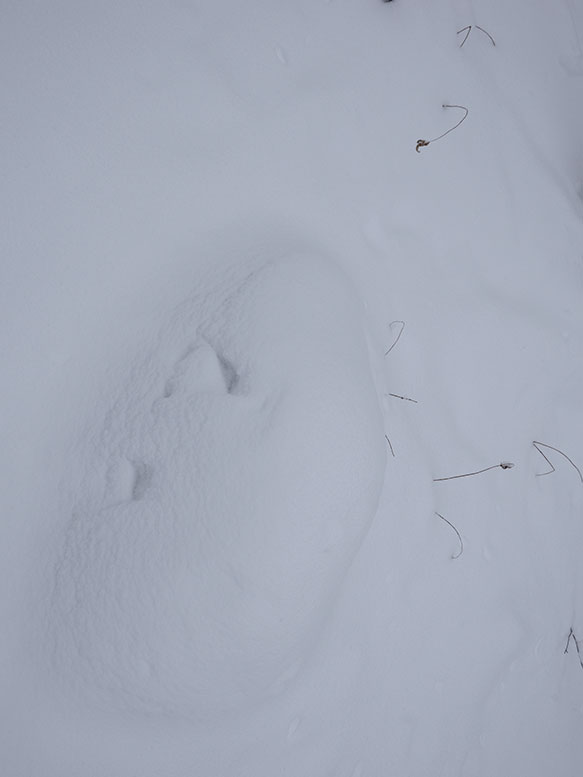
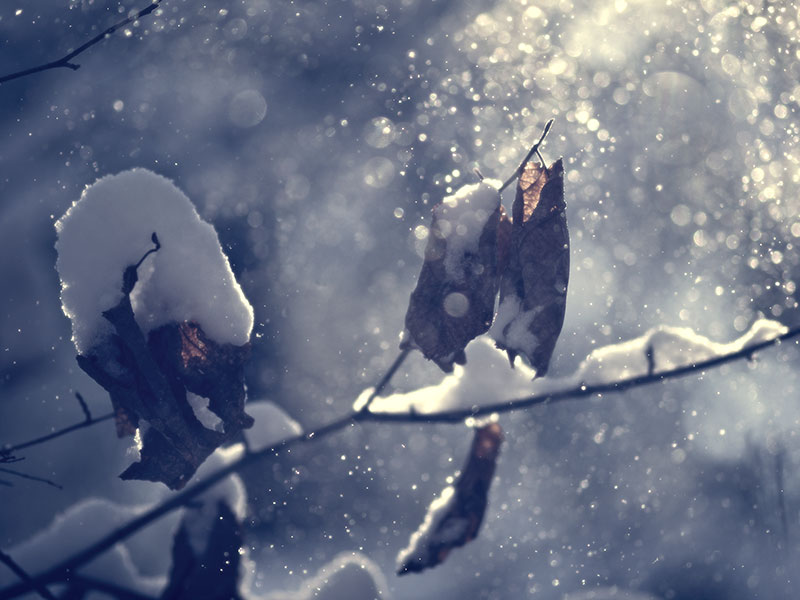
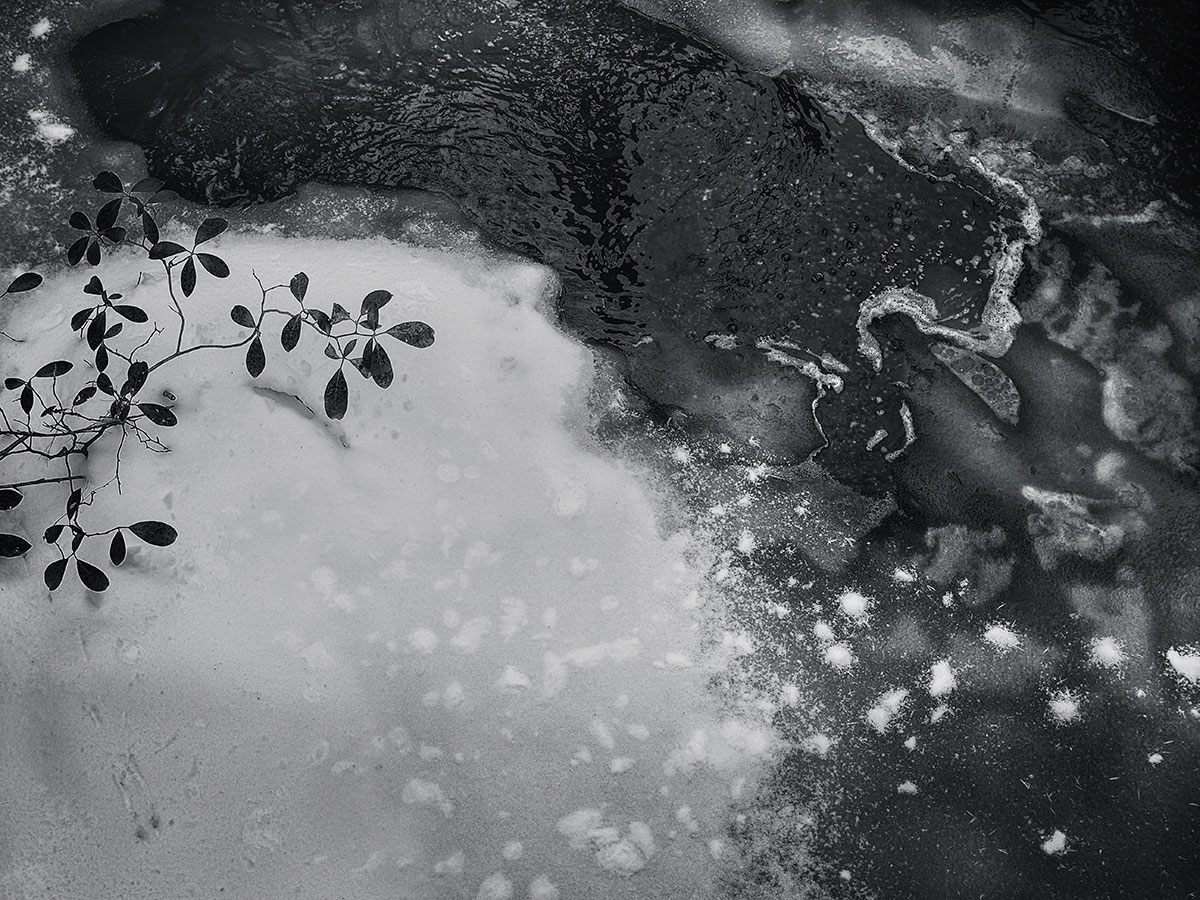
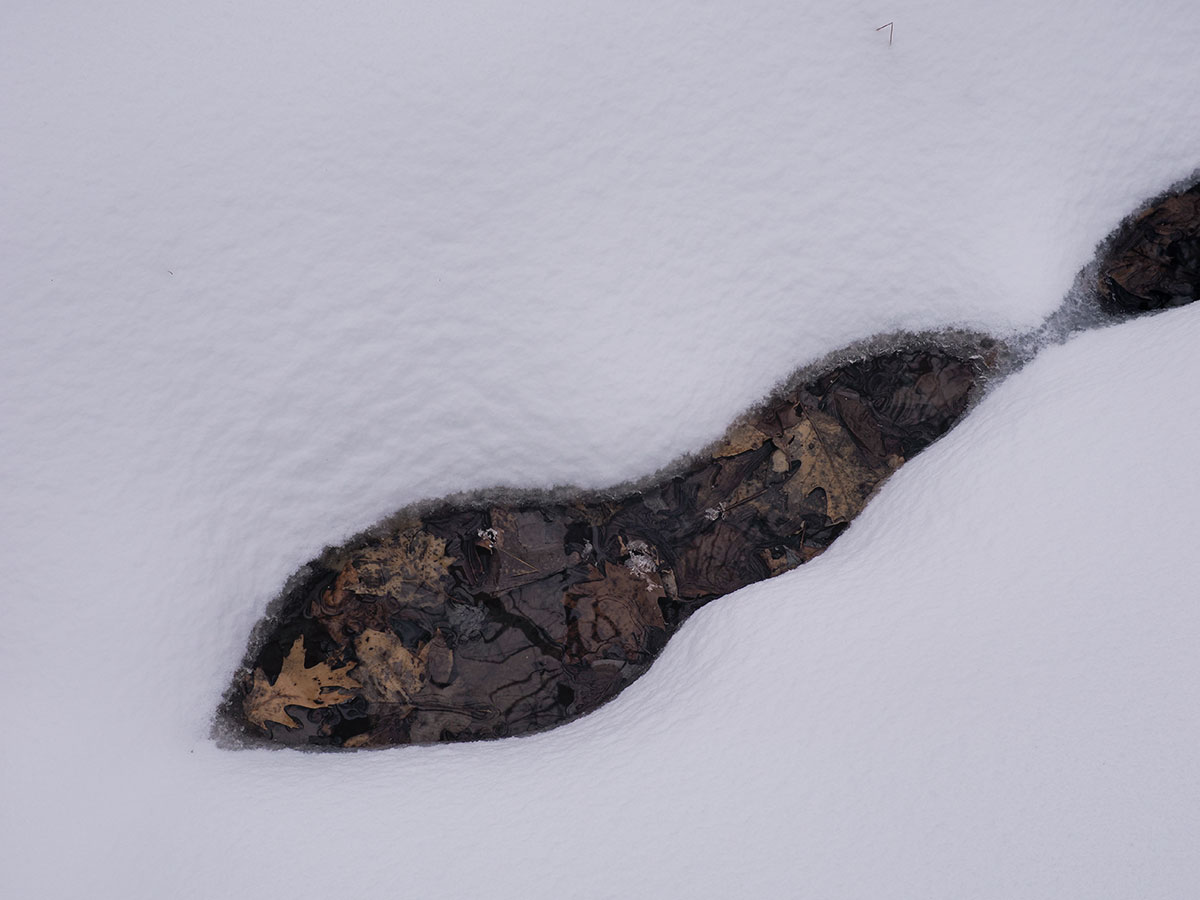
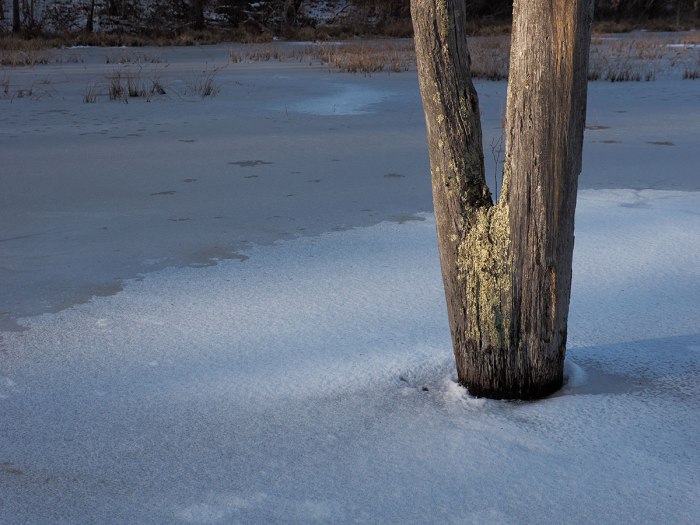
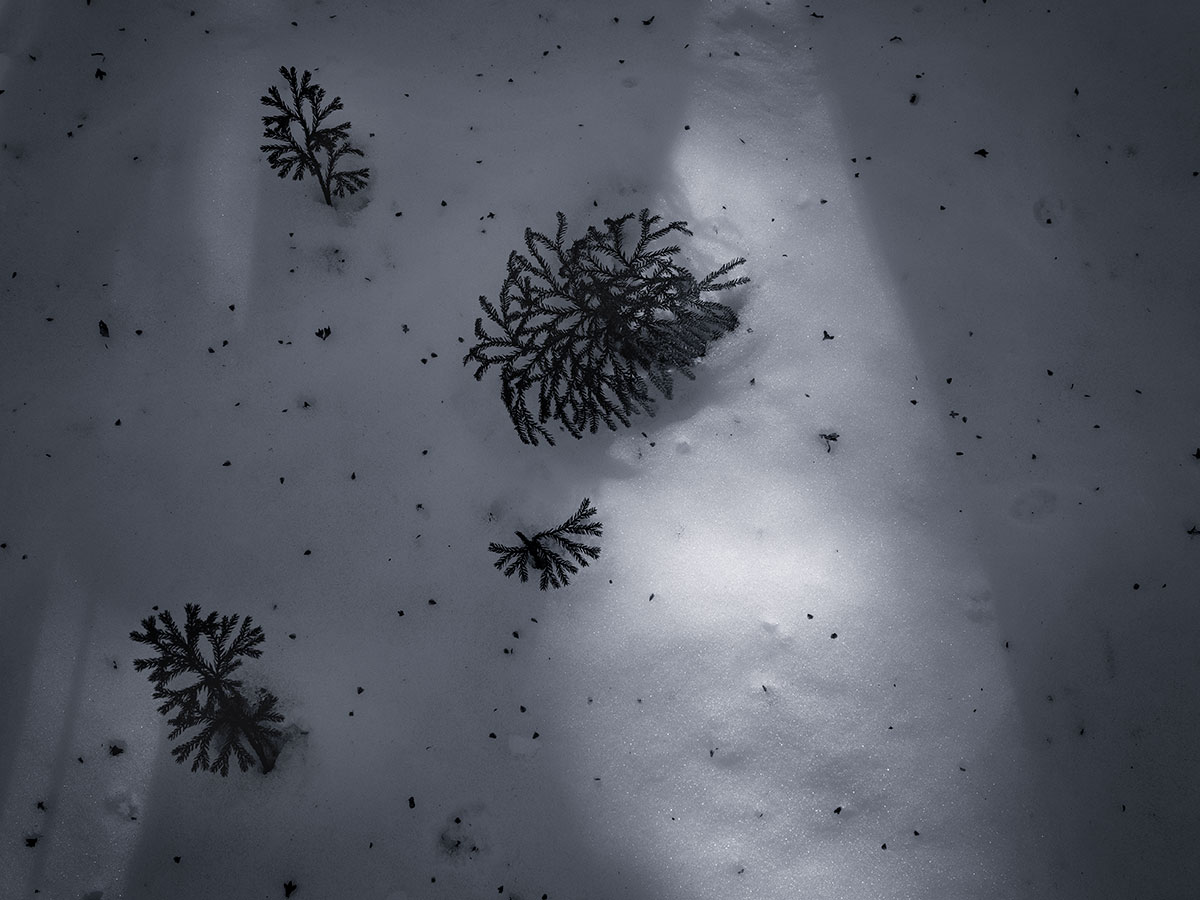
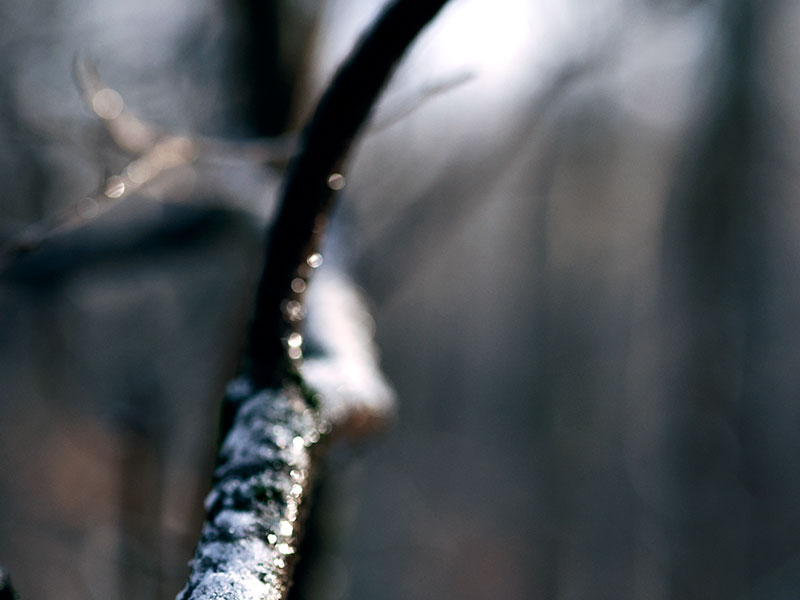
Despite the illusion of warmth, the picture was taken in a foot of old snow in a hemlock swamp; a secluded caress in a tangle of Mountain Laurel. The temperature was well below freezing here; a frost deep enough to make June seem like a universe away. This close to the subject, you need to remember not to step backwards on your snowshoes.
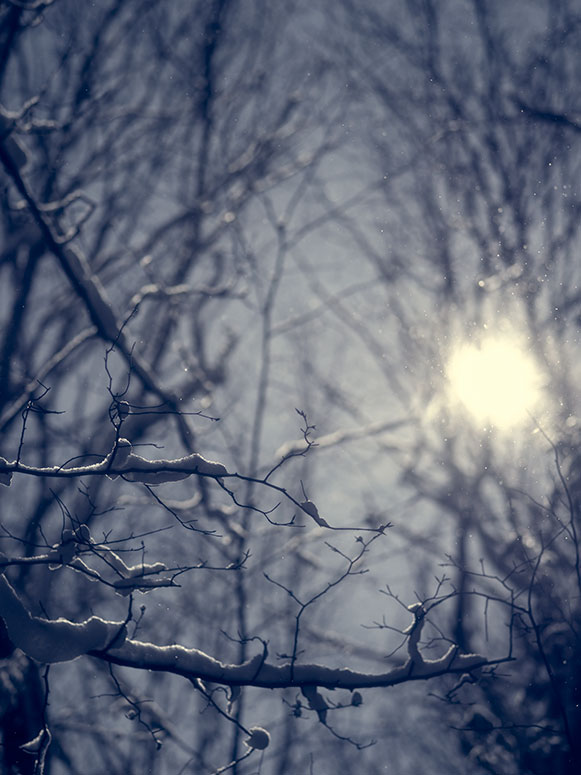
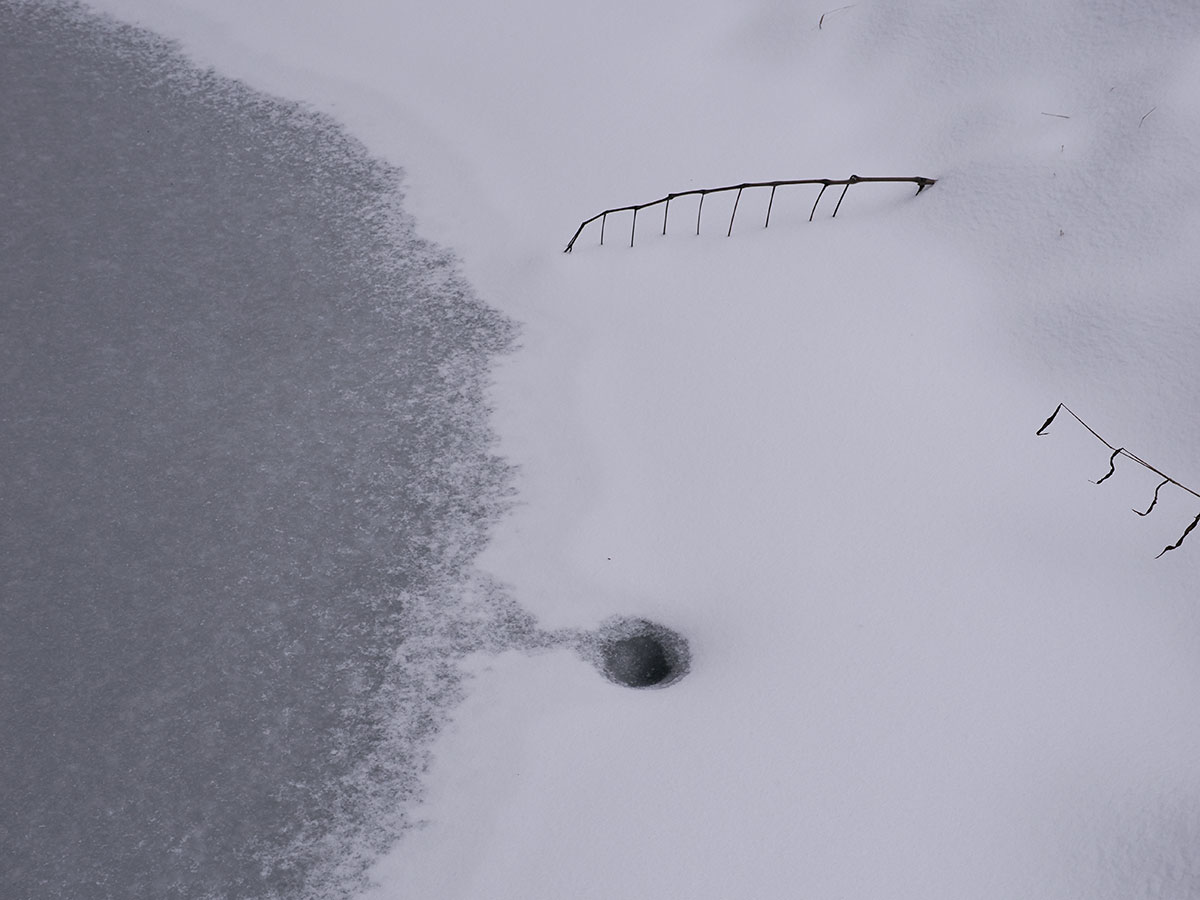
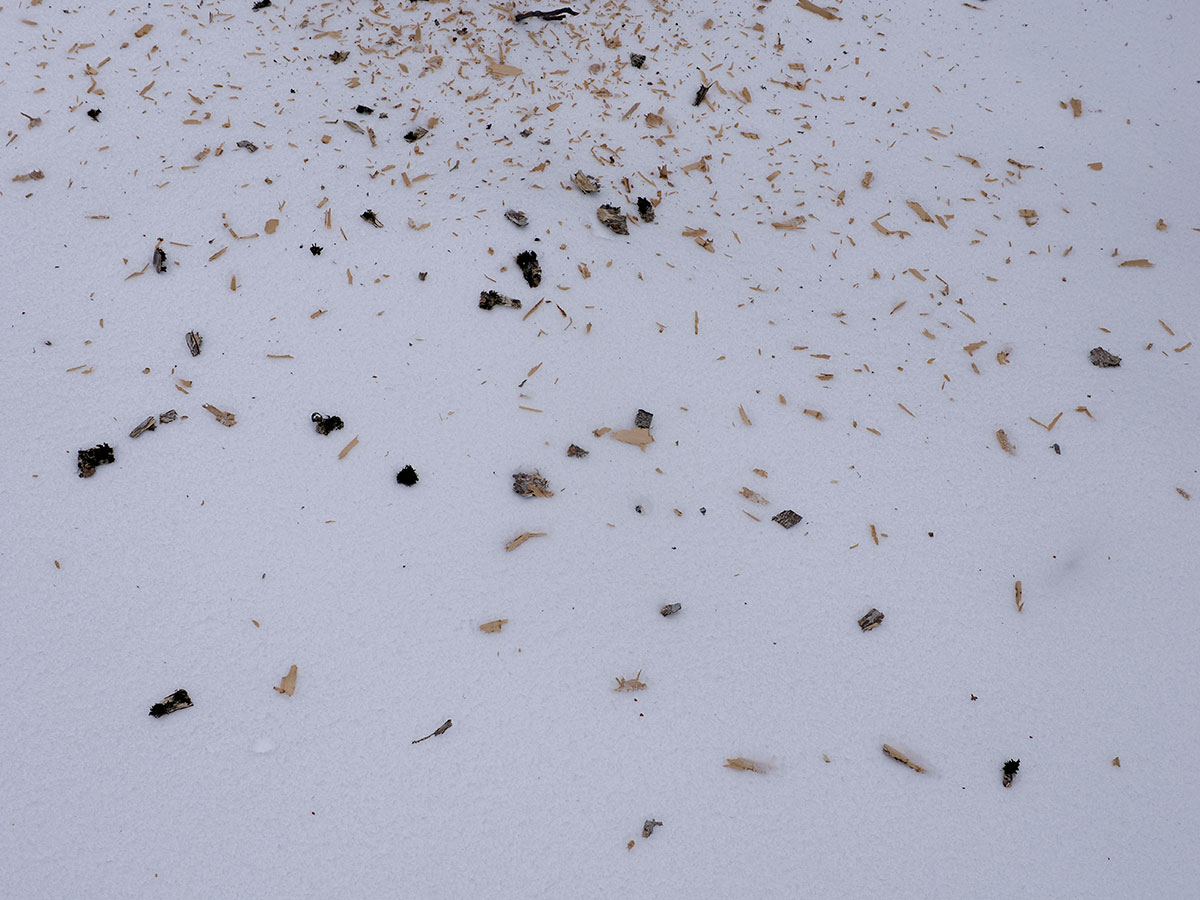
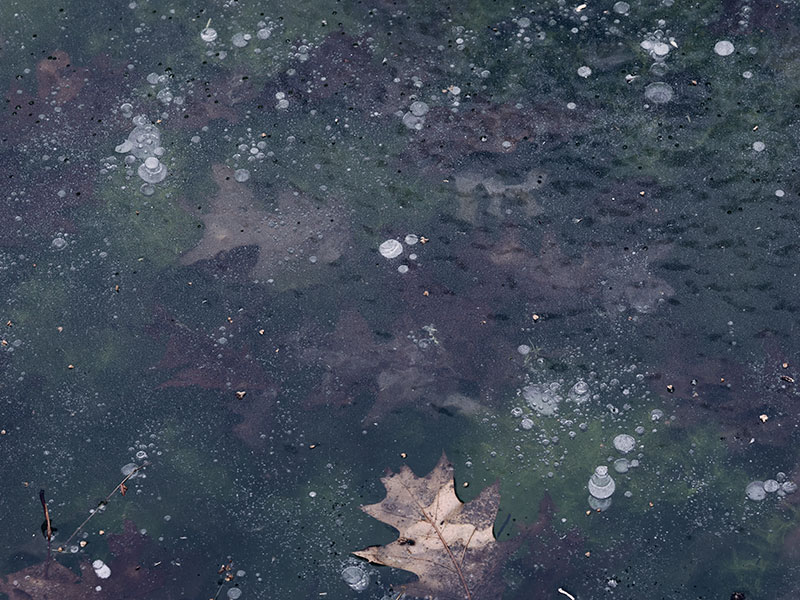
Behind the lens, I find myself circling winter from all directions. Is the light warm or is it frigid? Does monochrome confuse or clarify? Can snow and ice be seen in endless variation? The answer is always “yes,” depending…
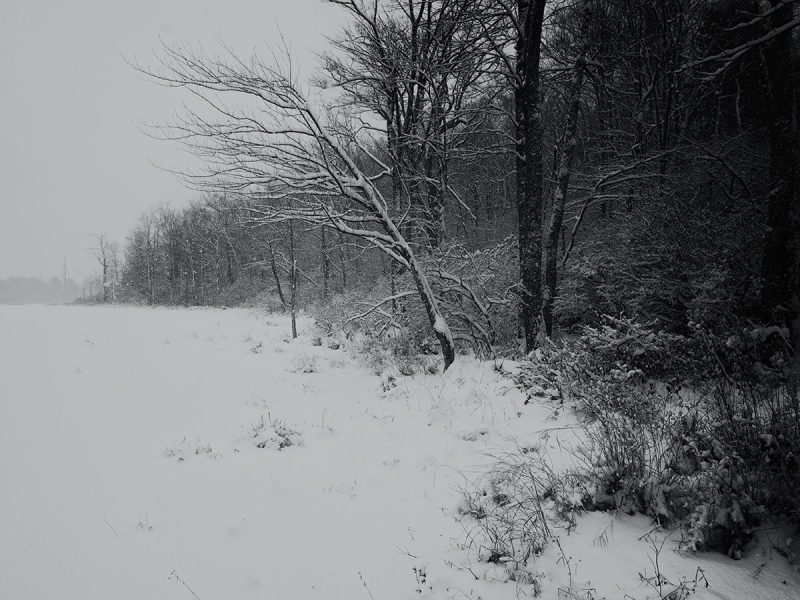
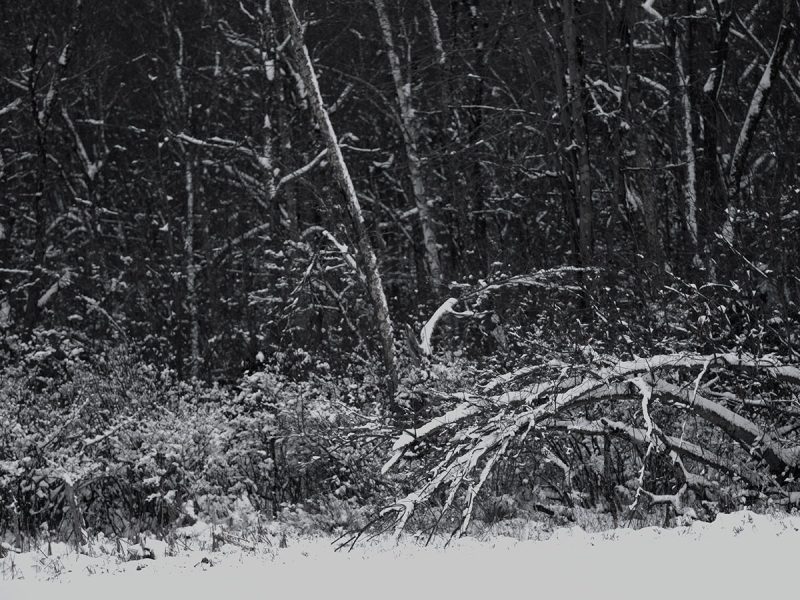
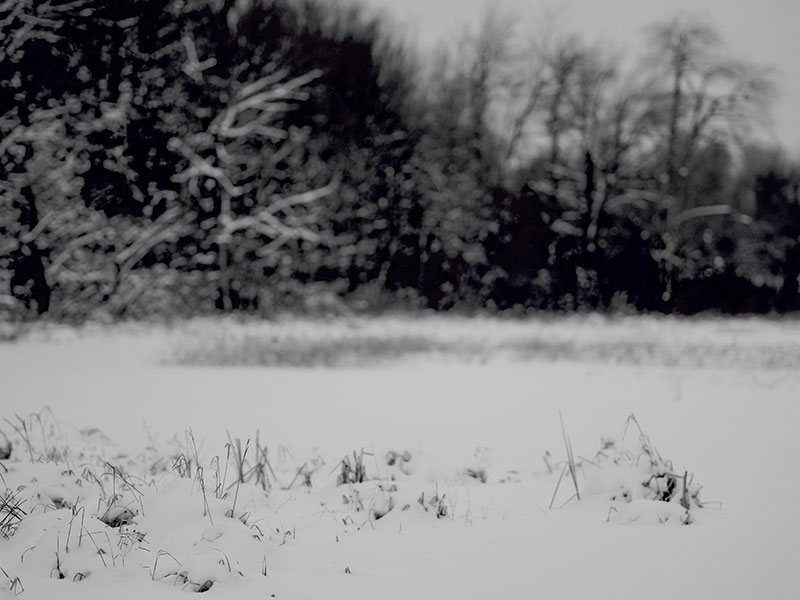
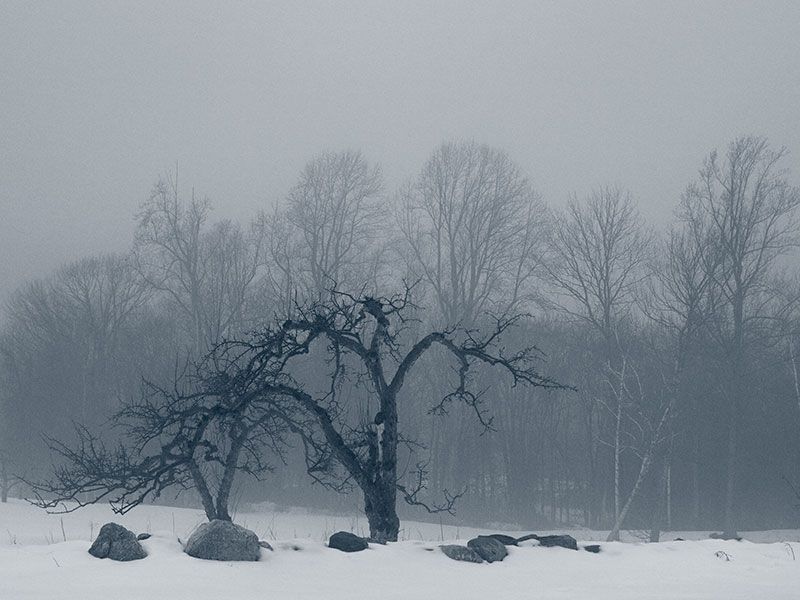
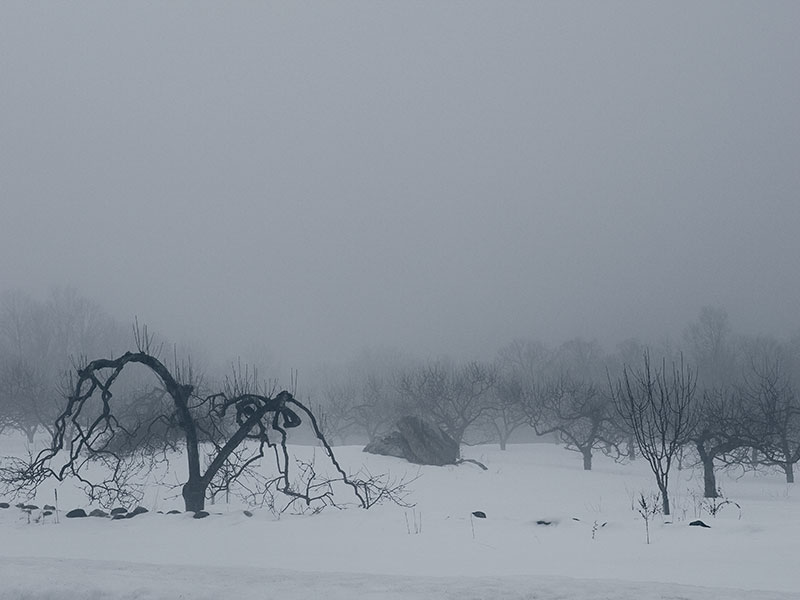
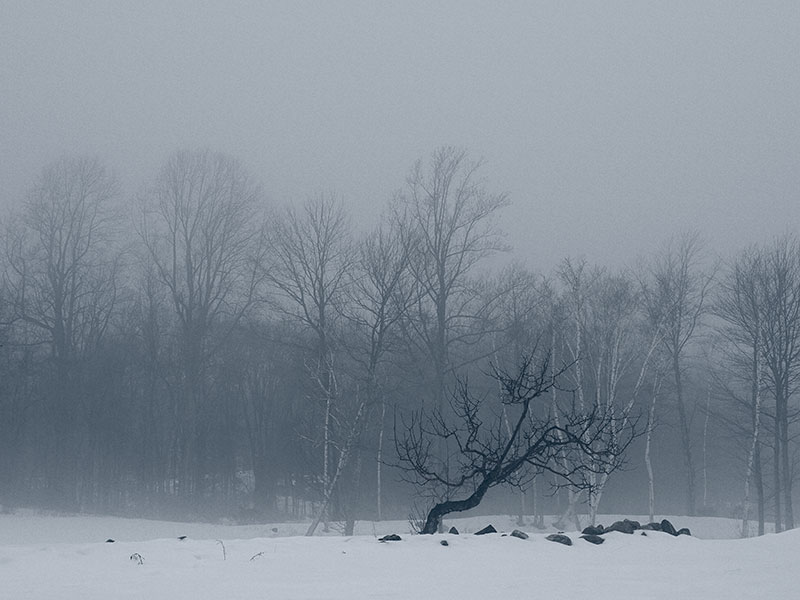
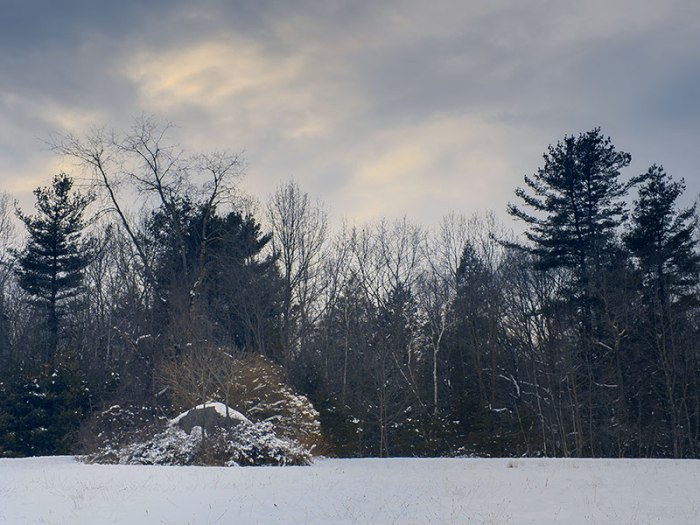
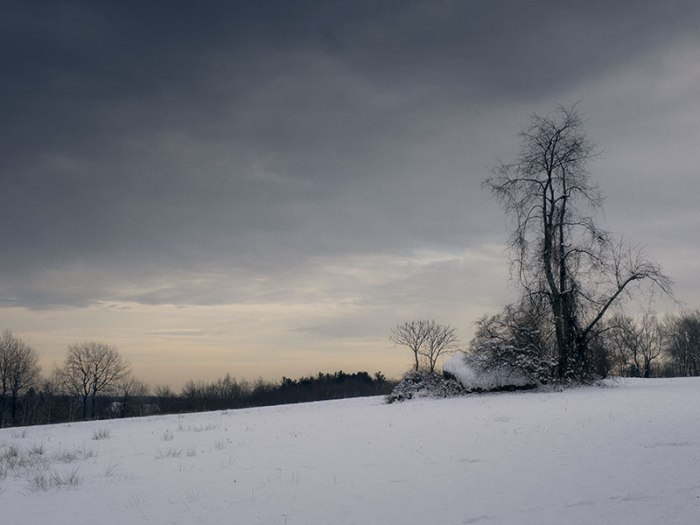
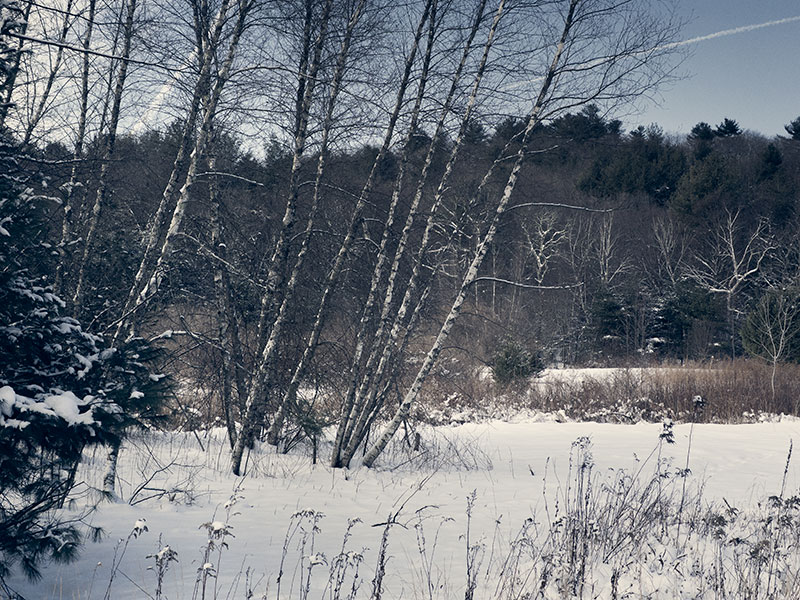
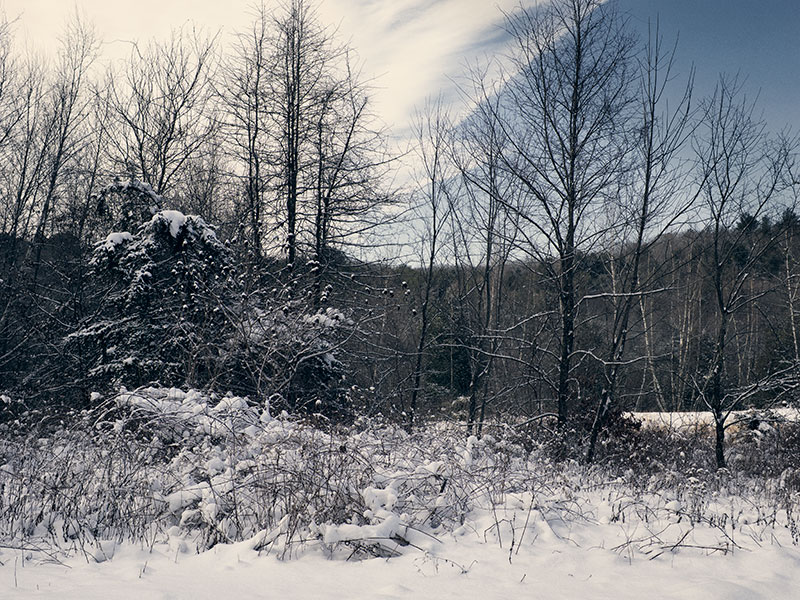
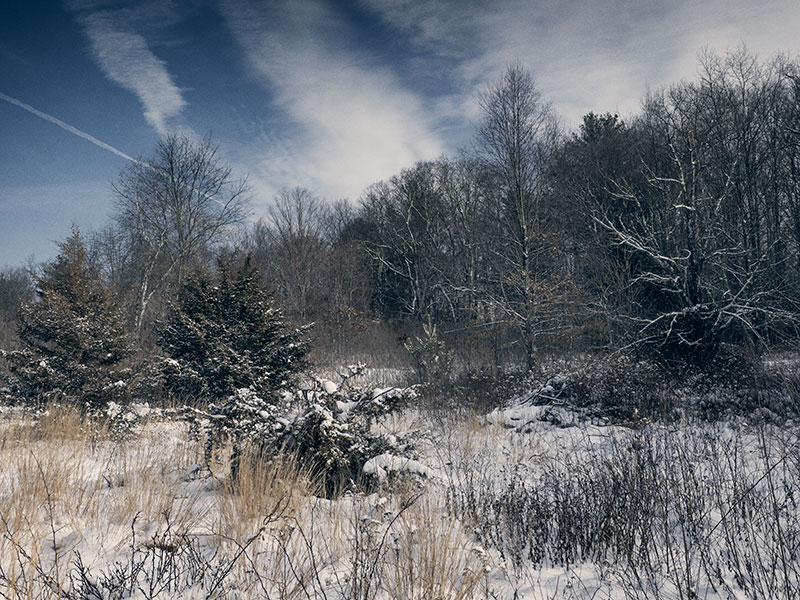
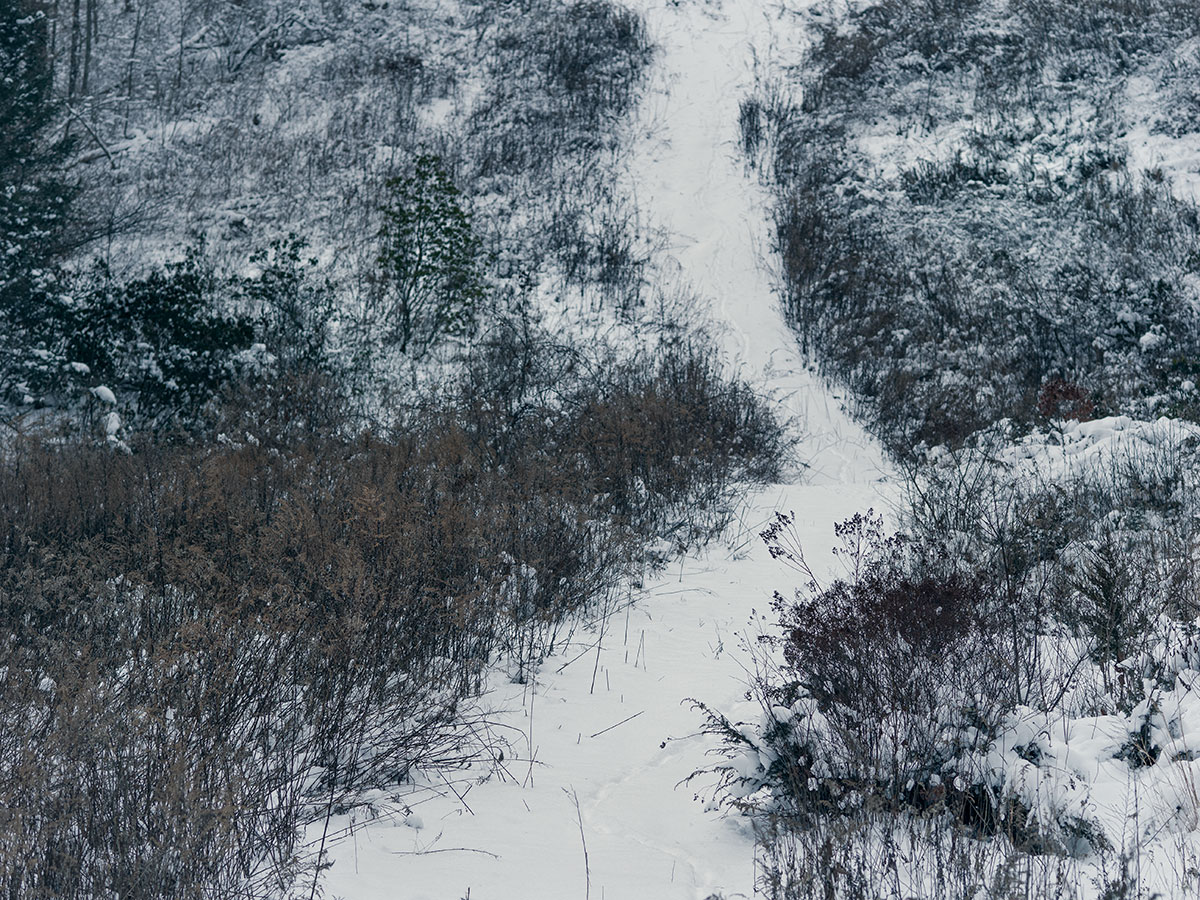
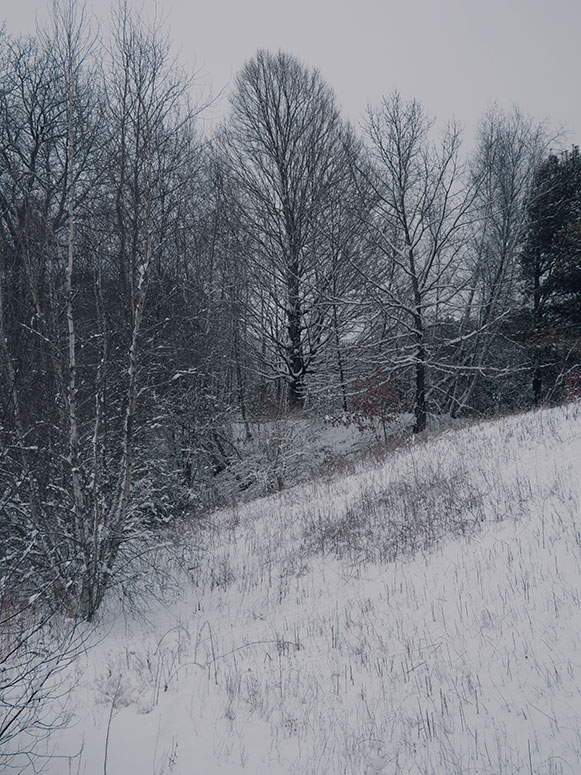
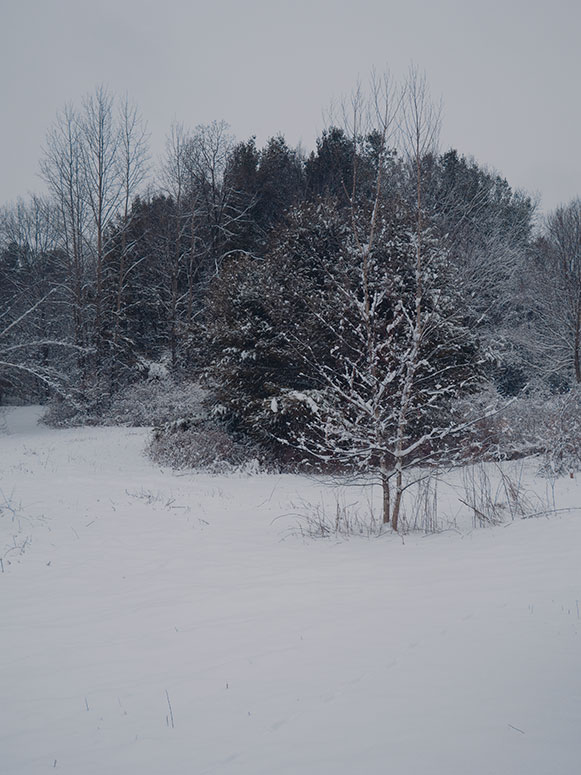
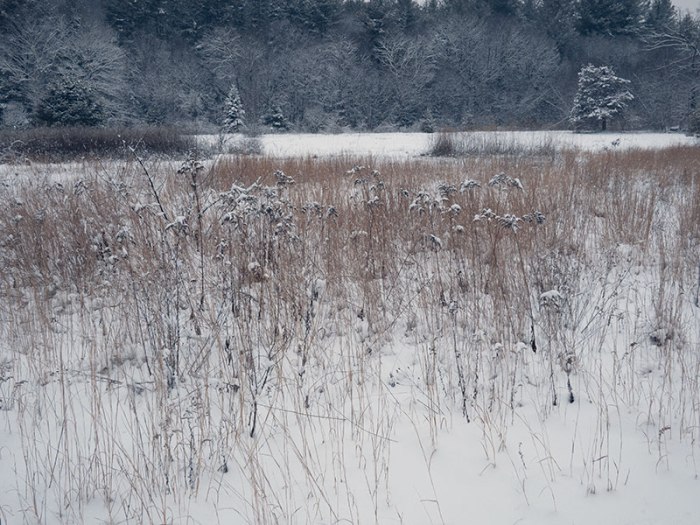
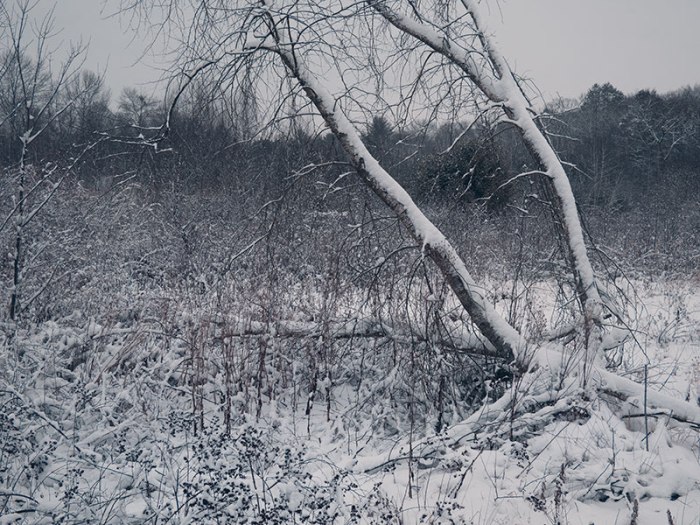
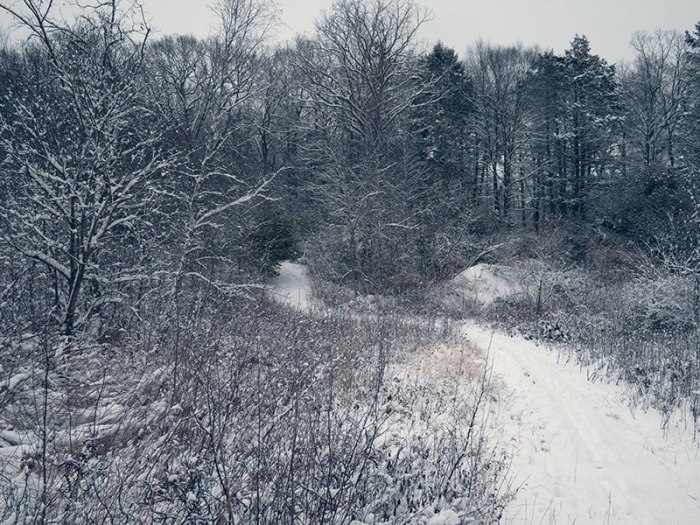
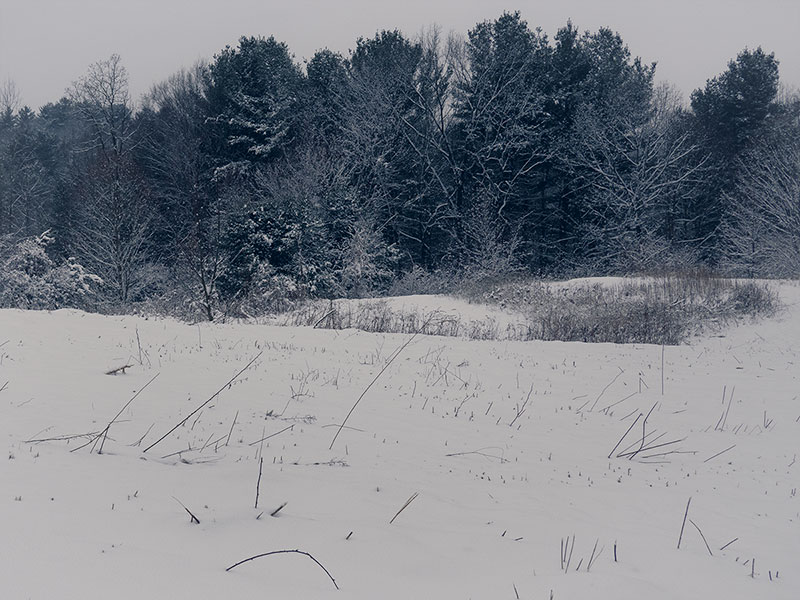
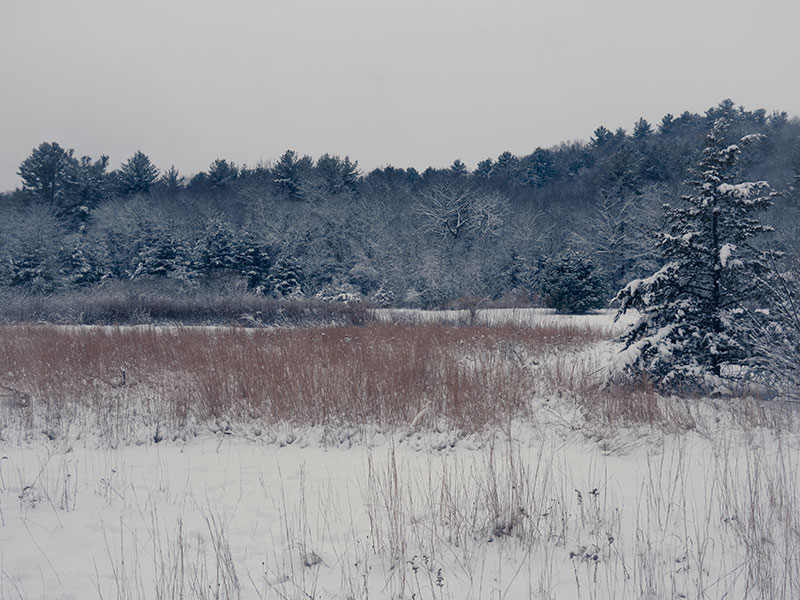
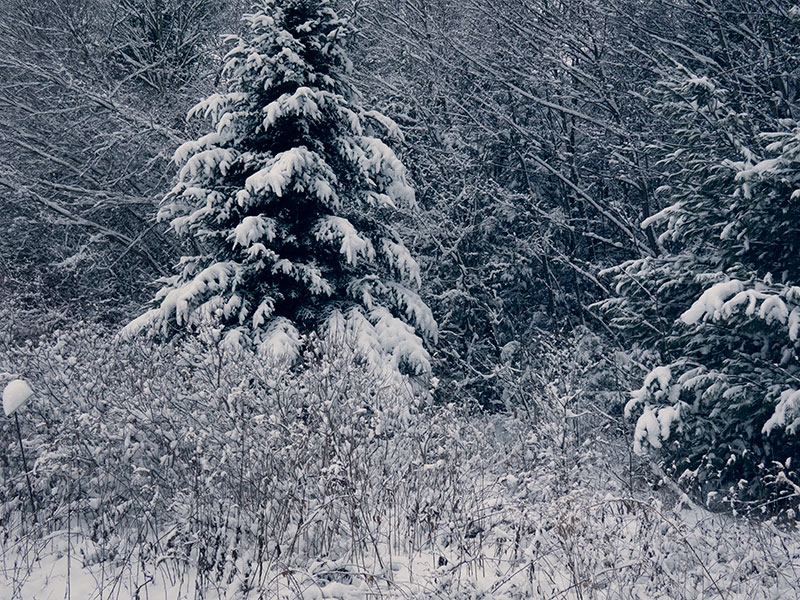
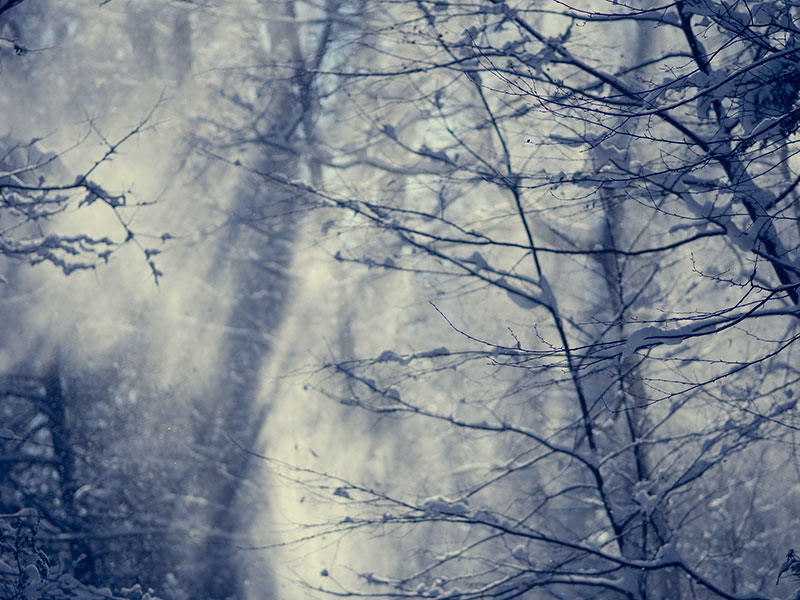
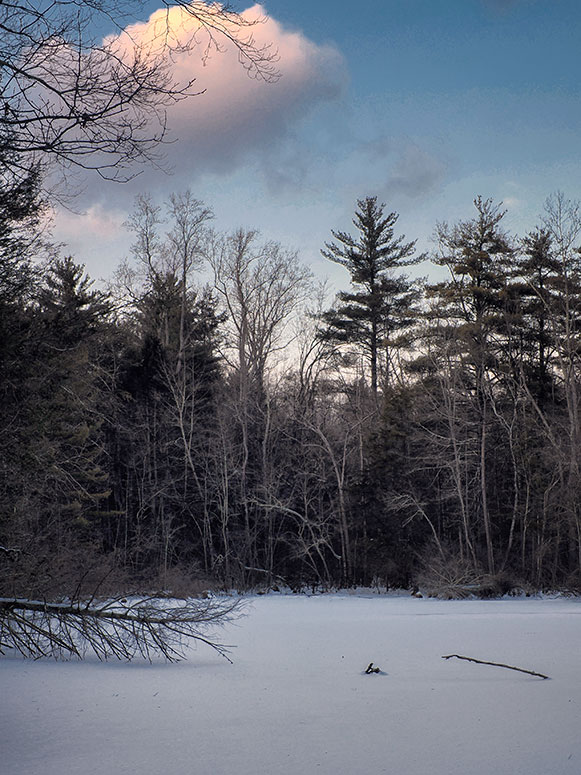
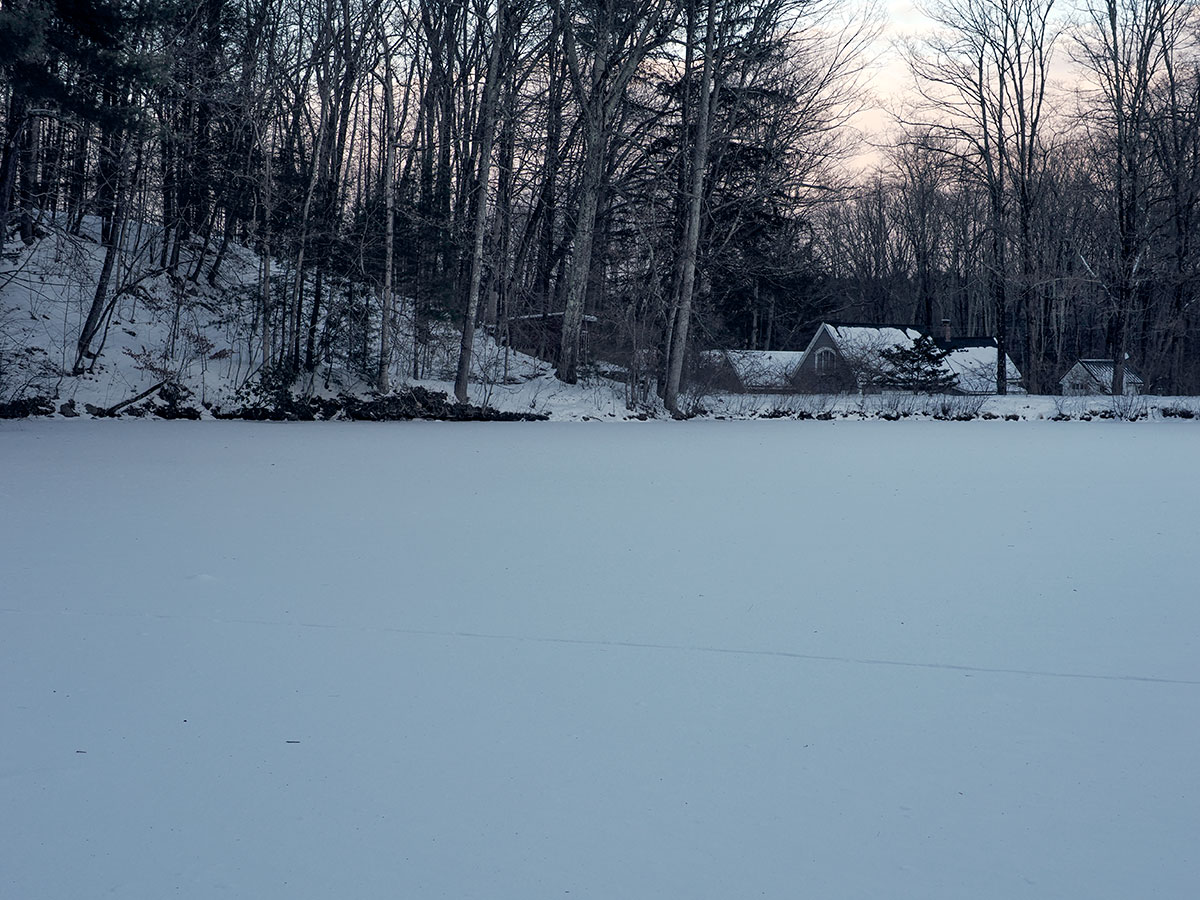
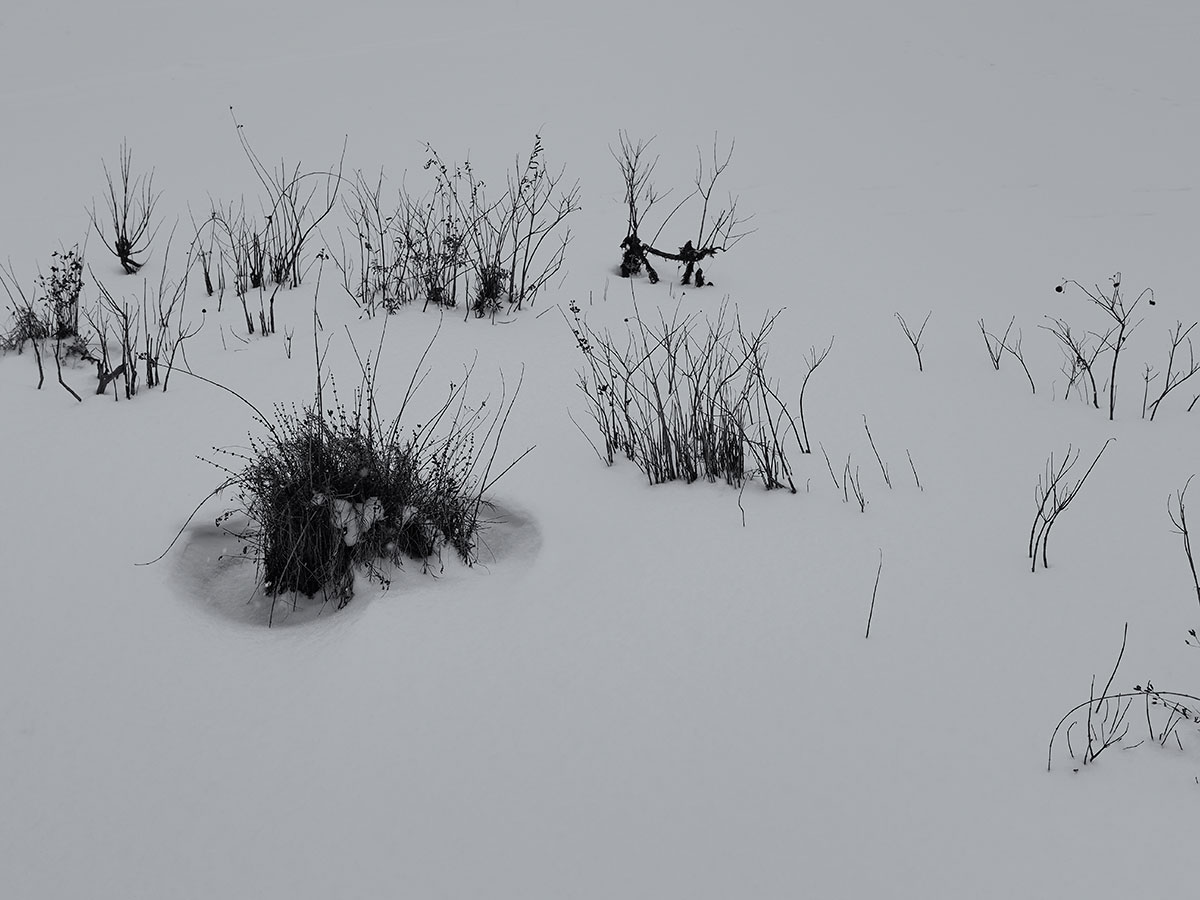
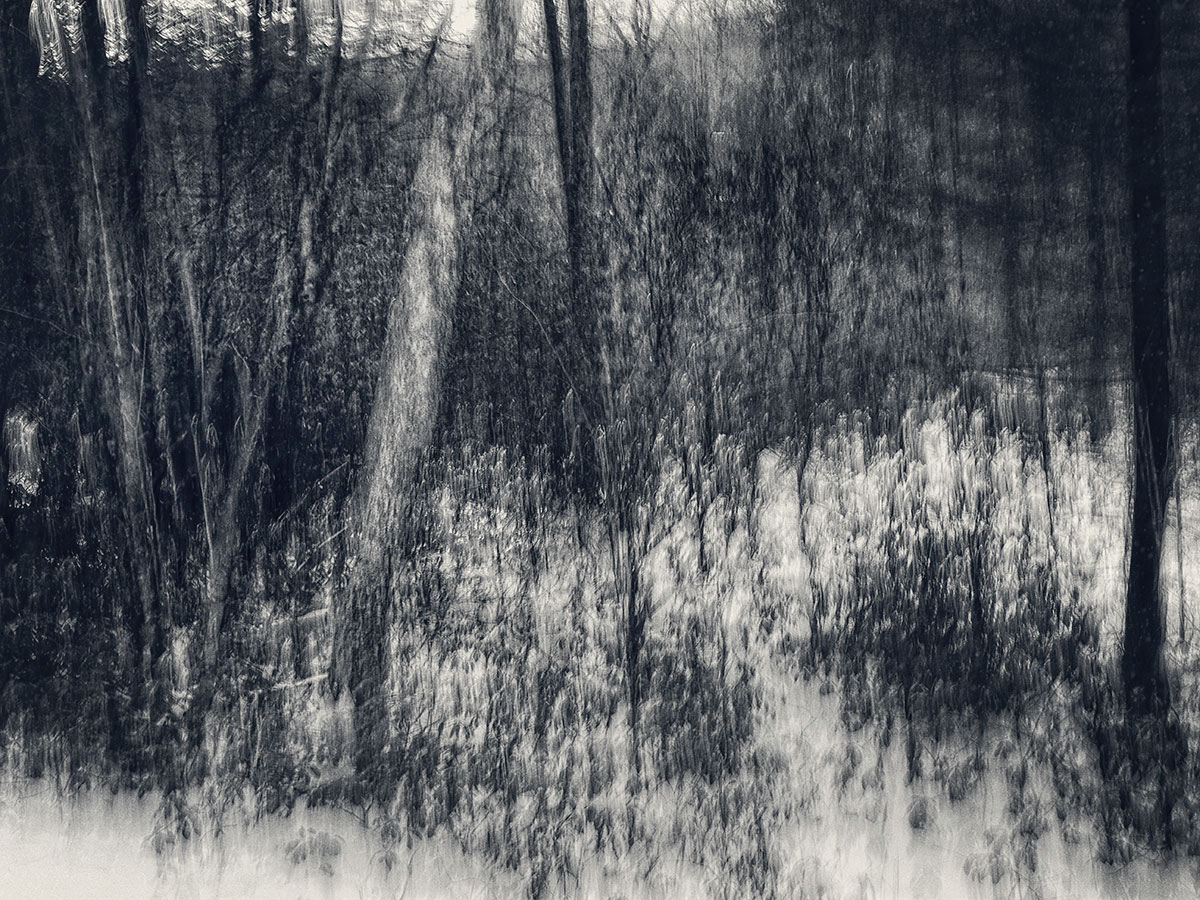
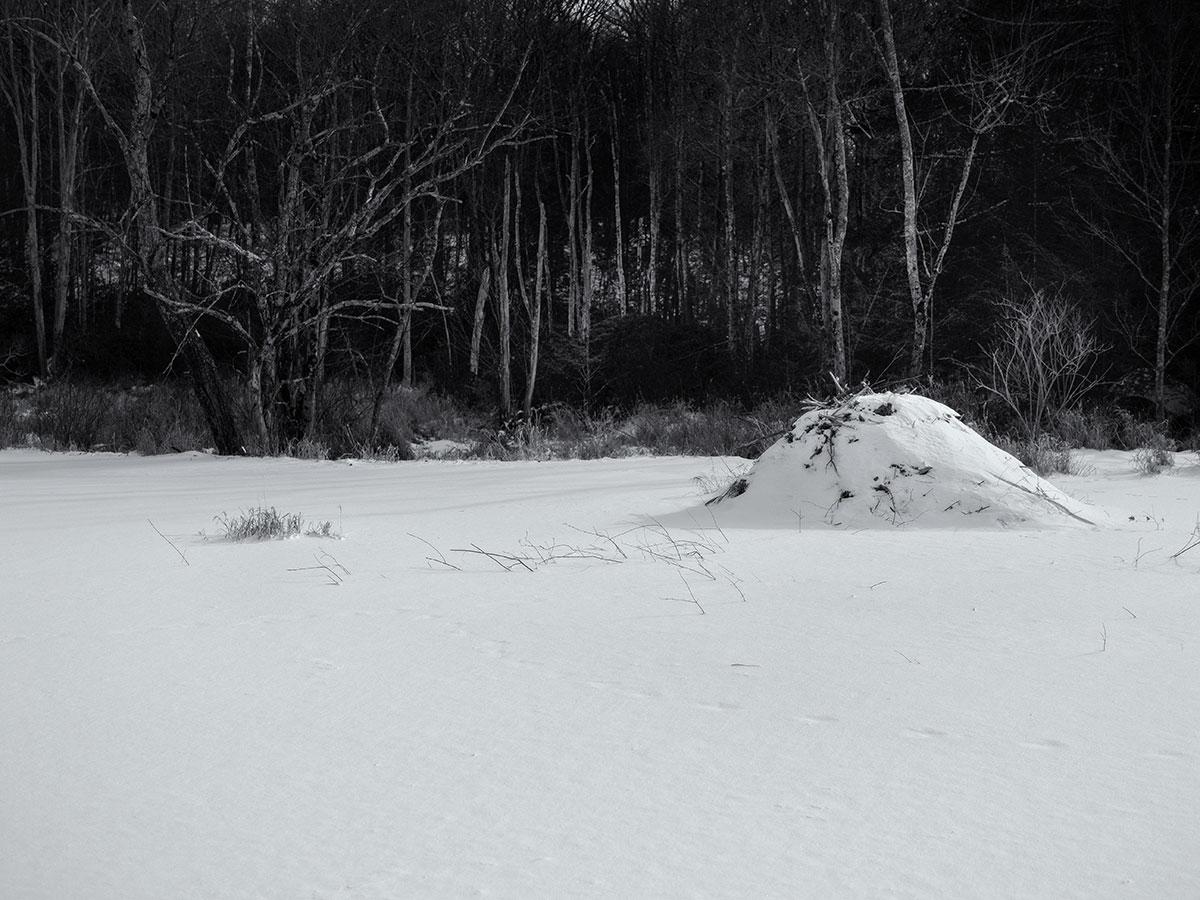
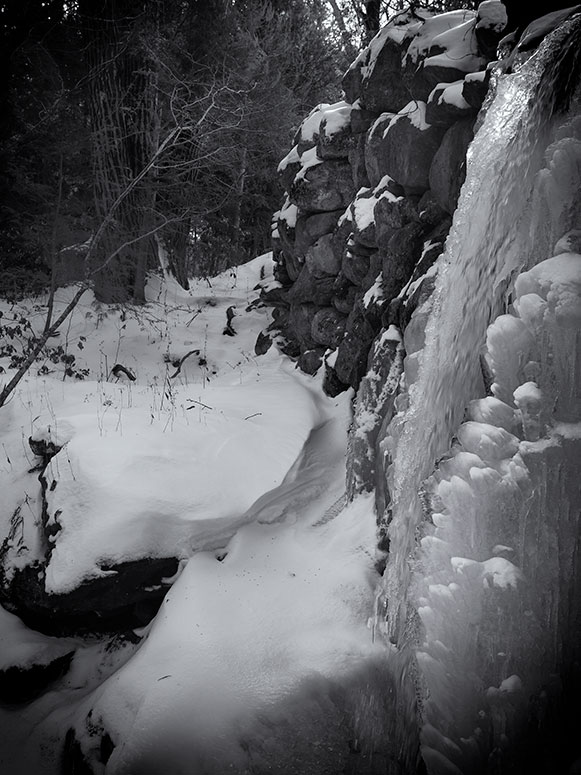
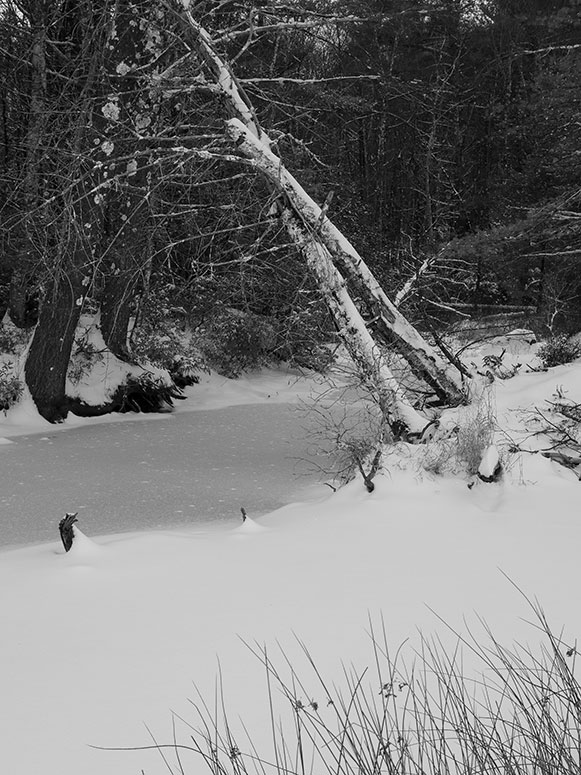
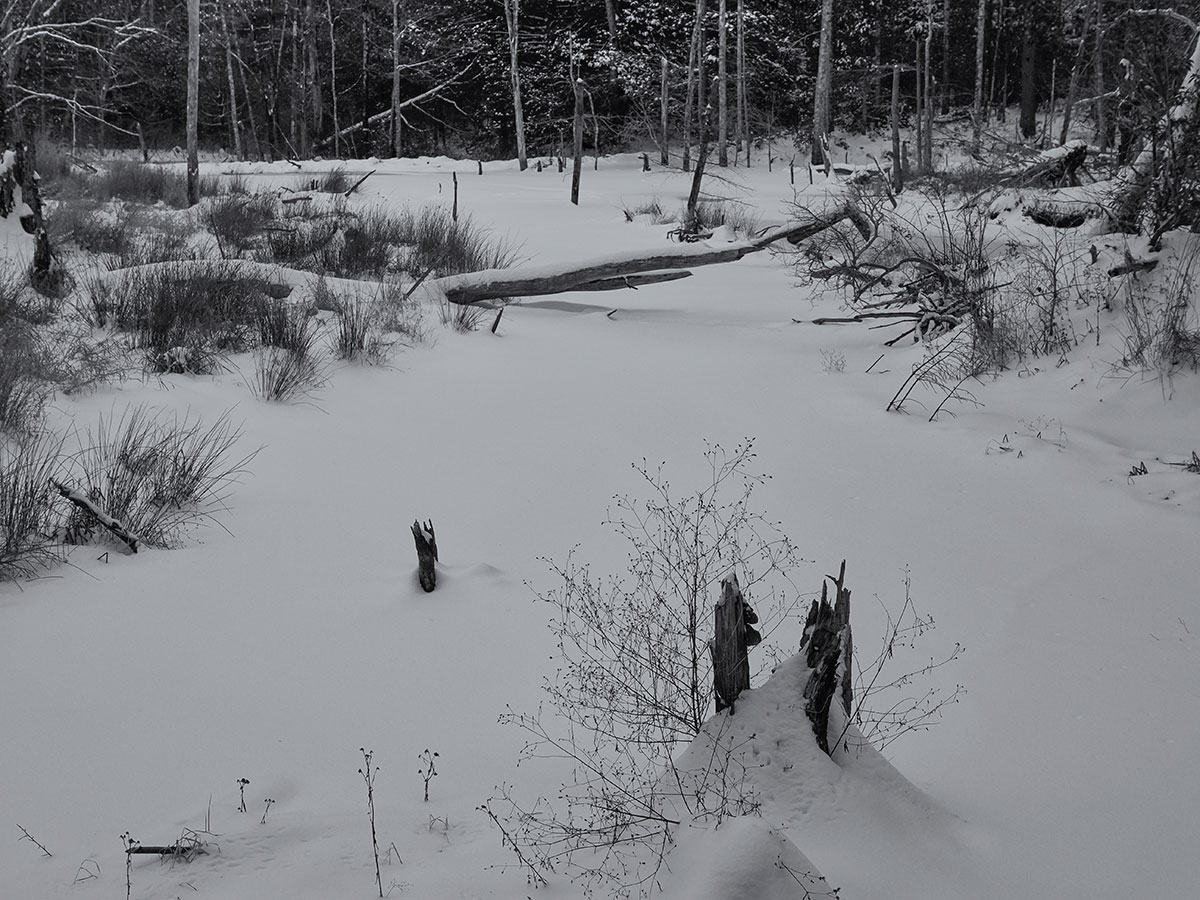
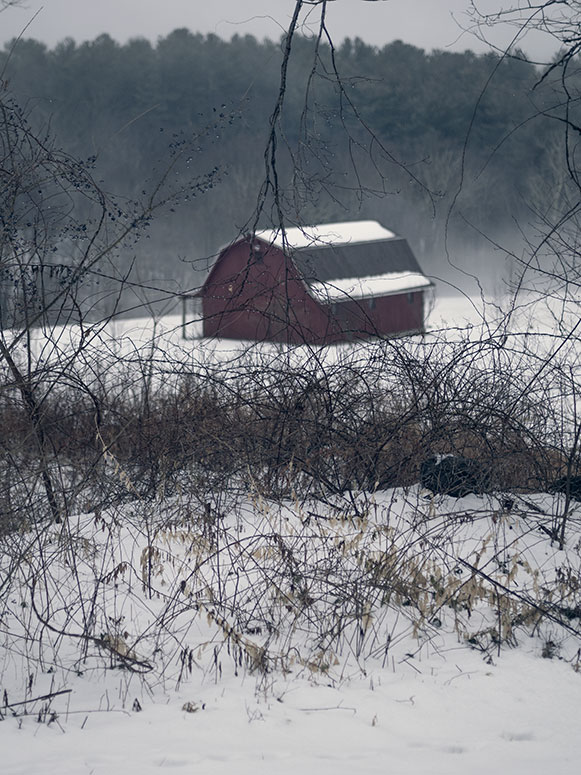
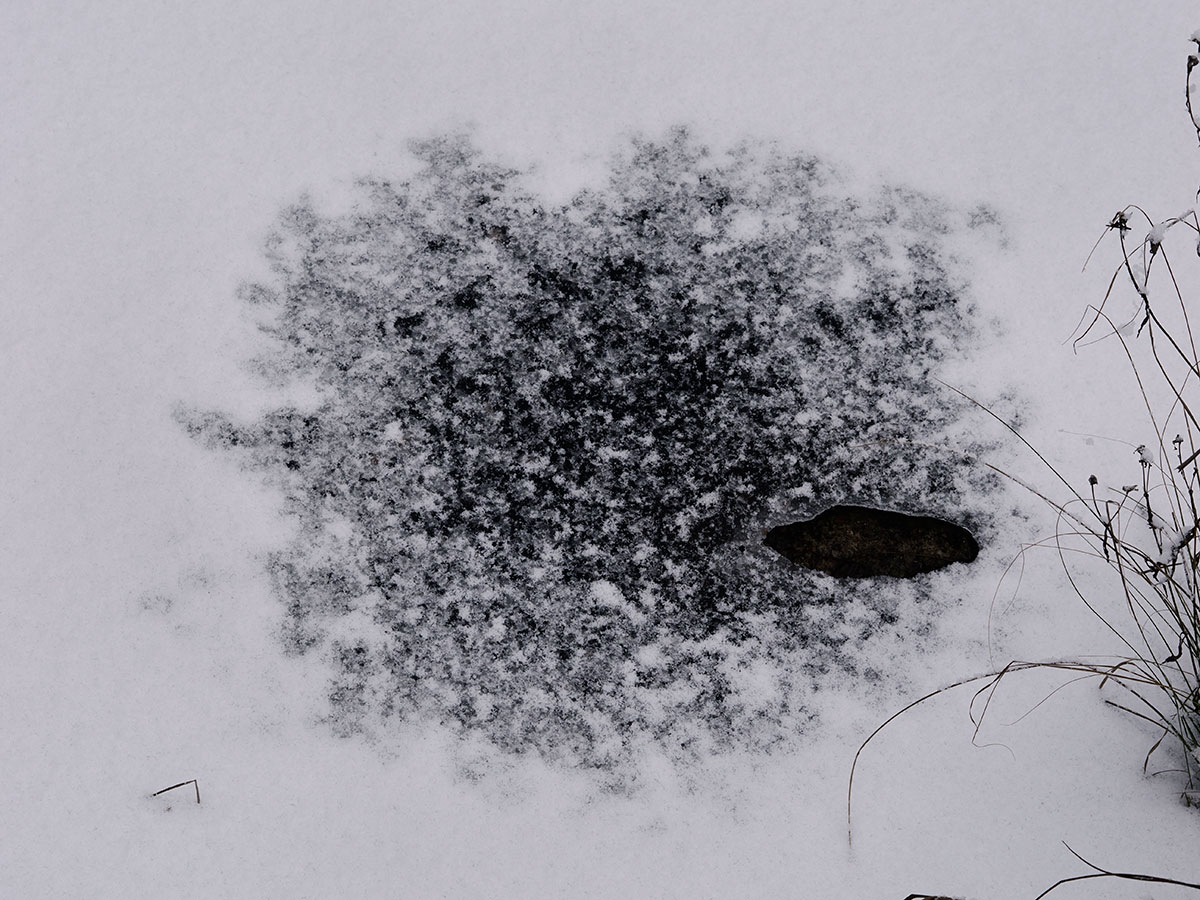
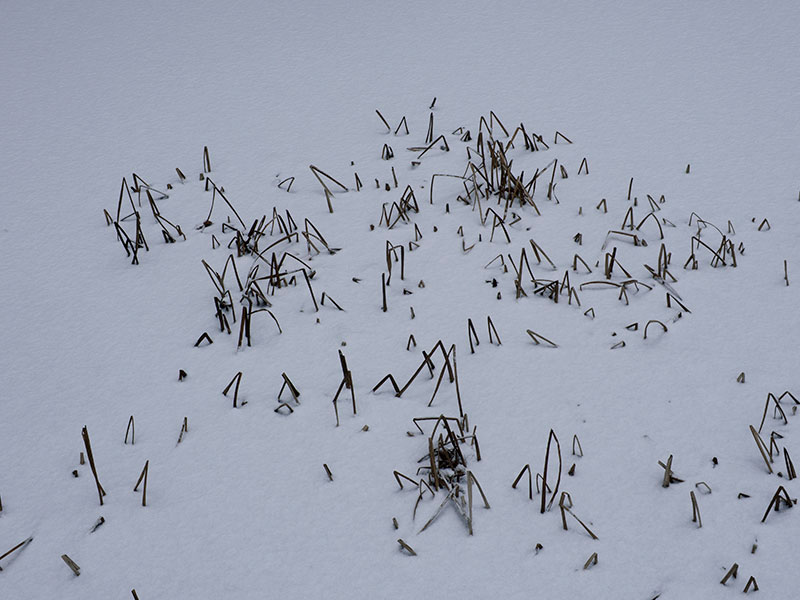
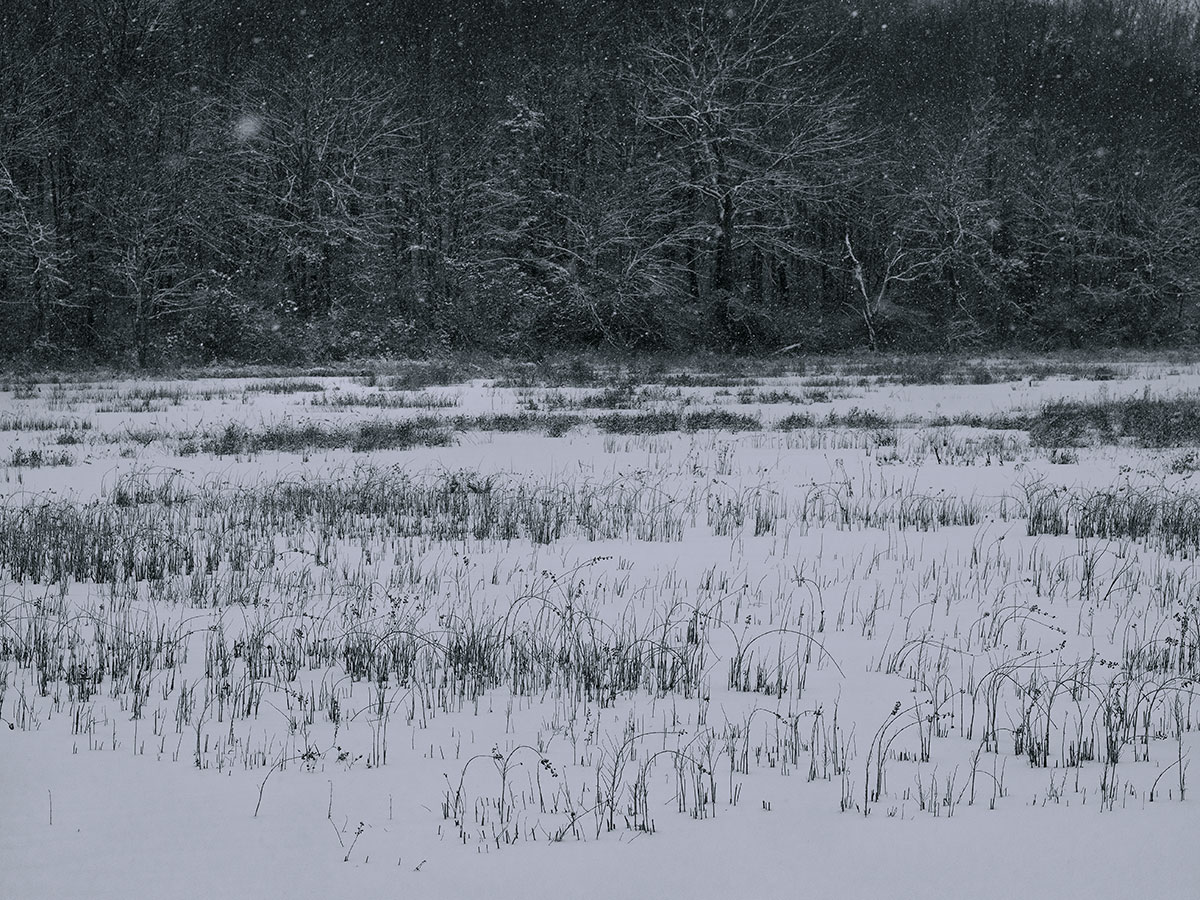
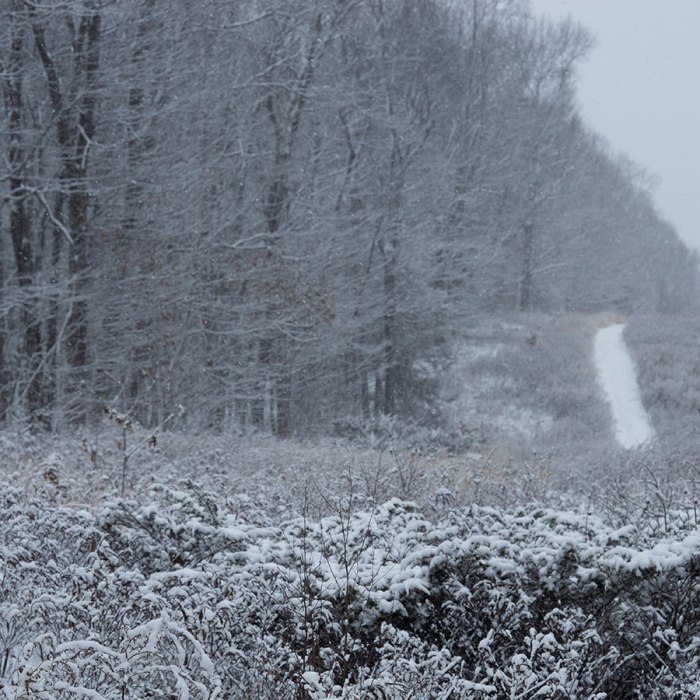
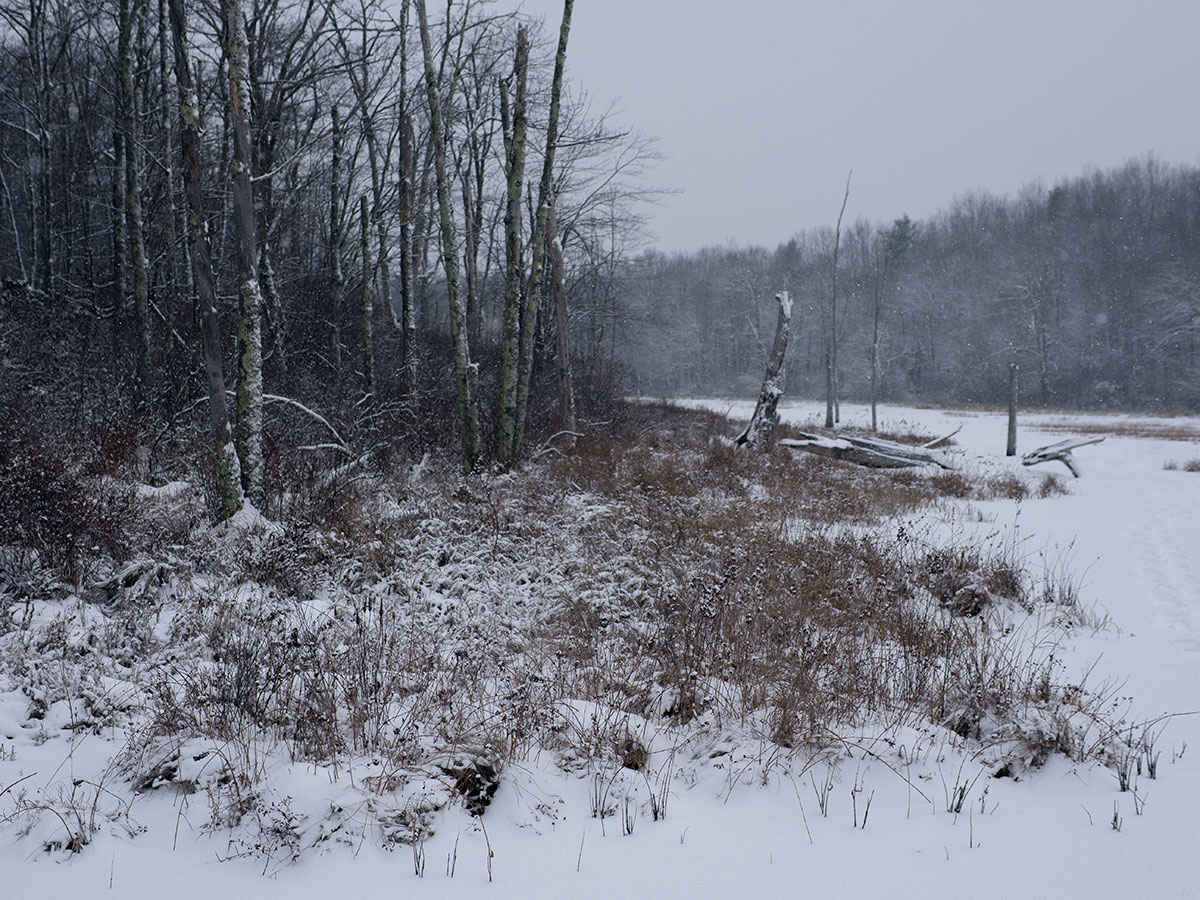
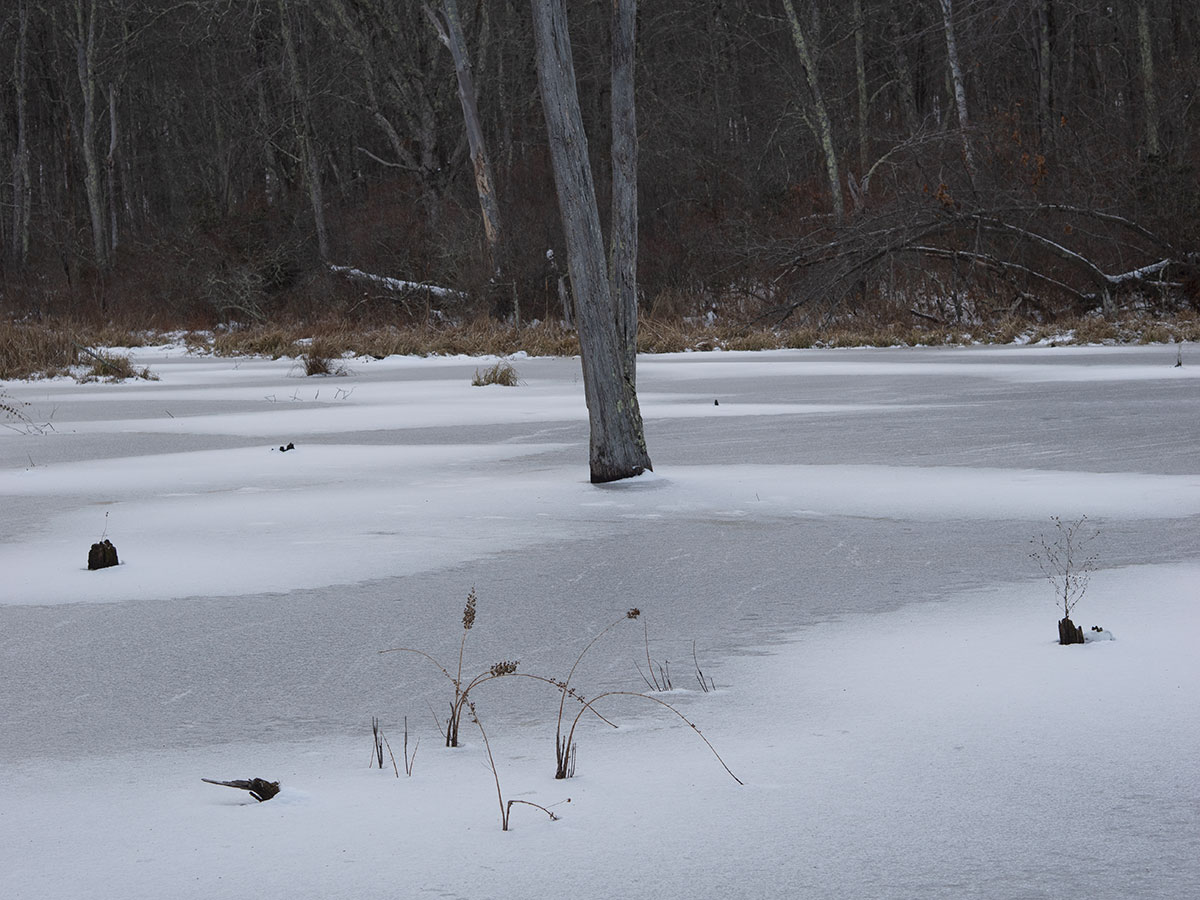
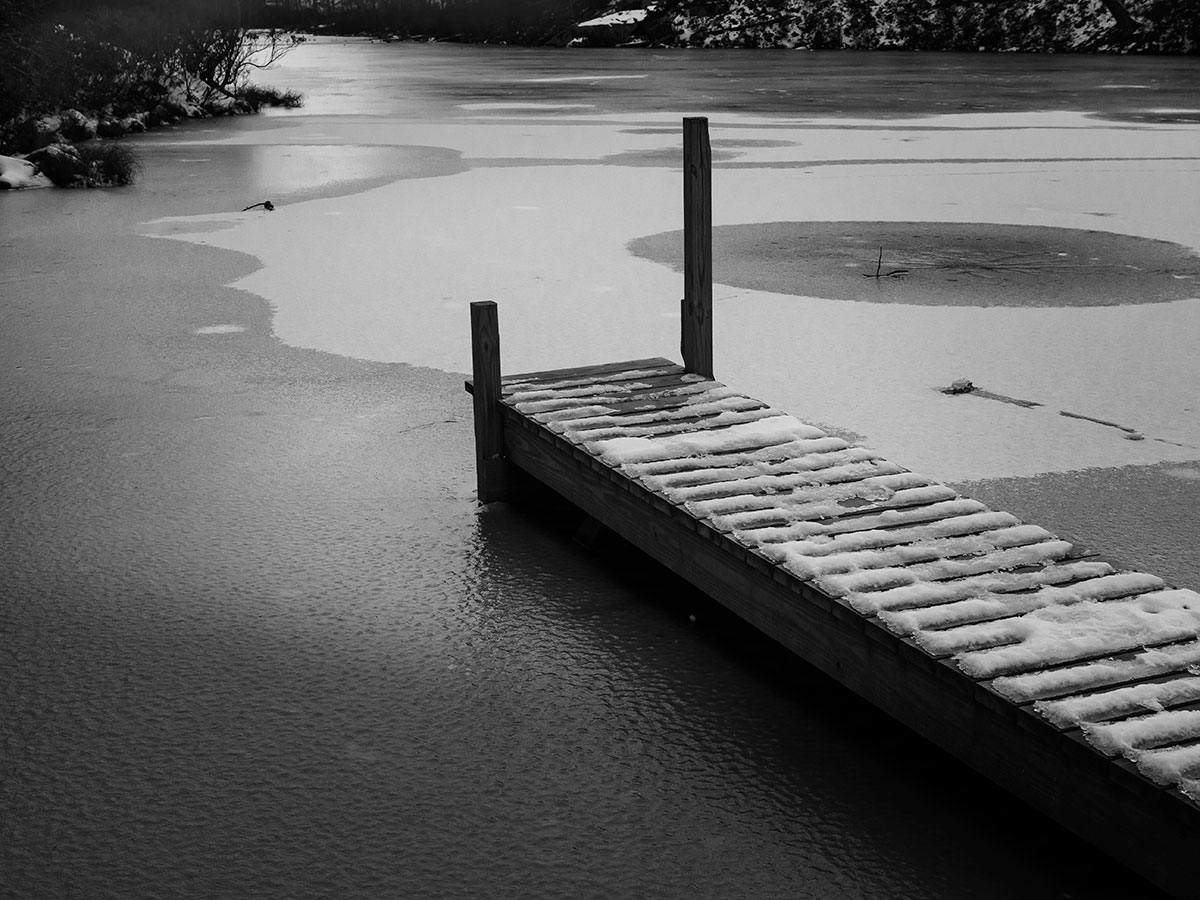
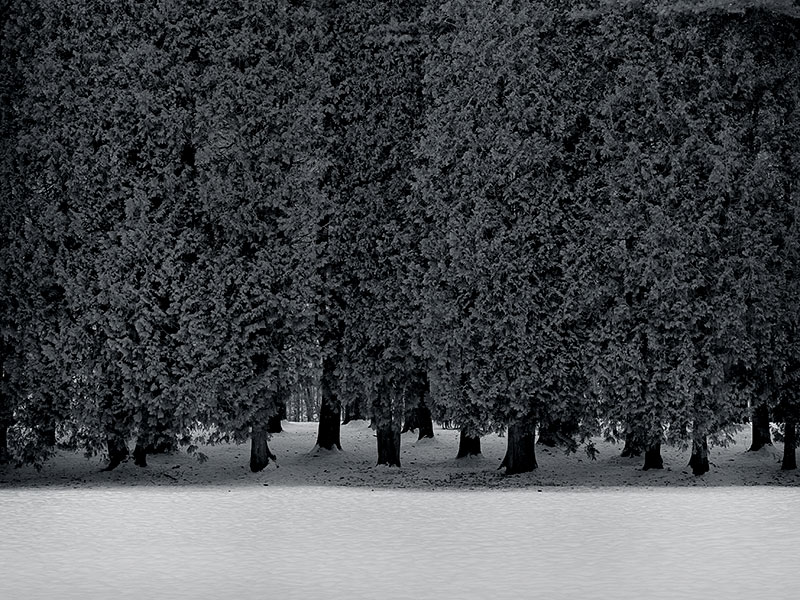
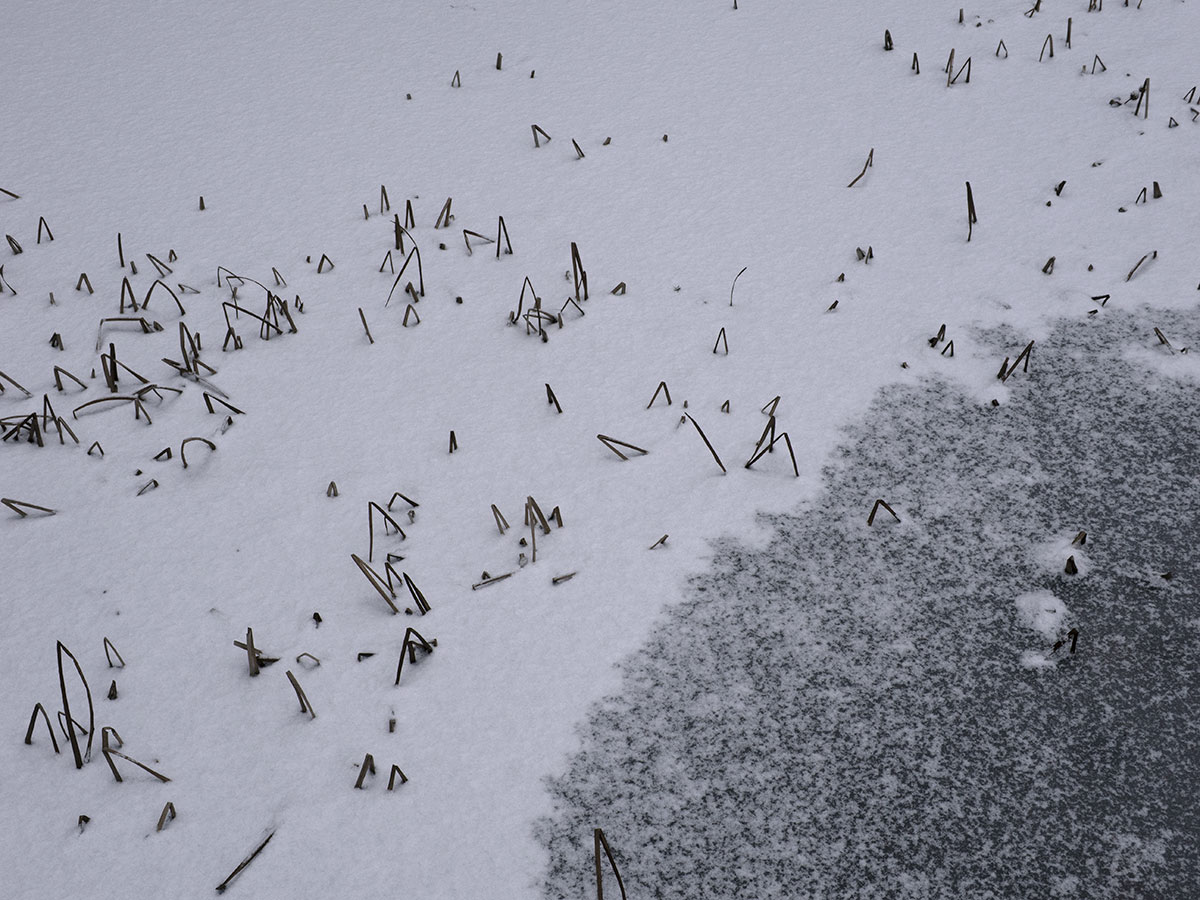
The three landscapes are from a week ago; taken at Phillips Pond here in New Hartford.
Today we’re being visited by the fifth winter storm of the season, and this one has what it takes to refashion perspective. It’s currently 4°f; 12 to 18″ inches of snow (in progress and could go higher). The storm is blanketing a huge swath of the northeast, turning to freezing rain along the coast.
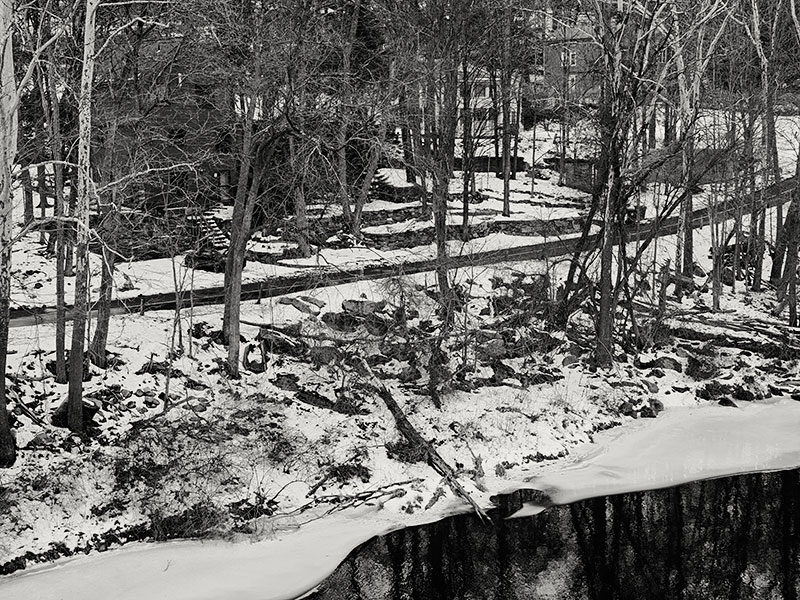
A thaw has moved into southern New England, one that I’m hoping will only be temporary.
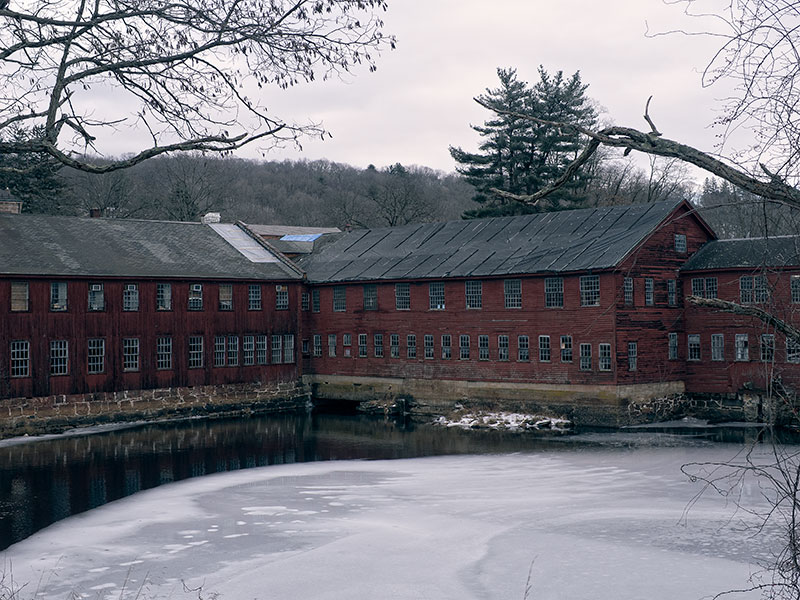
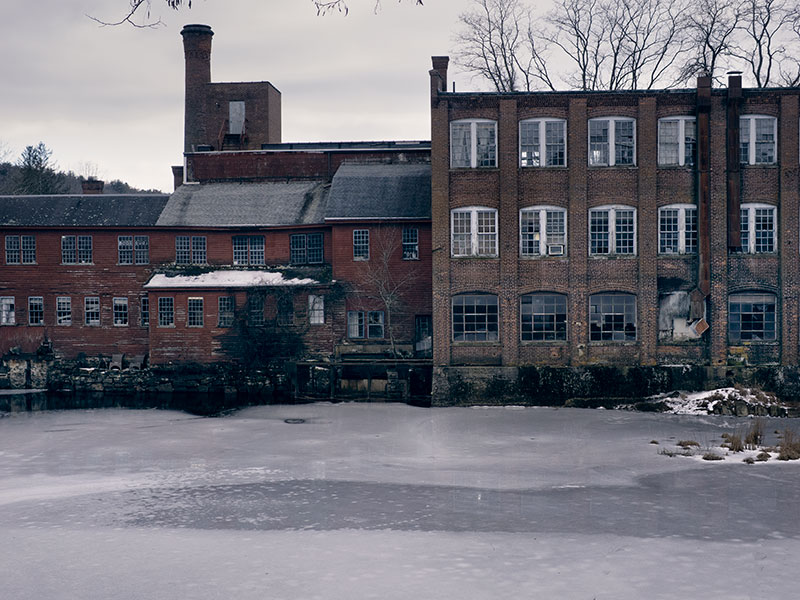
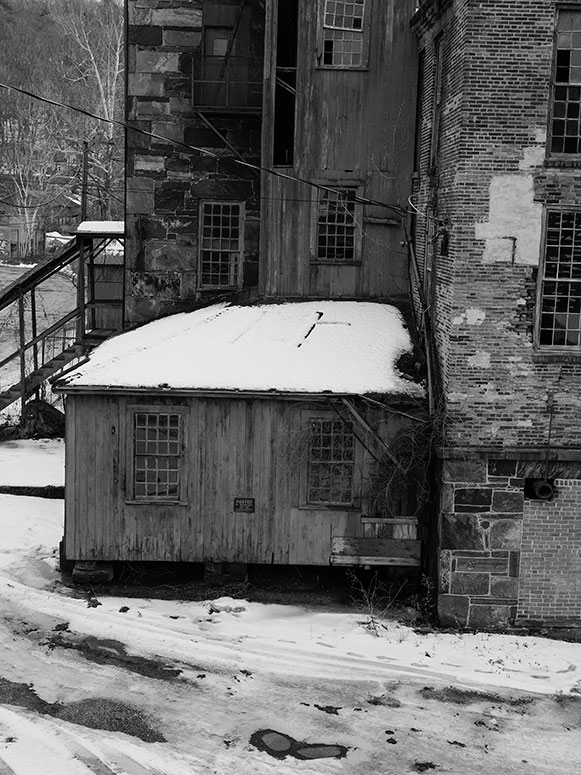
A visit to Collinsville yesterday resulted in some pictures of the riverfront and surrounding neighborhoods. The village is situated on the Farmington River; the site of an historic factory complex where edged tools were made. It was here that John Brown came to purchase spears, an acquisition which ultimately led to his failed rebellion and execution.
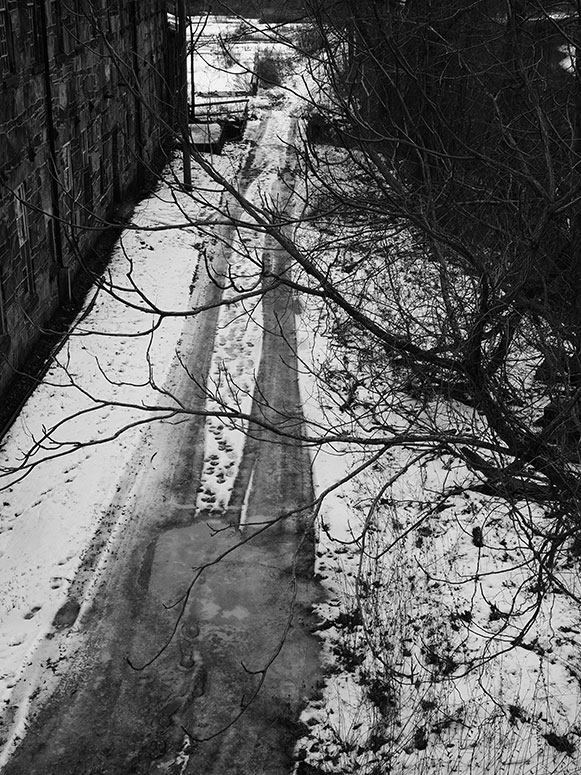
Yesterday, the Farmington was dressed with large patches of melting ice, and snow was beginning to fade from the riverbanks. There’s an elevated section of rail trail next to the factory that provides the downward gaze. The patchiness of the snow looked especially interesting in black and white.
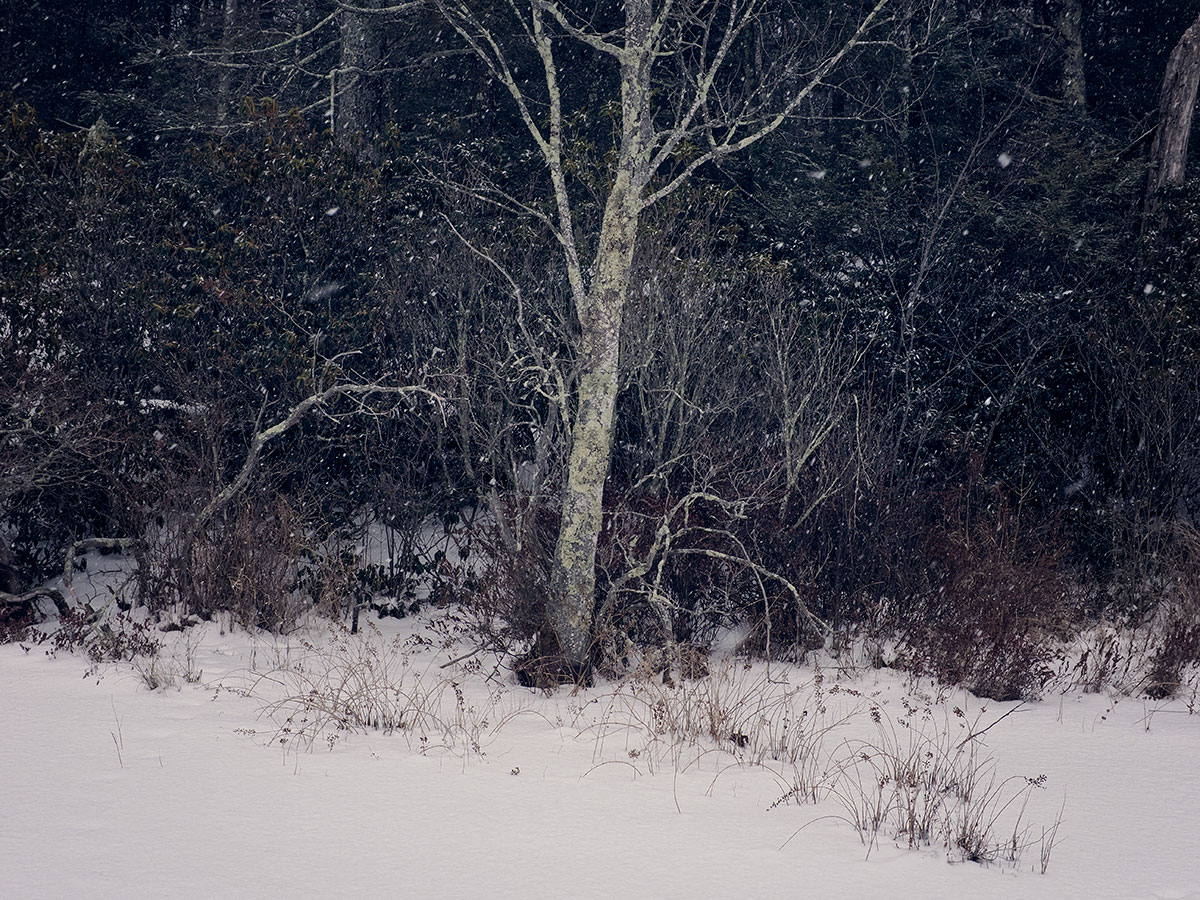
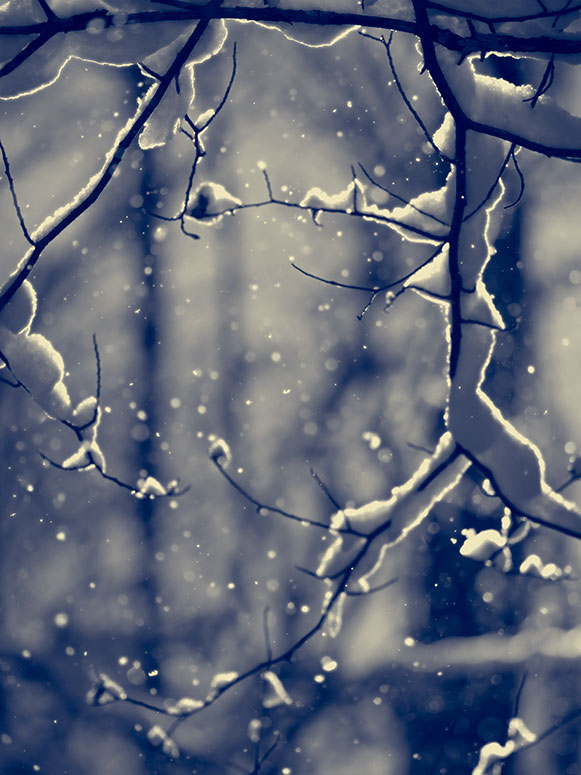
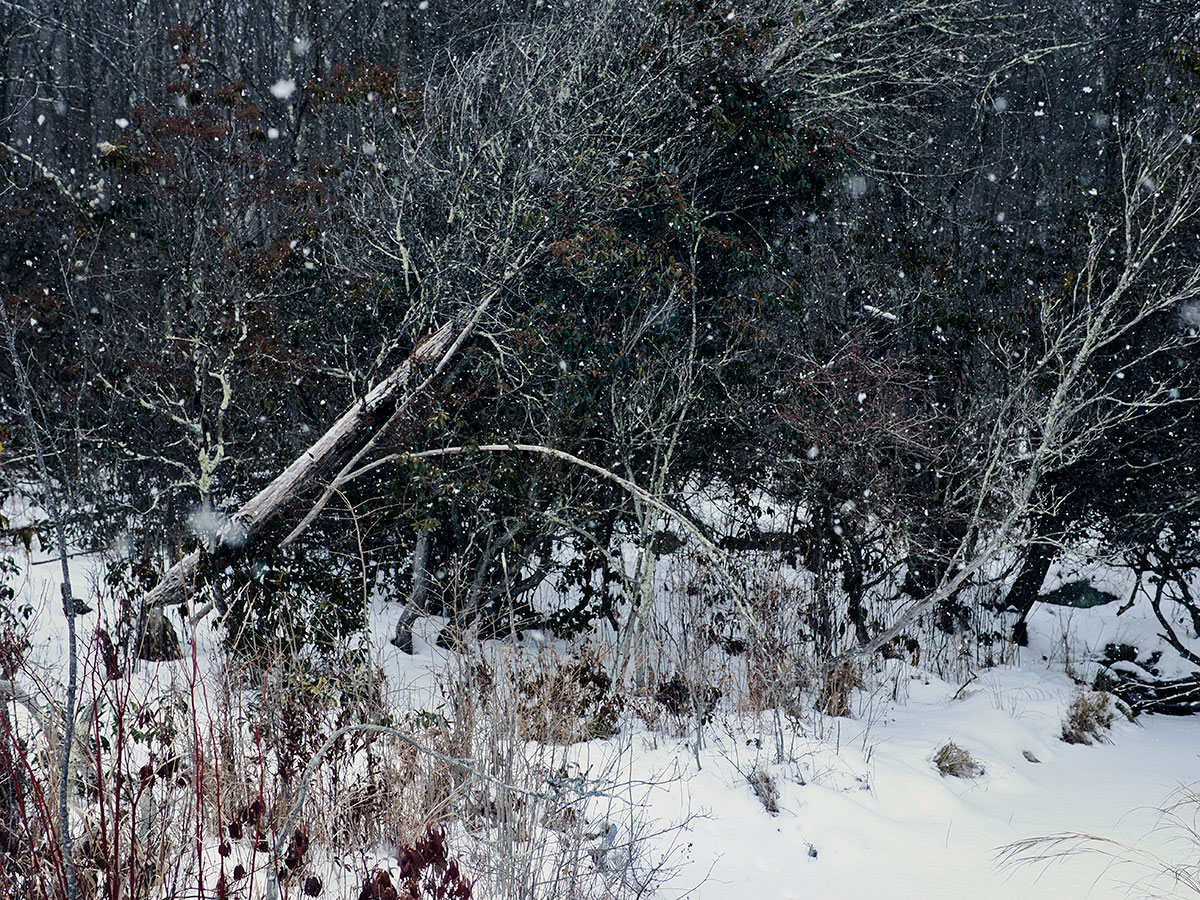
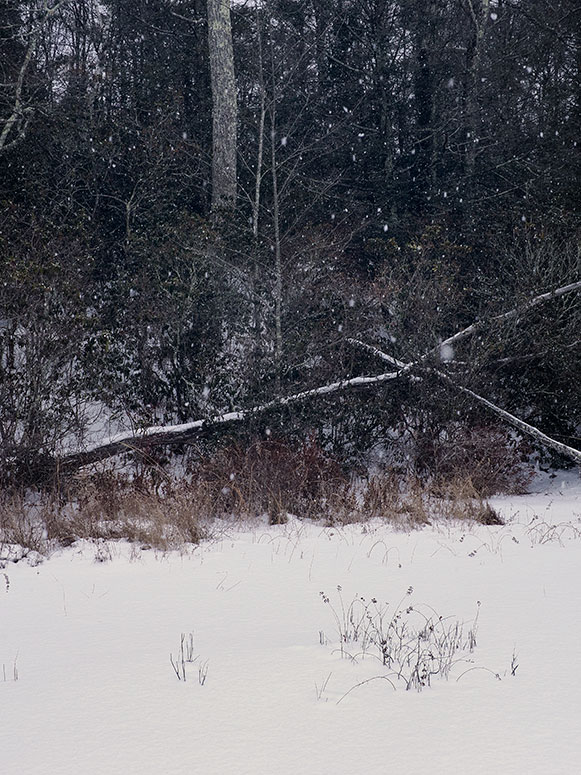
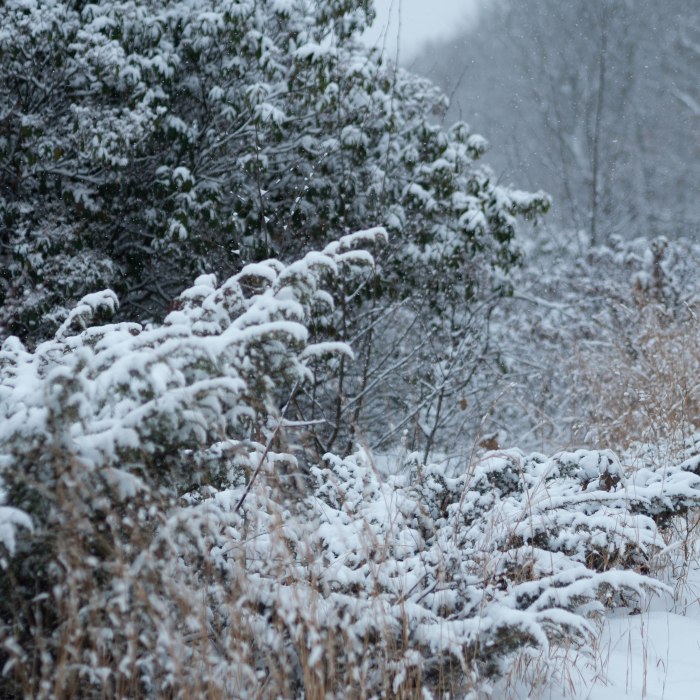
During yesterday’s walk on Phillips Pond it began to snow. I took a series of pictures with faster shutter speeds and and another group with shallow depth of field. One method freezes the flakes’ movement and the other blurs the flakes closest to the lens, such as is the case with this image. What I wanted to see is how enriched the real images of falling snow are when you compare them to the various apps and plug-ins that try to recreate it.
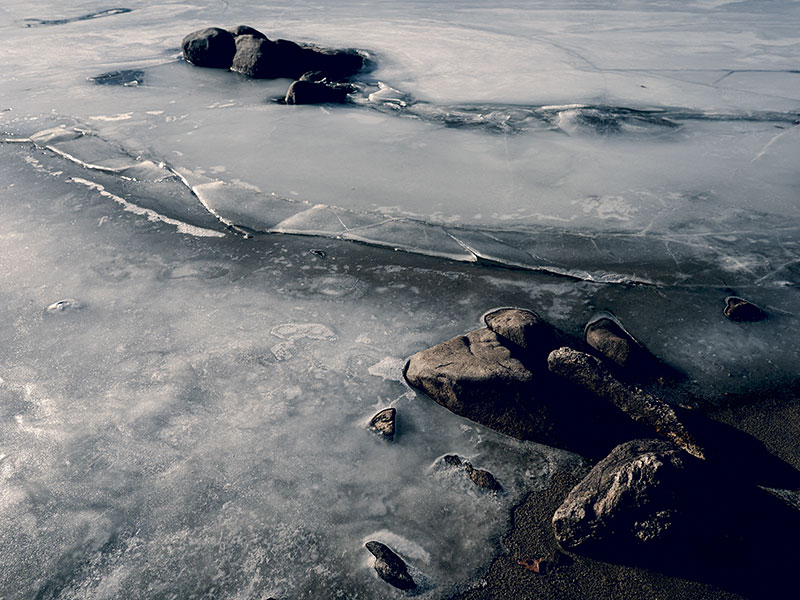
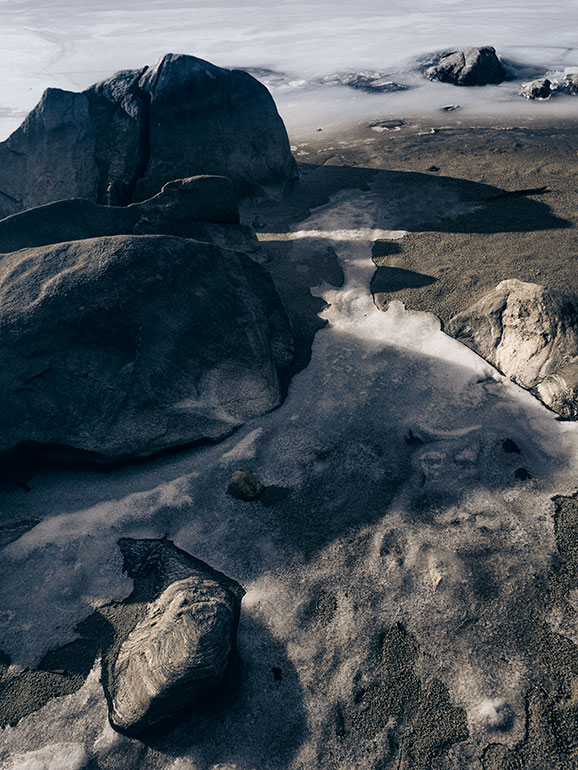
The pictures take in the wetlands across the ice with occasional glimpses into the surrounding woods; all with a veil of snow.
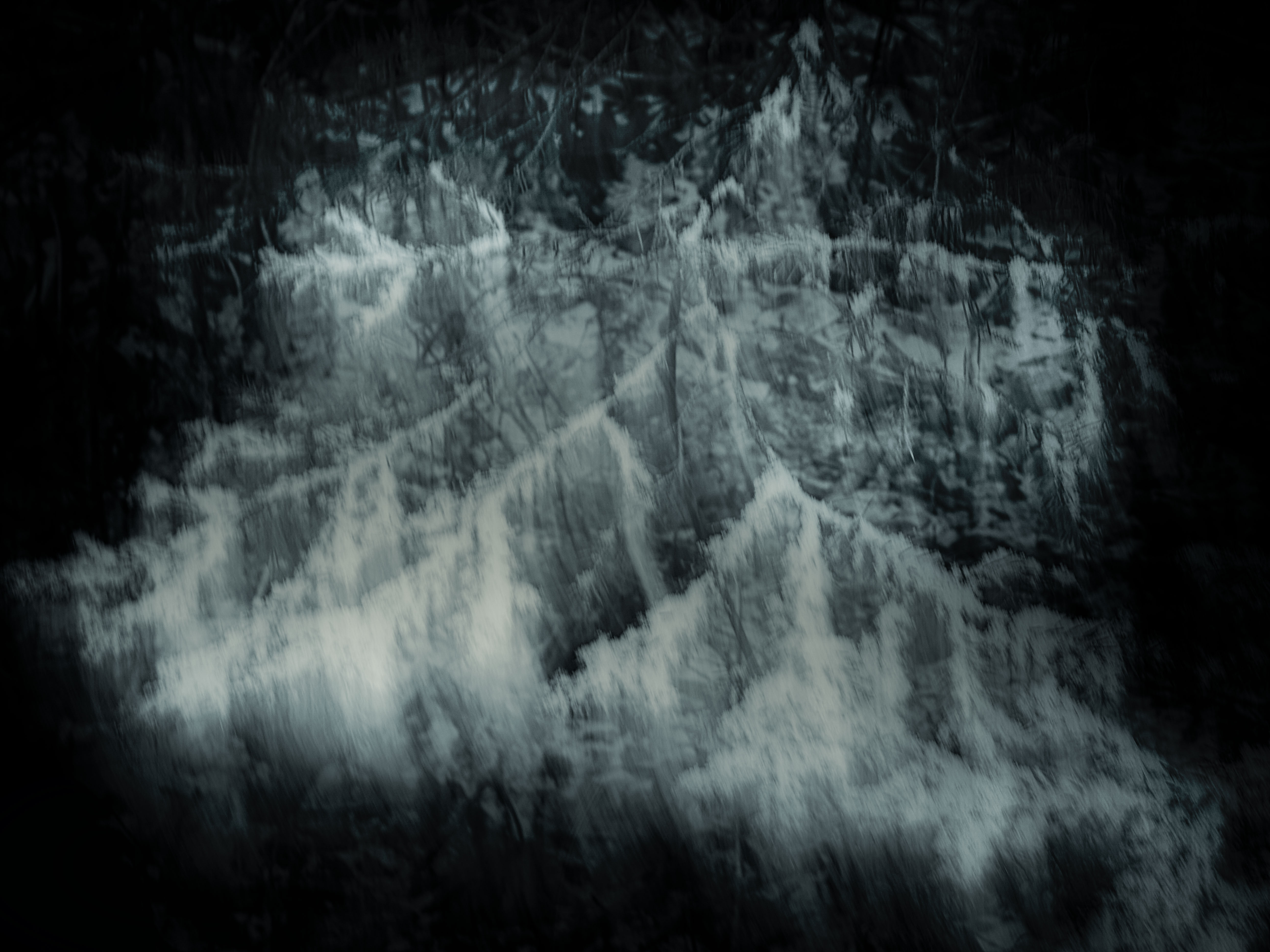
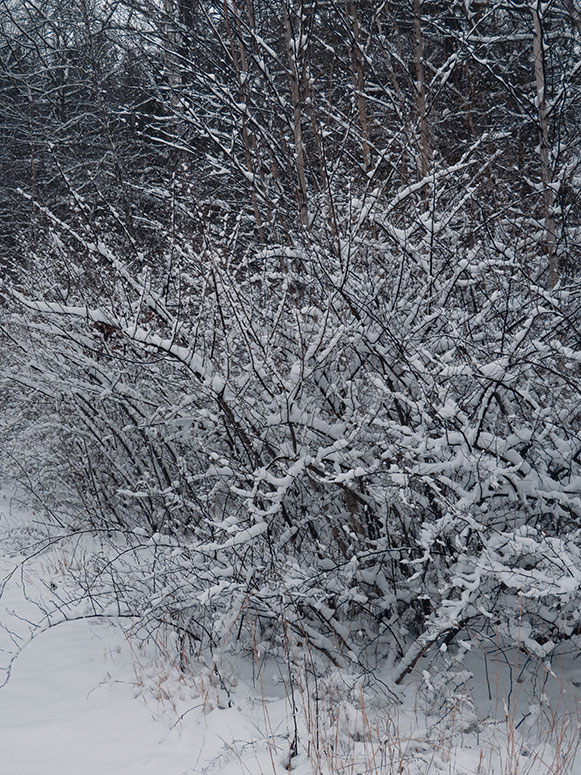
Snow-laden branches on a young tree by the driveway. Low light. Split-tone. Vertical camera movement (but not a whole lot).
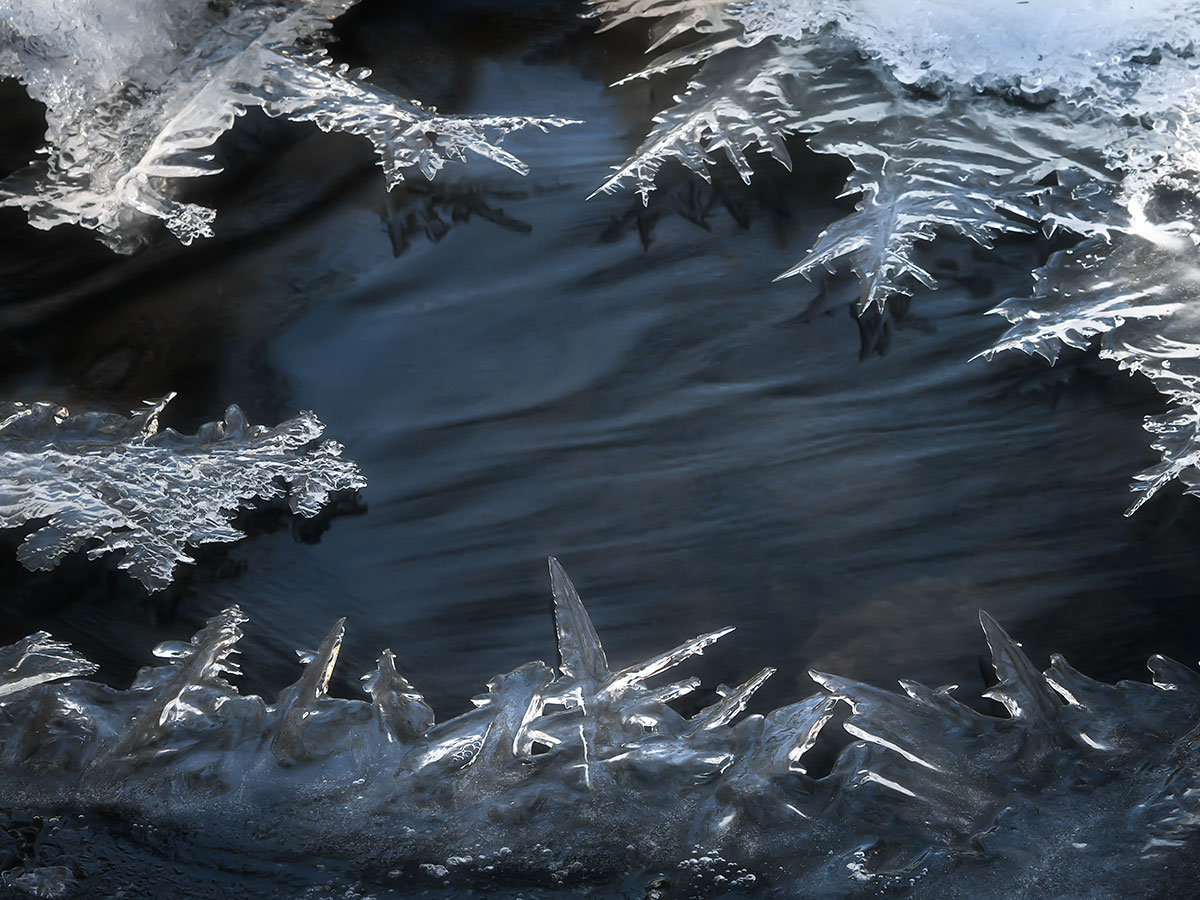
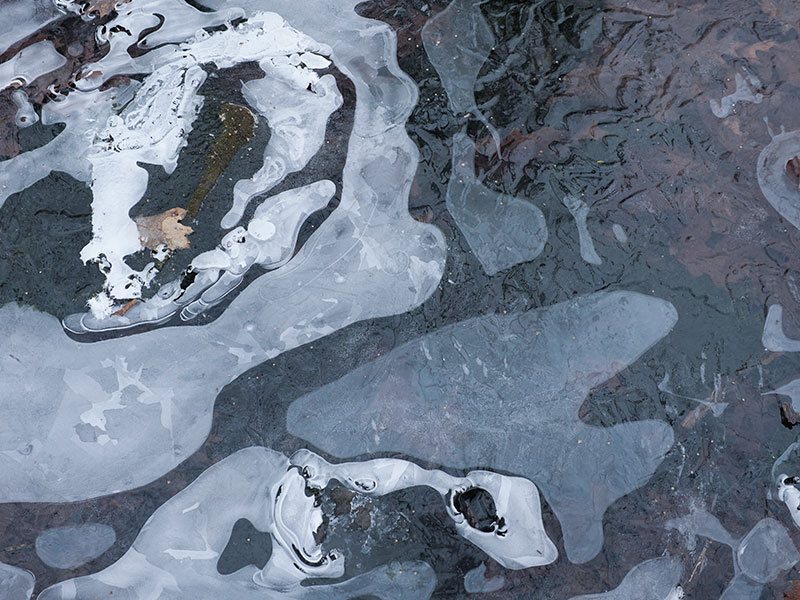
I found these jagged ice forms recently in Leadmine Brook (Roraback Wildlife Management Area in Harwinton). It may sound odd, but they do resemble the migraine auras I’ve been experiencing most of my adult life, albeit with less scintillating effects and color.
The rivers have been presenting a different wintry face with every visit, depending on the temperature and strength of current. There’s another winter storm in the queue for this evening.
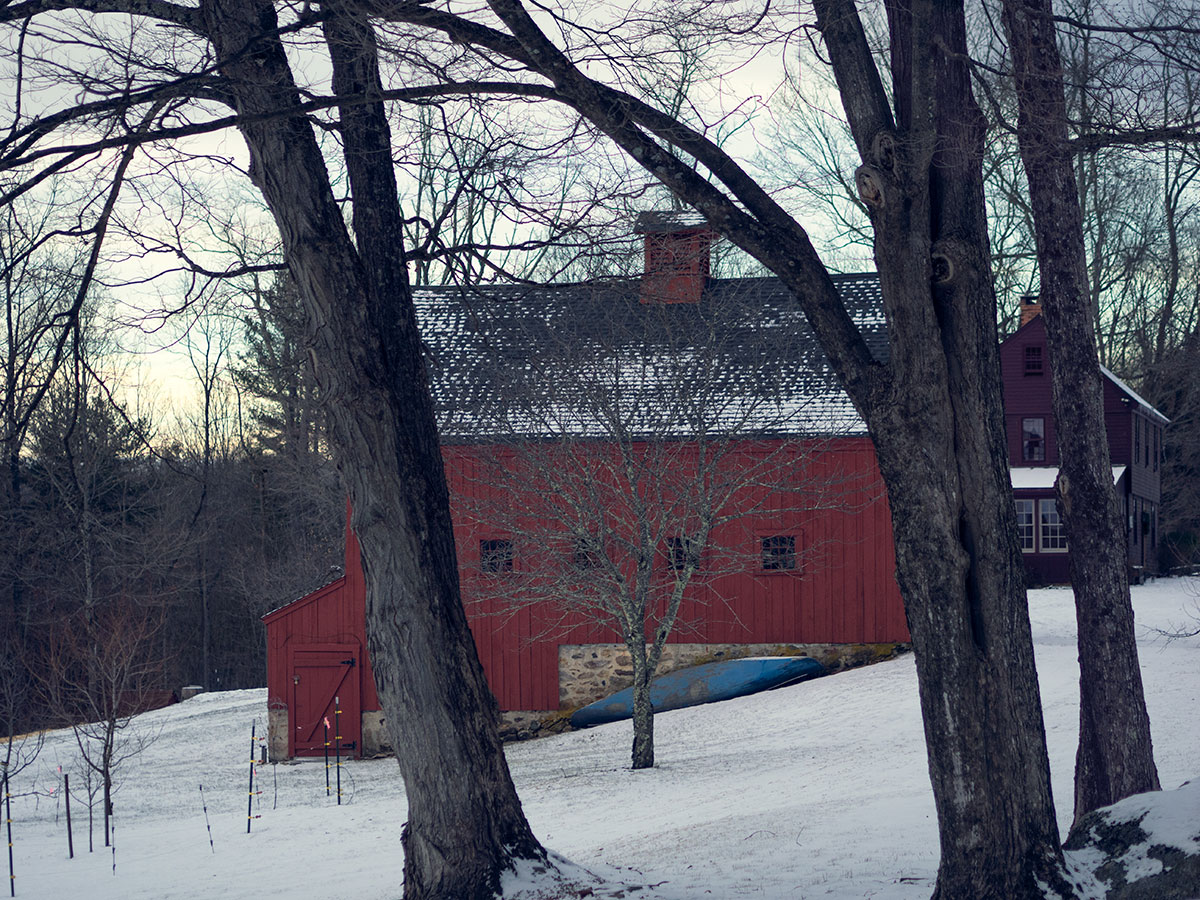
A few days ago we spent some time after dinner looking at Andrew Wyeth’s winter paintings from Maine. Sadly, this wasn’t a museum visit or even a coffee table book; just a half hour online. I was struck by how he conveyed a feeling for winter color using much of the same antiqued palette that he’s known for. I also realized how well he conjured up the flavor of New England loneliness; quite different from that found in Edward Hopper’s work.
My picture was taken after a recent hike in the Roraback Wildlife Management Area. Despite cold fingers, I snapped a few pictures before starting up the car. This is not how Wyeth would’ve painted it, but I liked the lacey light of a winter sunset, and the lines of trees and blue canoe. Harsh shadows would’ve turned this picture into something else but they were retired for the evening.
You can check out some of Wyeth’s work from Maine here. Happy holiday week, ya’ll.
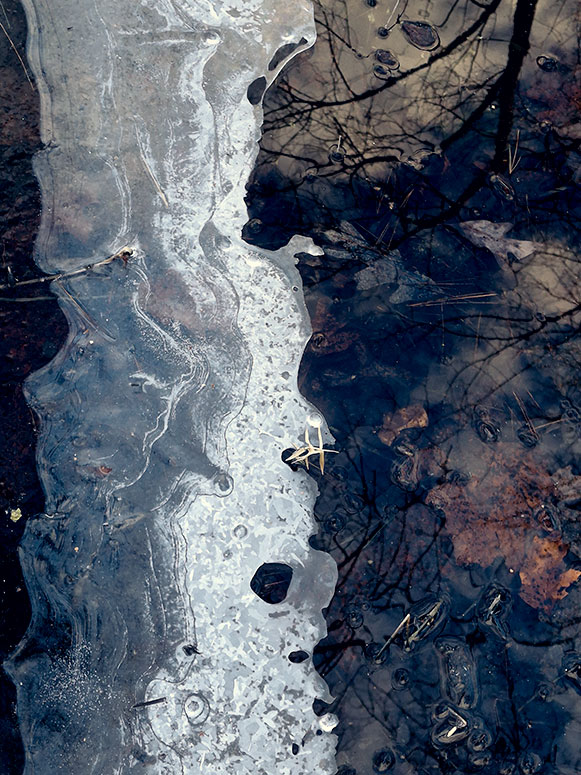
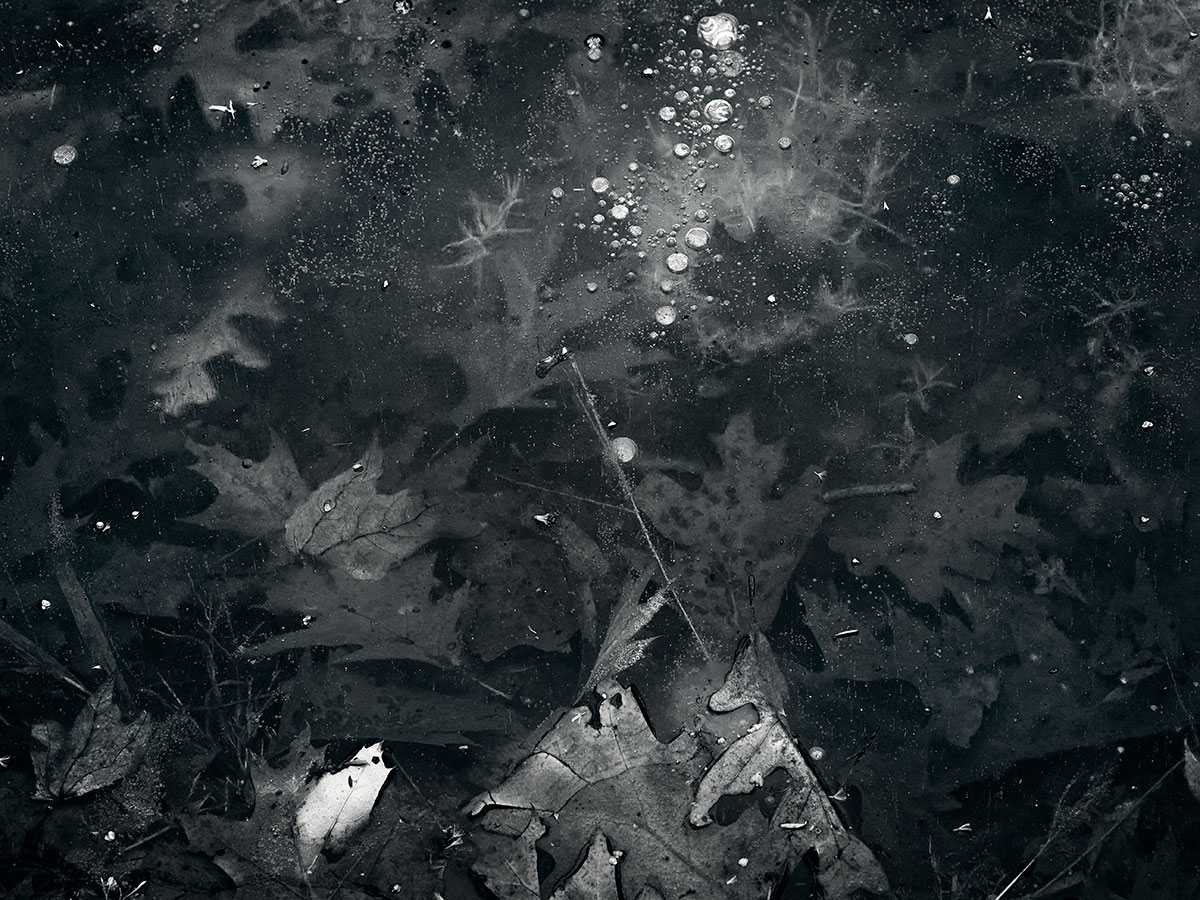
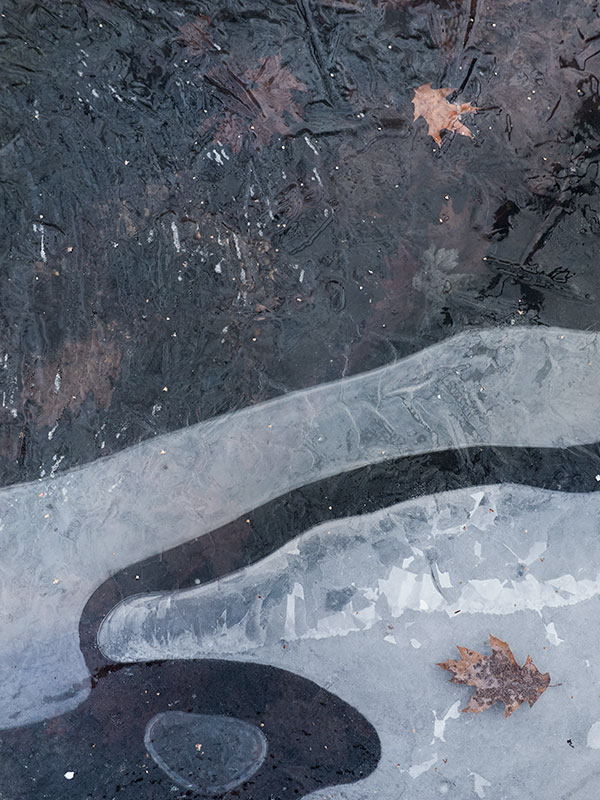
When I unpacked the second picture in the series, it looked complicated enough to come with operating instructions. You’re looking at a close-up view of ice at the edge of a pond; the last rays of sunlight skirting across the surface. Those are reflecting branches in the upper right and leaves encased in ice below. That adds up to three subject planes, if I’m counting correctly.
This picture, as well as the previous one, were taken during a frigid walk to the pond adjacent to Indian Council Caves in northwest CT. As usual, my camera was in the saddle bag, but alas: I’d forgotten my memory card. So, you’re looking at a relatively rare capture from my cell phone.
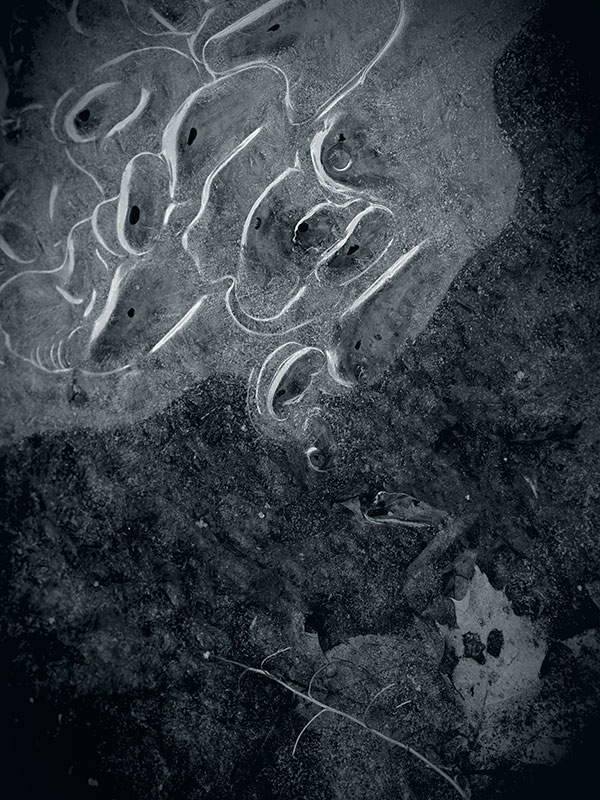
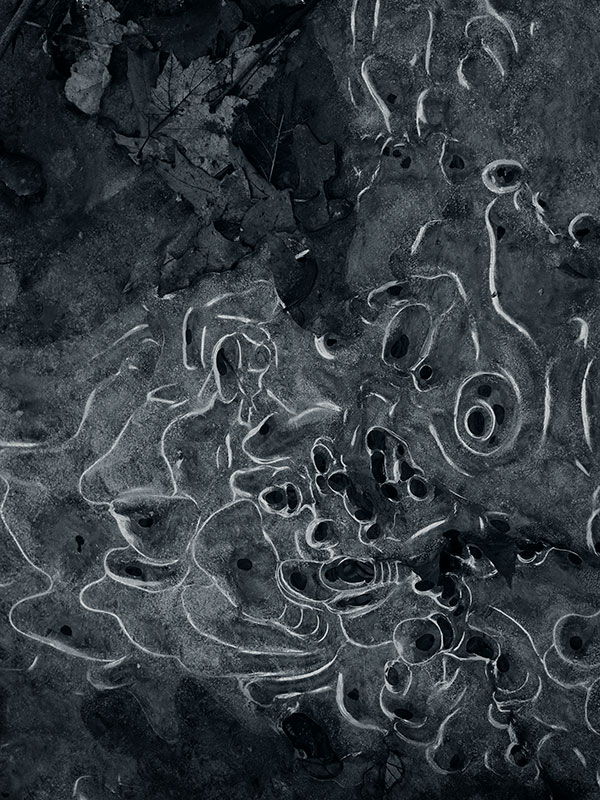
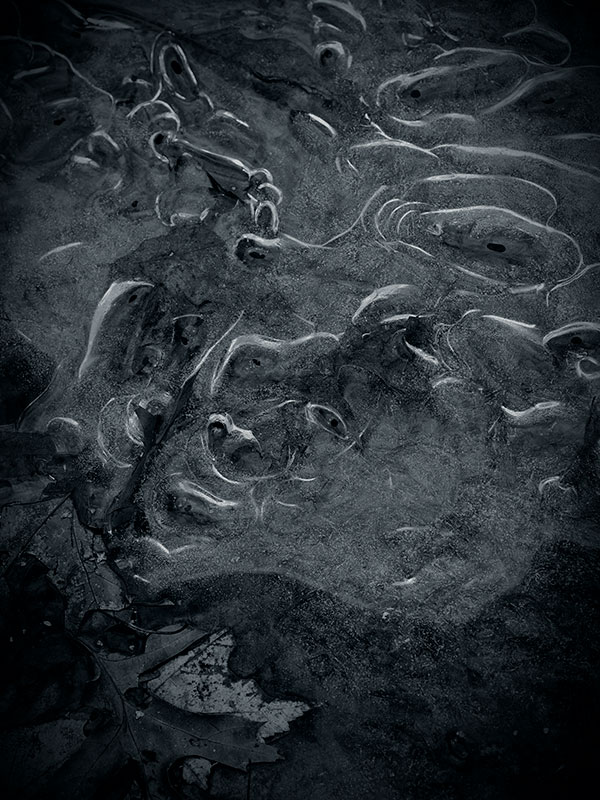


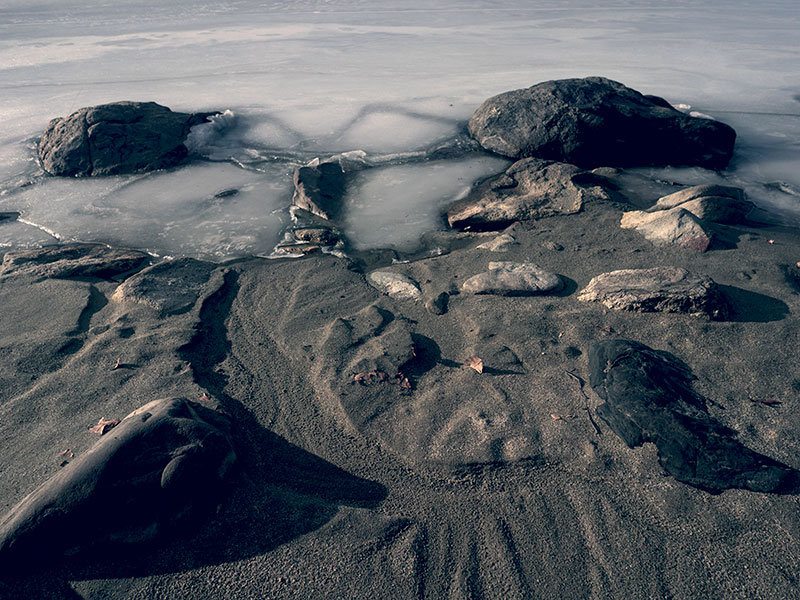
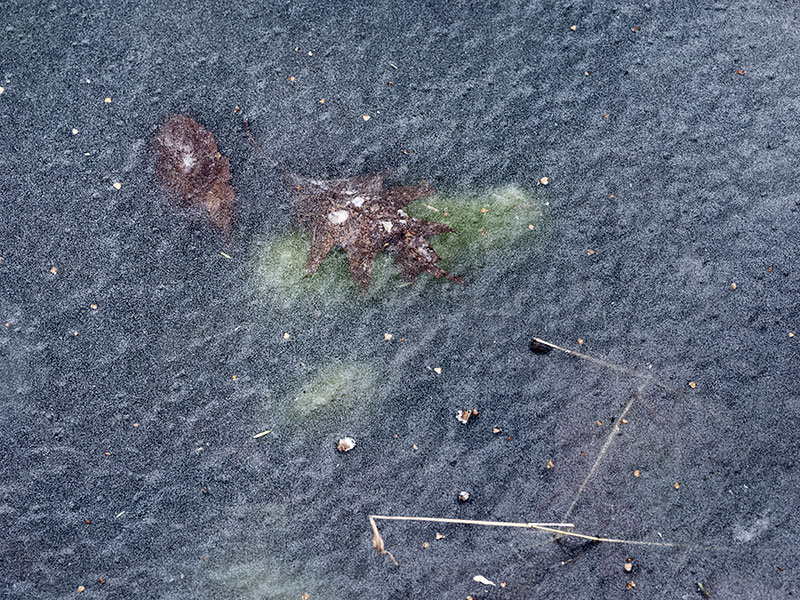
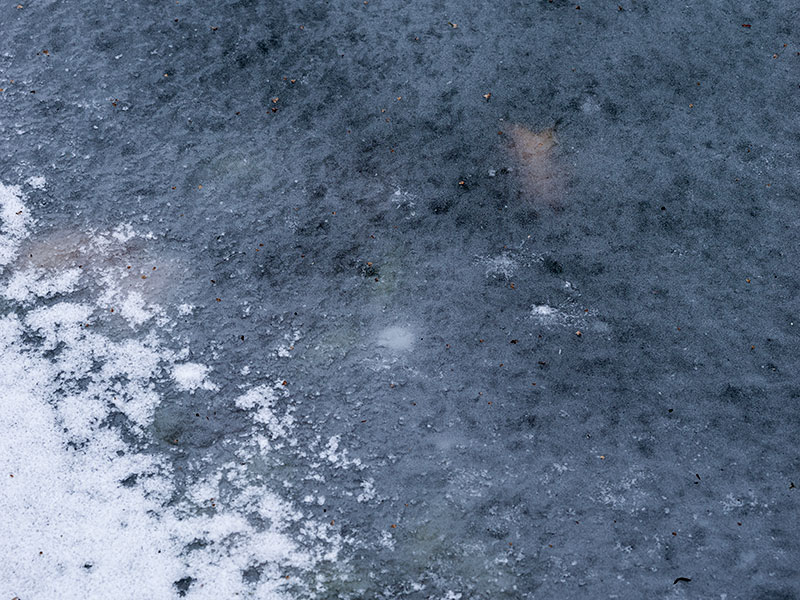
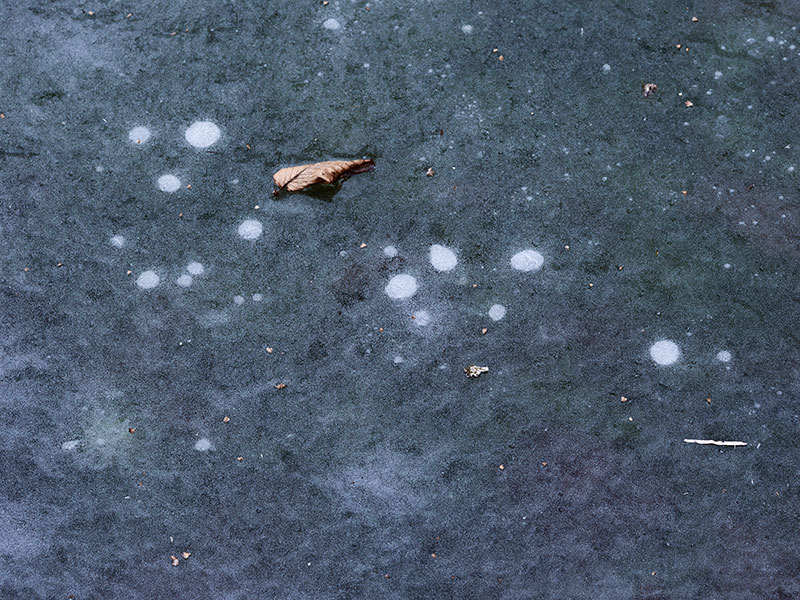
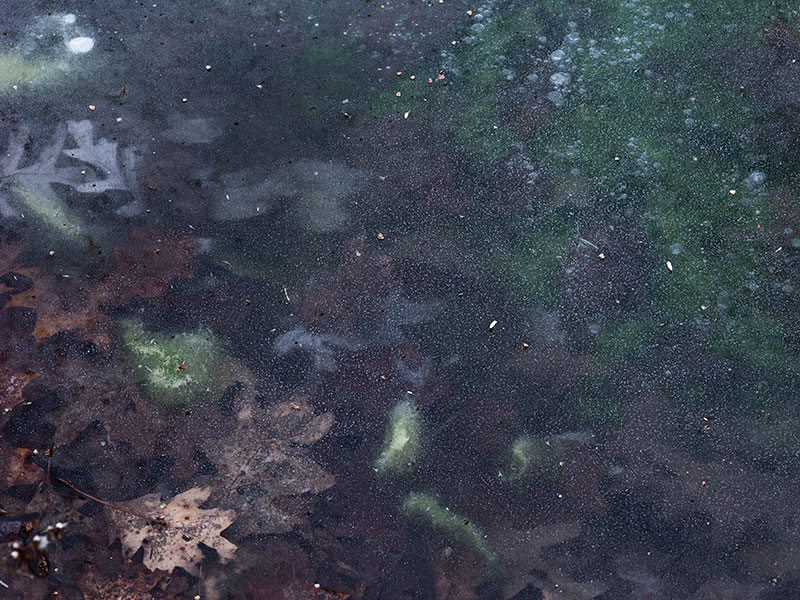
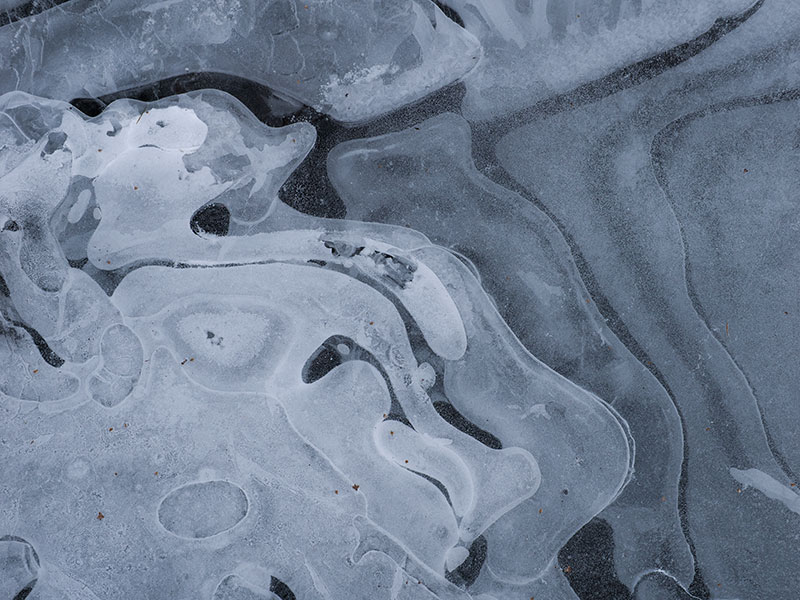
The group of cool-toned ice pictures were photographed at the intermittent stream adjacent to our home. These are black and white photographs, but since I applied a faint split-tone to each, “monochrome” wouldn’t be the right word to describe them.
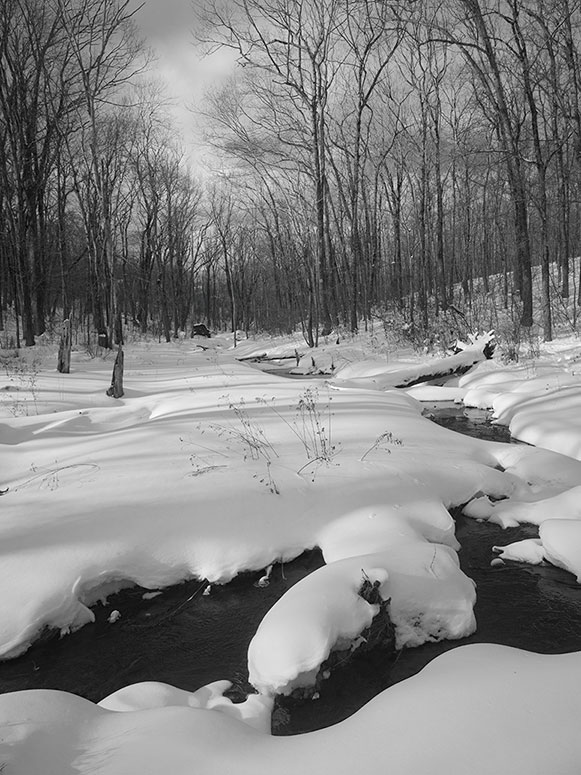
Despite temperatures well below freezing, the creek has remained in a state of partial freeze, and in various spots it can be seen pulsing below the ice. Most lakes and ponds, on the other hand, are solid enough to walk on.

























 JOHN TODARO