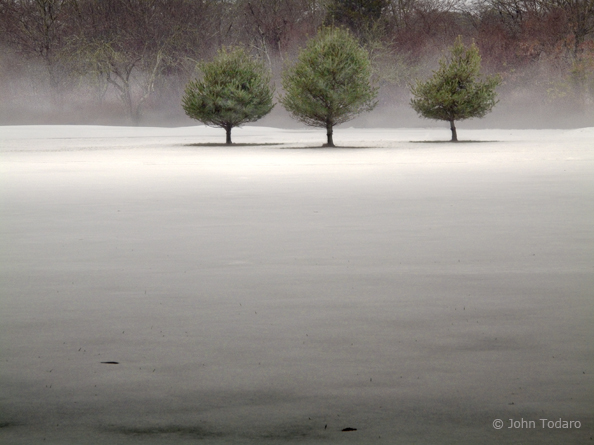
View From the Haerter Bridge: Panasonic Wide Converter (DMW-GWC1)

Here’s a photograph captured with my new Panasonic Wide Converter…a Micro 4/3 camera accessory which is also known as the DMW-GWC1. If you ask me, better names must certainly exist.

As I’ve explained in other posts, the converter attaches to the Panasonic 14mm f/2.5 and presto—you have an 11mm lens. This is equipment for those who occupy a very specific niche: The Micro 4/3 completist, or at least anyone in possession of the 14mm Panasonic lens who’s curious about a wider field of view (and doesn’t want to fork up the $600-plus for the comparable Olympus lens).

The picture was captured as a RAW file (handheld, and using a Panasonic GF2). The RAW was converted to JPEG in order to publish it here at my site. No color adjustments were made, and the file hasn’t been sharpened. A slight reduction in contrast was employed in order to make the image more internet-friendly. (Keep in mind–you really should be checking out at these photographs on a MAC monitor anyway if you want them to be spot-on, a point which is especially relevant when it comes to highlight detail.)

If you’re wondering, the gradation from the upper left to the upper right in this photograph is entirely natural (the sun was shining a few degrees starboard). Happily the files from converter photos show only a slight (but acceptable) amount of vignetting. If you’re horrified by any vignetting, the post-processing fix will cost you all of four seconds. Barrel distortion is present, but can be likewise dealt with in Photoshop. If you’re not shooting architectural subjects it may not matter anyway. Overall, the optics of the converter seem  comparable to the 14mm lens it attaches to.

The location of the picture:  Sag Harbor, USA…on the eastern end of fish-shaped Long Island where our wild roses are now blooming.

Several more of my converter photographs along with additional comments may be found at the following links:

https://johntodaro.wordpress.com/2012/05/18/swan-at-havens-beach-panasonic-wide-converter-dmw-gwc1/

https://johntodaro.wordpress.com/2012/06/04/sag-harbor-photography-wall-and-flowers-shooting-with-the-dmw-gwc1/

My friend Peter (at .documenting.the.obvious) has  published a more thorough review of the DMW GWC1, (especially as regards vignetting, barrel distortion and corner sharpness). Visit his post at the link below but please take some time to enjoy his many unusual photographs:

http://dothob.wordpress.com/2012/06/23/into-the-great-wide-open/
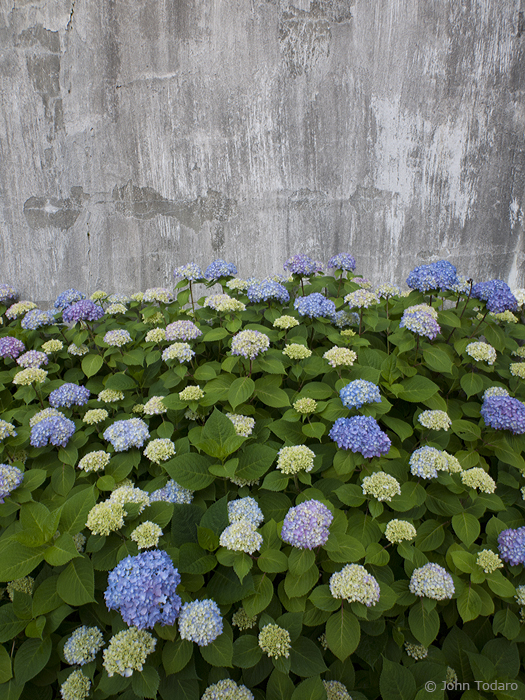
Sag Harbor Photography: Wall and Flowers – Shooting with the DMW-GWC1

I’ve been working with my Panasonic wide converter, a recently introduced accessory which is also known as the DMW-GWC1. If you ask me, there are gasoline additives with sexier names–but don’t let that scare you off.

As I noted several posts back, the DMW-GWC1 is screwed onto the front of Panasonic’s popular 14mm Micro 4/3 lens. Once attached, the lens is persuaded to yield a wider field of view (about the same as a 22mm lens on a 35mm camera). If you’re accustomed to using a 28mm, the converter is decidedly more expansive.

The first thing you notice is the increased depth of field, something which opens up many new creative possibilities. This is especially true when used on cameras like the Panasonic G3 with it’s full range of manual controls and live viewfinder. The second thing you notice is that whatever is close to your lens has an appearance of being much further away.

Over the last few days, I’ve been using the converter on subjects that are well below the horizon–a technique which is admittedly counterintuitive. A lens this wide has an enormous appetite for skies, but summer is on the way and  there’ll be plenty of time to go looking for clouds.

The Hydrangeas were discovered while walking up to the coffee shop a few mornings ago in Sag Harbor Village. The image was captured quickly without the need of a tripod.  I was in full shade. Everything’s in focus in the picture because there’s more depth of field than you can shake a stick at. Moments later I was sipping coffee and making sure my lens cap was affixed to my converter. The bulbous glass accepts no filters, so you have to be careful.

The image is essentially a copy of the RAW file with no further color or contrast correction.  To me, that’s a good sign.

As you can see, the converter performs well in low light, yielding images that are both bright and fully accurate in terms of color. I haven’t yet pushed this thing into more challenging light and contrast, but I can tell you that within the gentle gamut of shade, it’s fine.

Nice work, Panasonic.

My other two posts for the DMW-GWC1 may be found here:

https://johntodaro.wordpress.com/2012/05/18/swan-at-havens-beach-panasonic-wide-converter-dmw-gwc1/

https://johntodaro.wordpress.com/2012/06/06/view-from-the-haerter-bridge-panasonic-wide-converter-dmw-gwc1/

For those into the particulars, the image was handheld @ 200 ISO, f9.o @ 1/100. I was using the Panasonic G3.

View From Long Wharf, Sag Harbor

This image was found on the east side of Long Wharf recently, on a calm morning with unsettled skies. One hundred and seventy years ago (around the same time Fox Talbot was perfecting the photographic process) this very same wharf was the locale of Sag Harbor’s formidable whaling fleet.  Sag Harbor had notoriety in those days, both for its industry and for its multifarious collection of sailors. There are several references to the village in Moby Dick.

These days, the only thing being processed out on the wharf is restaurant orders and the data for an occasional photograph. From the northern end there’s about 300 degrees of water to take in, along with North Haven and Barcelona Neck (in East Hampton) which are visible beyond. Straight out past the breakwater is a prominent beacon.  There’s some rocks near there where the seals like to sun, and beyond that are several thousand acres of Mashomack Preserve.

For those in tune with the tides, Long Wharf still can still whet the taste for adventure.

Winter Trees – Barcelona Neck

Barcelona Neck is a peninsula in Northwest Harbor that is home to the 500 acre Linda Gronlund Memorial Nature Preserve. Linda was a Sag Harbor native who died in the Pennsylvania plane crash which occurred on 9-11. The park has a network of well-maintained trails that explore field edges, salt marsh, second growth forest and beaches. There are many water views. My picture above was taken there a few years ago around this time of the year.

The peninsula has historic ties with Sag Harbor, although the park itself is within the Town Of East Hampton. It’s been said that homesick Spanish sailors thought the bluffs at the north end of the peninsula resembled those in Barcelona. On a clear day from on top you can see the distant archipelago formed by Plum Island, Great Gull, Little Gull and Fishers Island.

I gravitate to the park mostly to photograph fields, or more specifically to photograph the “gradient” of habitation as it fades gracefully into the woods. In some respects a lot of my pictures appear to be preoccupied with this, although it’s not usually a conscious function and is sometimes not successful.

Winter arrives in a week. If you live far enough north to have an ice rink in your birdbath then you’ll be enjoying a low angle of sun for another month. It can be a reason to plot an escape, perhaps to a warmer place with a sun on a higher perch. But on the other hand (if you stick around),  you can always grab a camera and try to harvest the light.