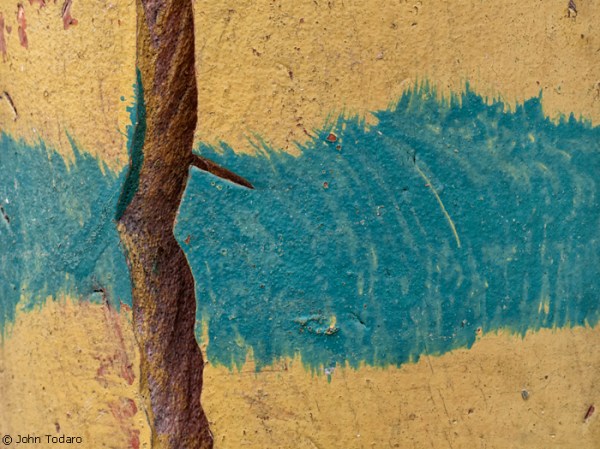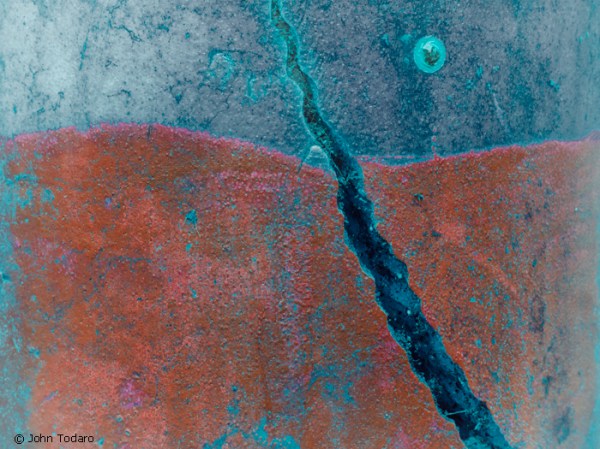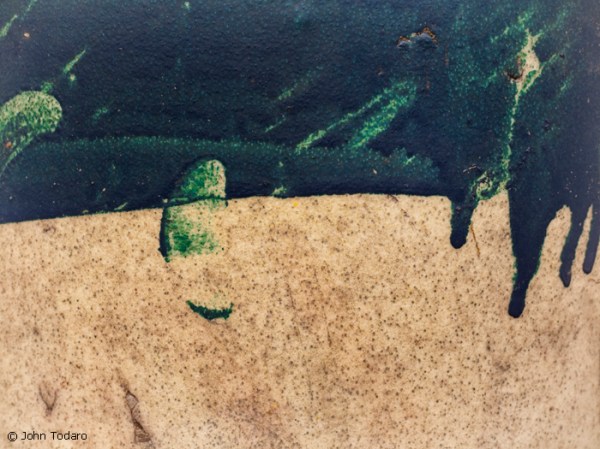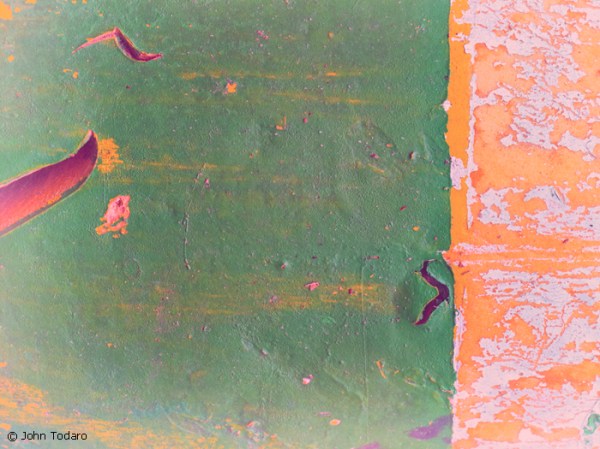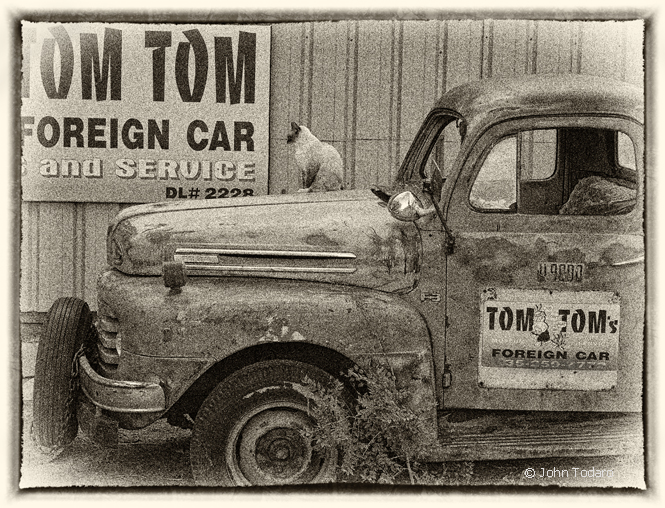
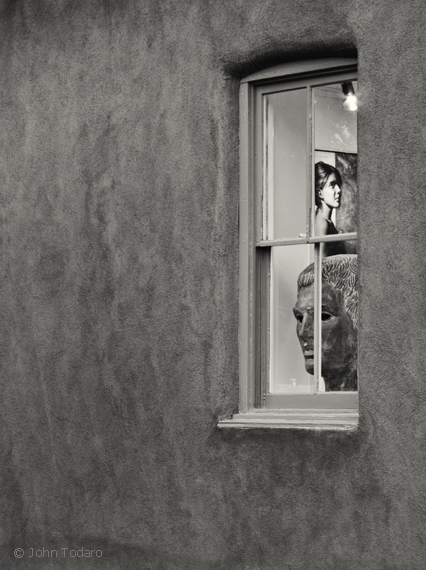
Lover’s Quarrel (monochrome)

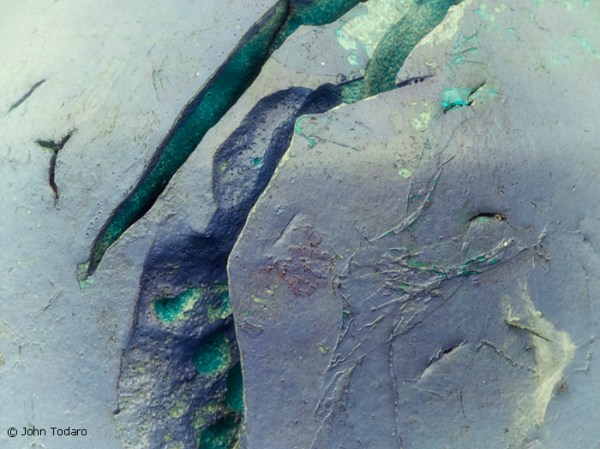
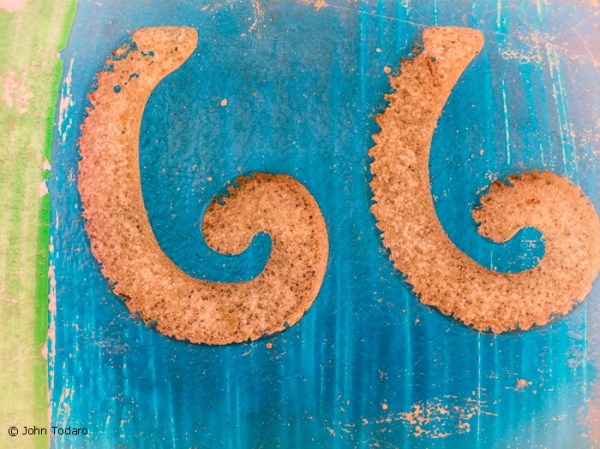
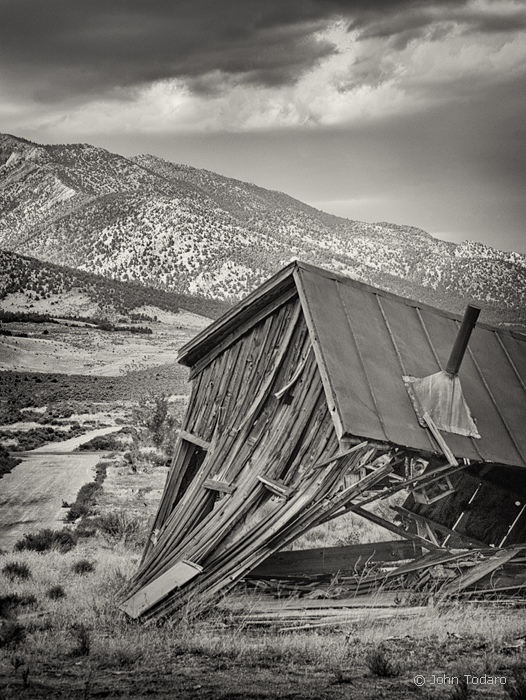
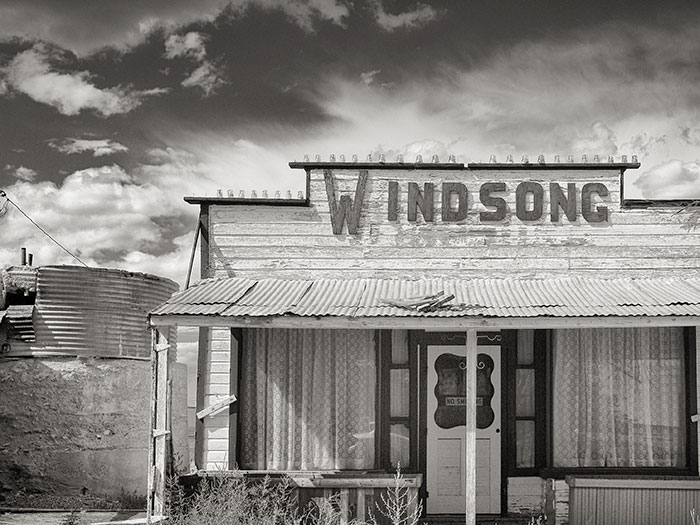
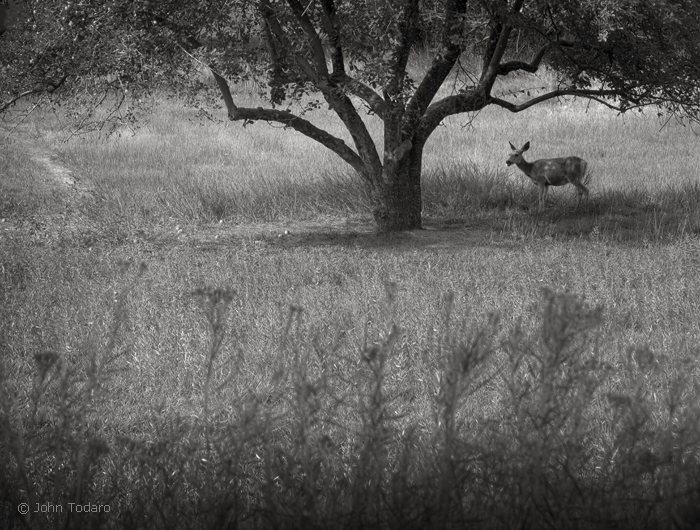
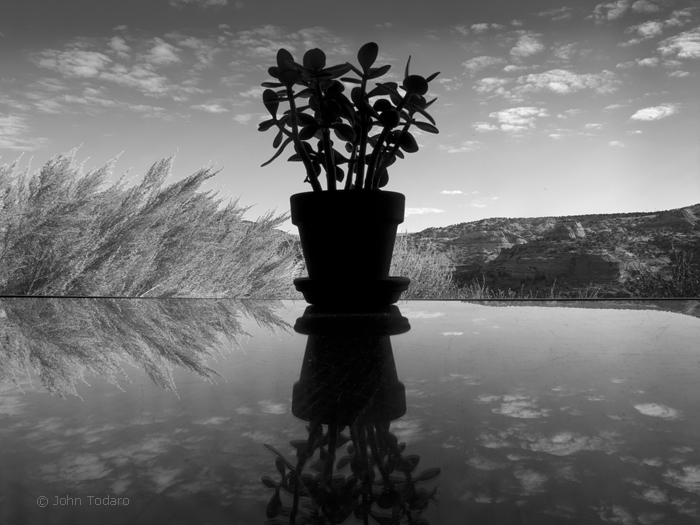
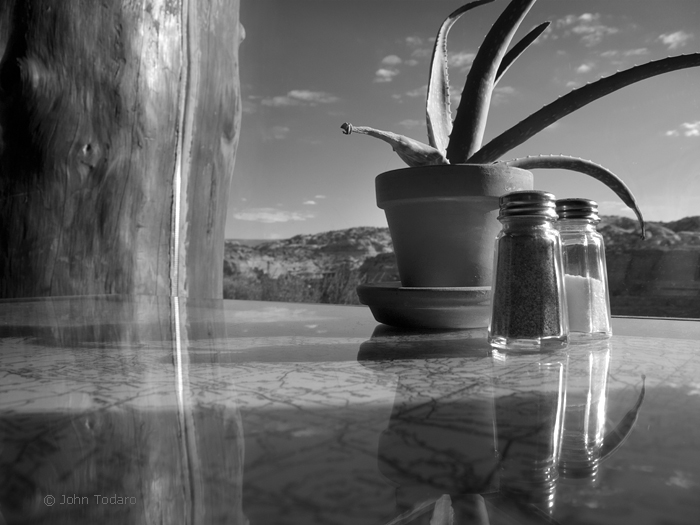
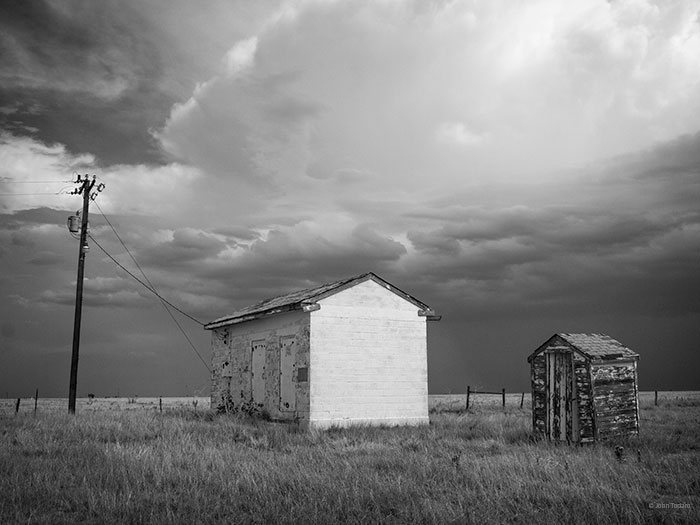
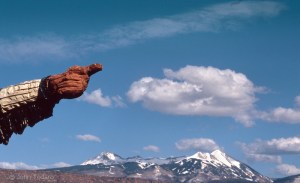
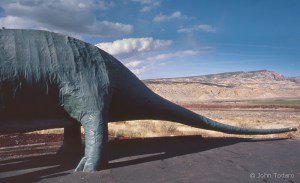
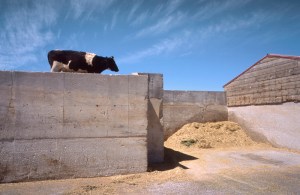
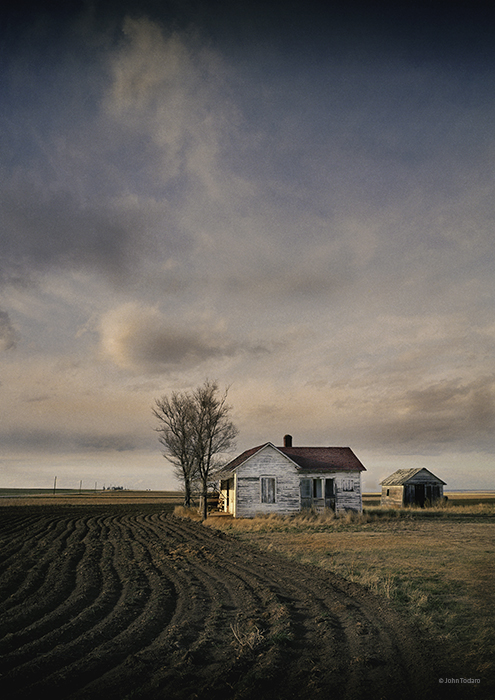
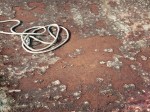
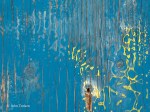
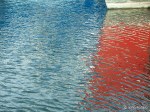
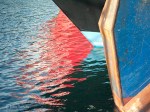
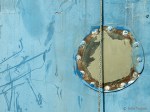
This is a photograph from Santa Fe which I recently began printing in black and white. In the earlier color version (link below), I was hearing too much of a “southwestern accent”…adobe walls…turquoise trim.

Perhaps the point of the picture was getting a little drowned out by color.

Canon G 10/August 2011

https://johntodaro.wordpress.com/2011/09/26/lovers-quarrel/lovers-quarrel-2/

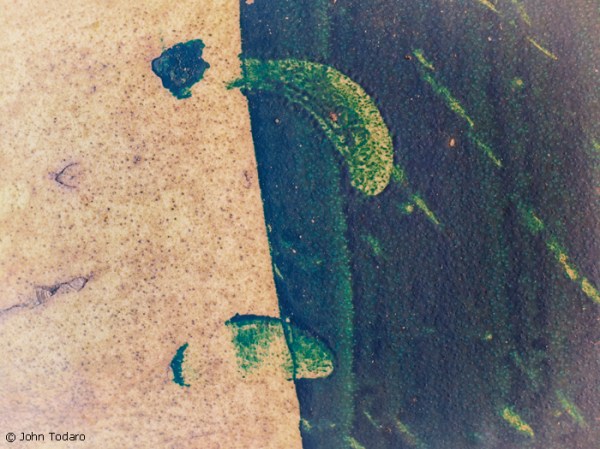
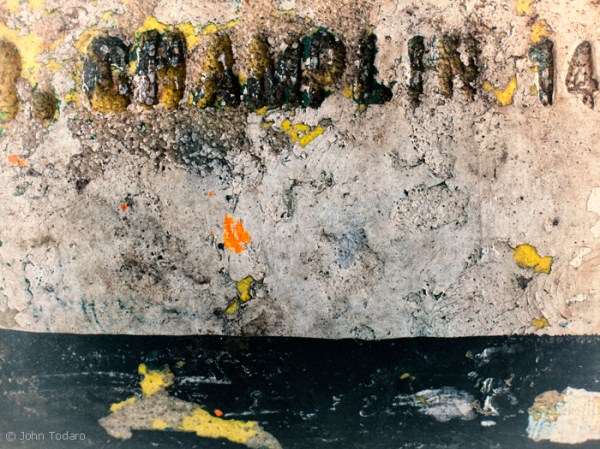
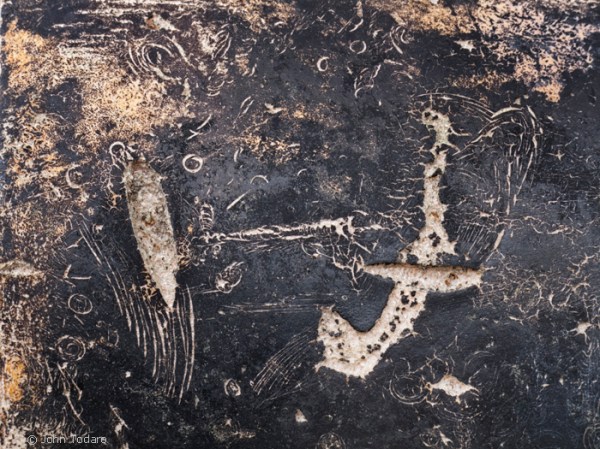
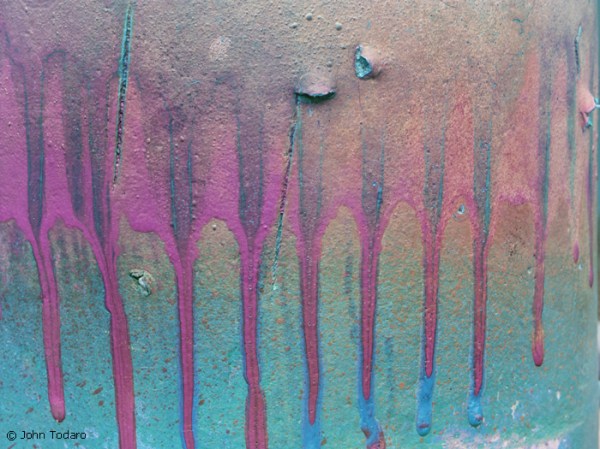
Lost Buoys Dragged From Flotsam

In a post earlier today I talked about how this project came about.  Here’s some details on how the pictures were made:

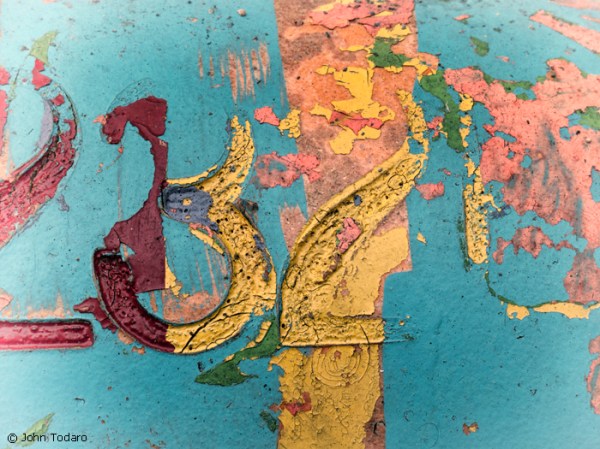
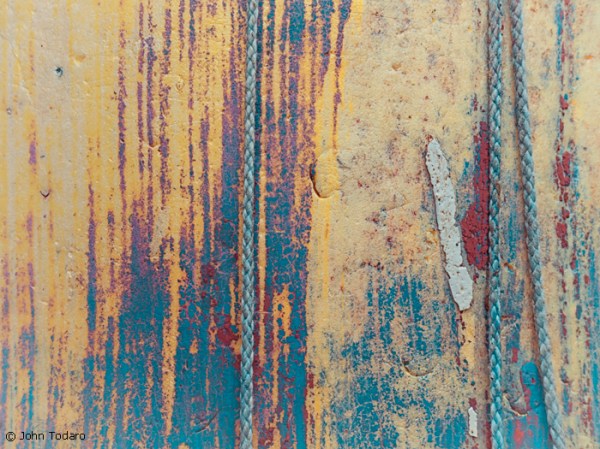
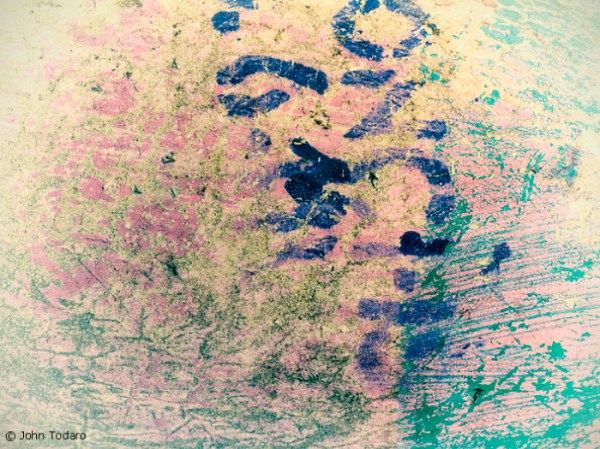
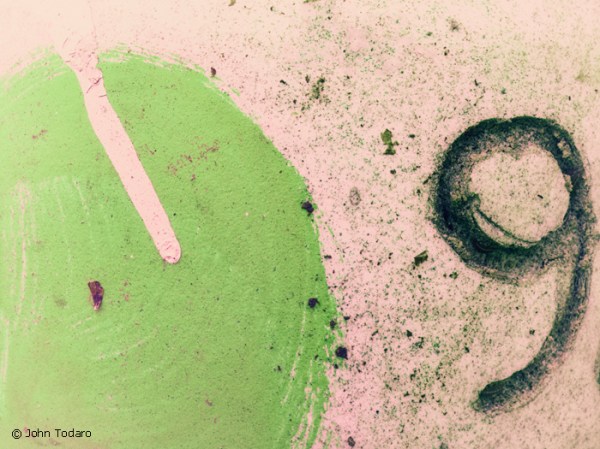
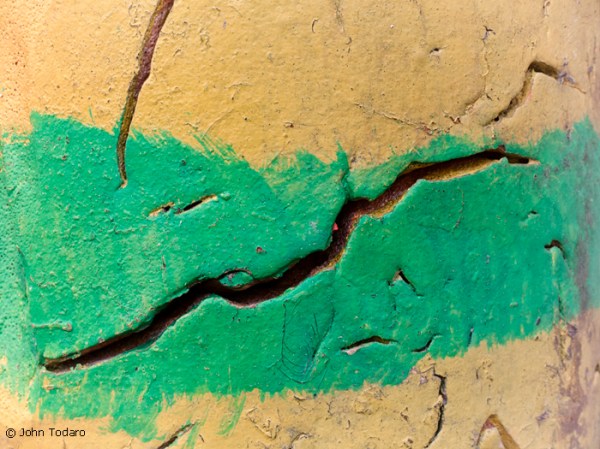
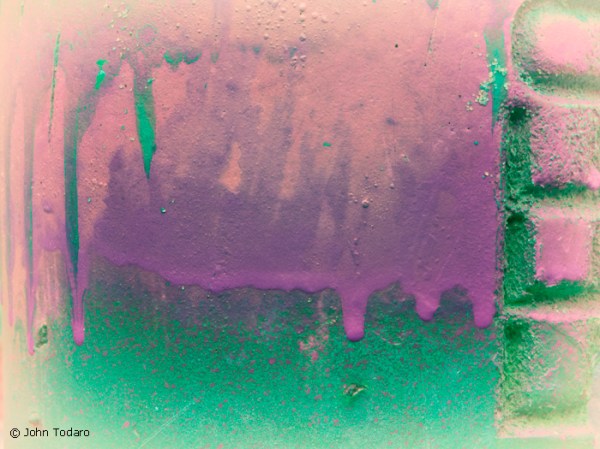
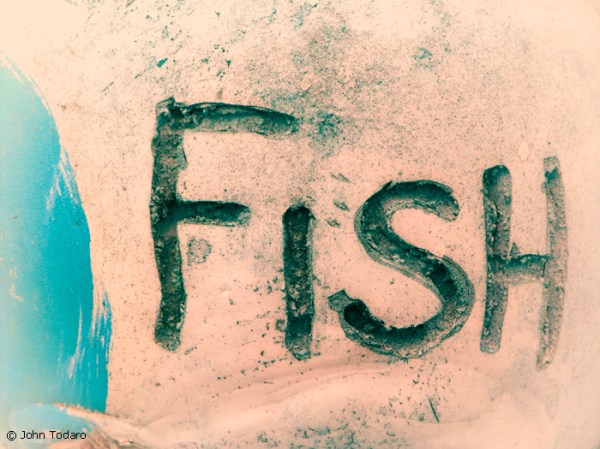
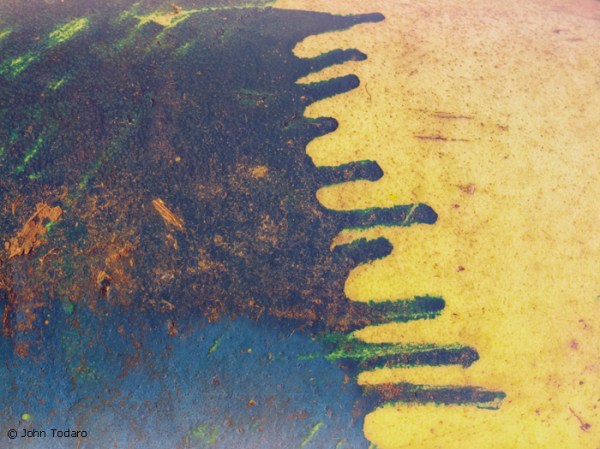
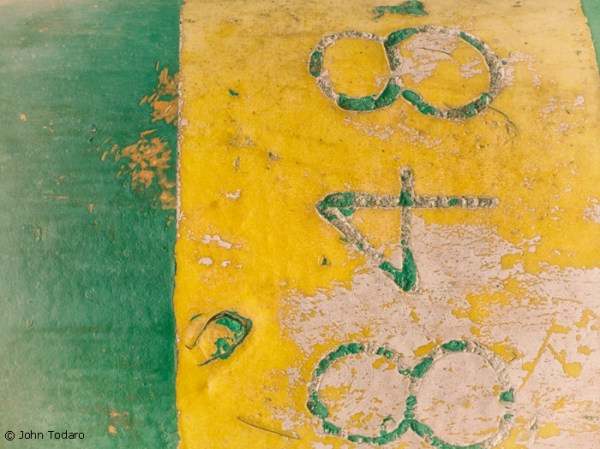
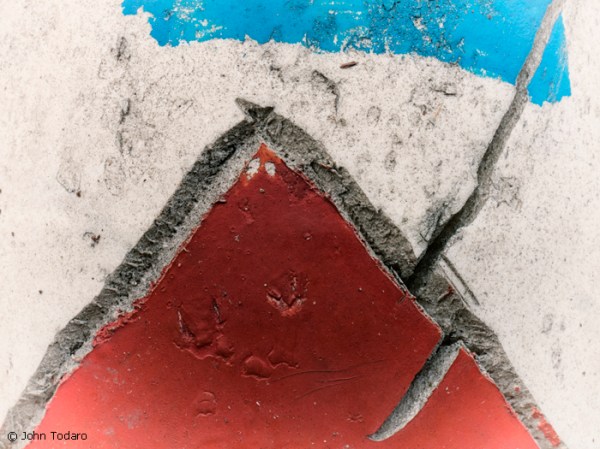
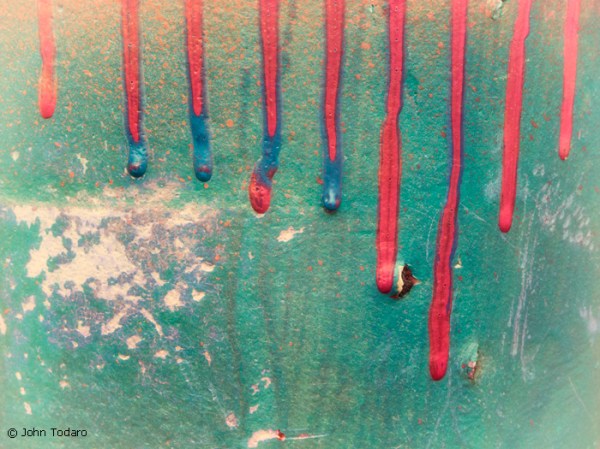
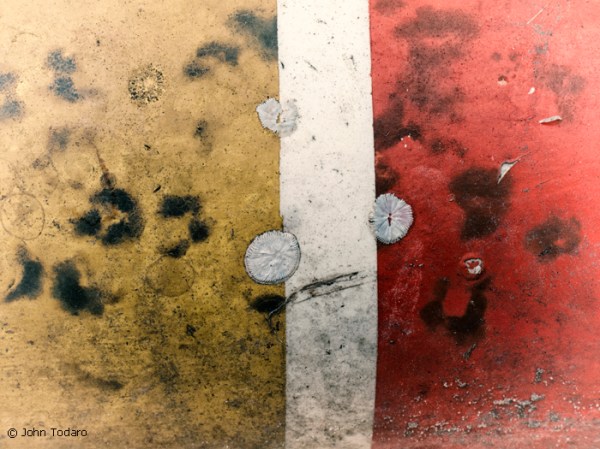
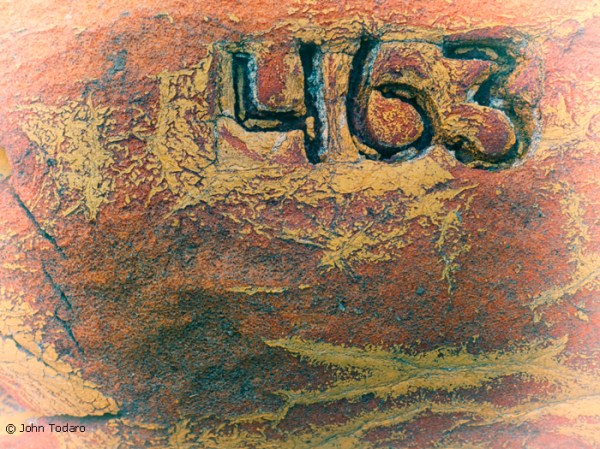
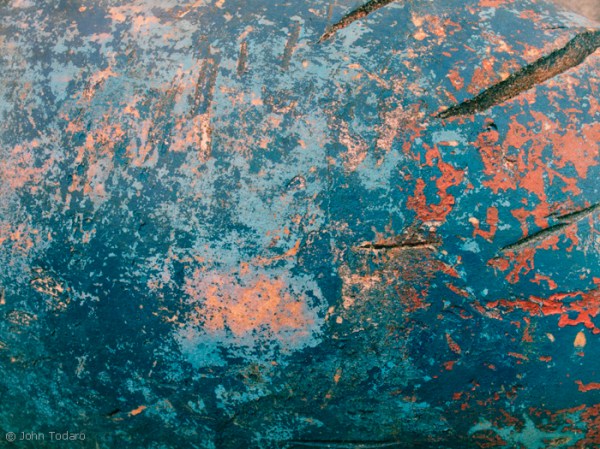
Buoys float, because they’re made of styrofoam. I was hoping that some of that buoyancy would be apparent in these pictures. With that in mind, I looked for whimsical points of view. Later, I tried to do the same with the treatments. Buoys are cone-shaped or cylindrical–about a foot tall. I decide to emphasize the curvature rather than try to fool you into thinking you’re looking at a flat plain. The curvature became most apparent with a little bit of vignetting. Most of these pictures were taken from about a foot away with a Canon G 10.

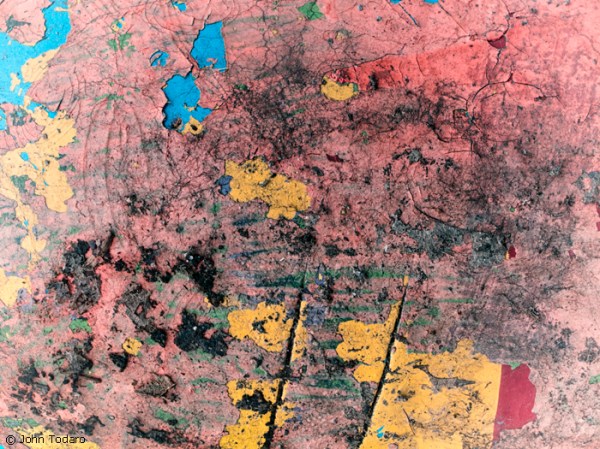
Buoys are marked up by fisherman. They paint them with stripes and carve numbers into them so that they can ID their traps. When buoys break free of their lines, they float around for months–aging, cracking, and acquiring all sorts of grit. I’ve come across some that have been out there for so long that they resemble shrunken heads. Eventually they arrive here in flotsam, with the nicest ones fully ripened. To me, the best specimens have great complexity of colors and textures. This happens after many months of marination out there in the brine.

The pictures work differently depending on whether you view them large or small. My wife tells me that they resemble little tiles. Perhaps they’d make good icons for desktop folders. The enlarged images are more revelatory because of the cues formed by scale and subject. If I decide to print them I’m not sure how I might want to size them, or if it even matters. Click on any picture you want to see bigger, or to leave a comment on a specific piece.

I began by entitling these pictures with odd or fanciful names. That wasn’t working so I changed them to Roman Numerals. After thinking about it for awhile I settled on the Latin characters for numbers. I don’t speak the language, but they say there’s romance in it.

Sound Clouds

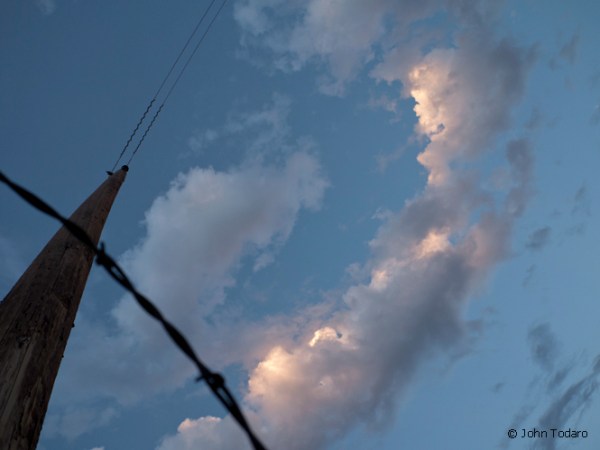
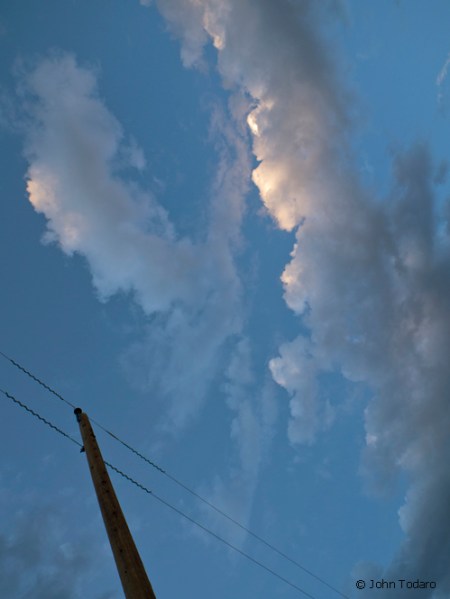
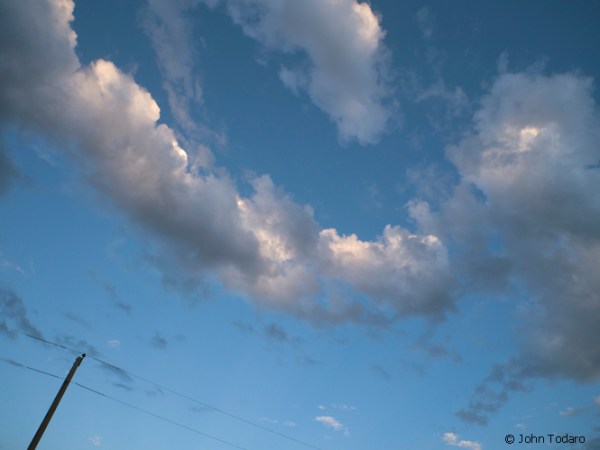
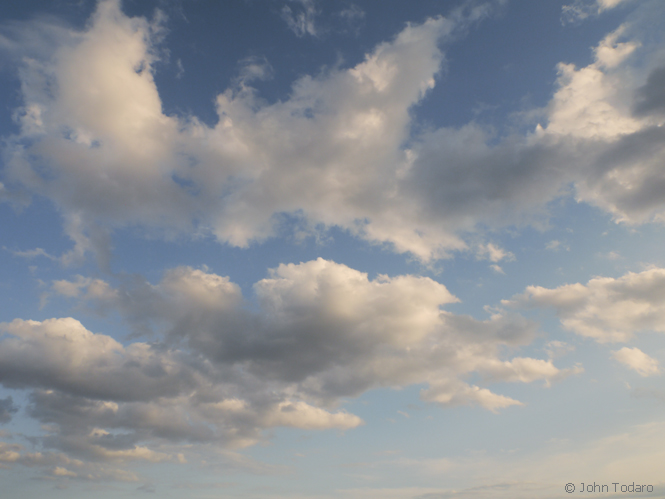
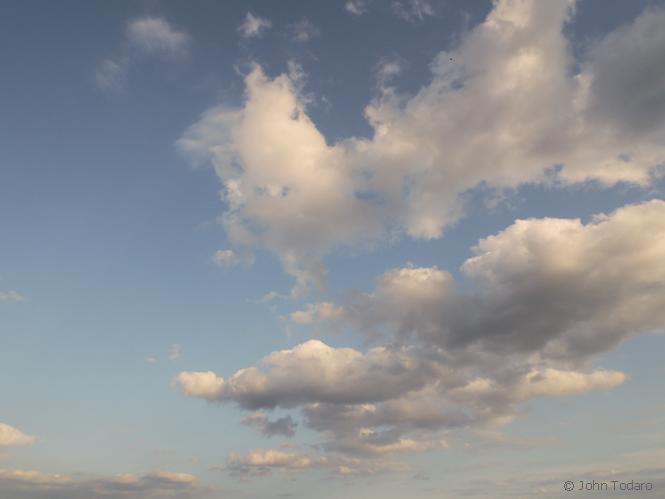
I’ve been intending to load up some cloud images. These were shot over Long Island Sound late one afternoon while traveling on the ferry from New London.

For a change of pace, I’ll talk a little bit about the workflow.

A bit of post-processing was involved here, but in this instance, it involved some “dial restraint” There are lots of sexy things you can do to a picture in Photoshop, but I decided to avoid most of those today, and in fact, went the other direction.

I wanted a baby blue sky with pastel shades that look like they could float out of the picture. In order to do that,  I had to reduce blue and cyan saturation. So I desaturated, maybe about 15%.  I then applied a slight increase of yellow and red saturation in the highlights which sweetened up the clouds just a touch. To me, this is something like applying a tiny bit of blush. Another color adjustment involved going into selective color and tweaking blue and cyan ever-so-lightly so that those colors would be a little bit less magenta. I’m not that crazy about blue skies with a magenta bias.

There were a couple more things to do. I could’ve created a stormier sky here, especially if I leaned into the left slider on the levels. A similar thing could’ve been achieved had I selected a polarizing or a graduated ND filter.  I took a look at those options but decided to do nothing. The sky had a native gradation which I liked, and so, except for a wee bit of lightening, I left the levels alone.  On plenty of other occasions,  I’ll want to take advantage of curves, levels and filters because I’m aiming for a different sort of look.

As a final act of non-action, I sharpened nothing here today because my 14mm Panasonic lens delivered a group of clouds that were agreeably diffuse. Photoshop can be like a candy store, but of course it’s not good to eat too much.

More cloudy pictures forecasted.

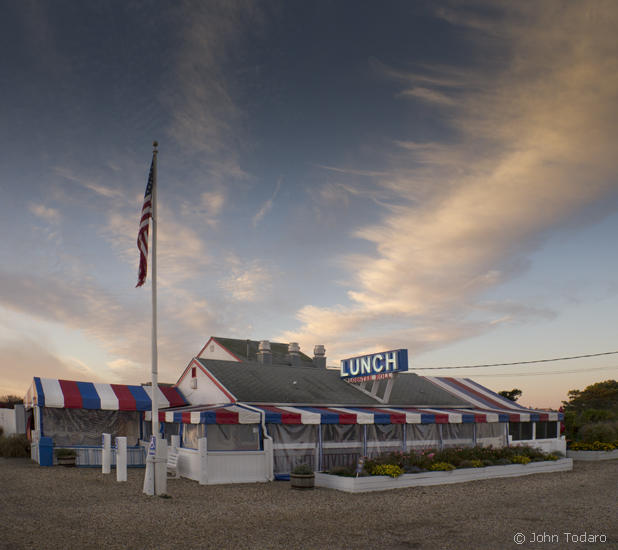
Lunch – Lobster Roll

Lunch (aka The Lobster Roll) is the venerable seafood restaurant which has been holding its own out on the Napeague strip for many decades. It’s a simple place that sits within earshot of the breaking surf. I’ve admired it over the years because it reminds me of those American roadsides which once blanketed this country–the places which have been supplanted by what Zippy The Pinhead called “creeping stripmallification”.

Lunch is easy on the eye, and I’ve been thinking that the place deserves a portrait. October brings good light to Napeague. This is what it looked like down there this morning.

Panasonic G3/14mm/wide converter

(Note: I’m allergic to shellfish, so don’t ask for reviews. I’ve heard the Lobster Rolls are good.)

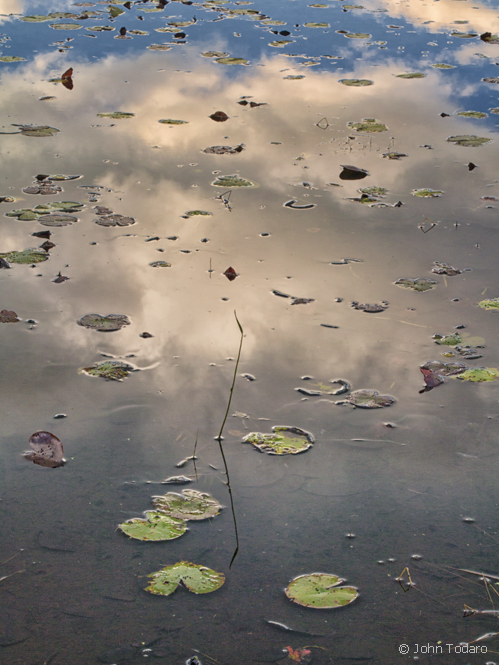
Leaves In Mud – Trout Pond, Sag Harbor

Since we’re so close to New England, the fall colors on Long Island are generally overlooked. We have no mountains, but we do have wetlands. Here on the east end, the wetland foliage is now at its peak and Trout Pond in Sag Harbor is especially vibrant. Late yesterday afternoon I photographed these leaves in the muddy shallows along the south end of the pond. It’s a pleasant hike along the edge, and if you’re feeling ambitious, you can continue onto the trails which climb the glacial moraine south of Sag Harbor. There you enter woods dominated by oaks and Mountain Laurel.

Handheld G3 Panasonic/45mm M. Zuiko

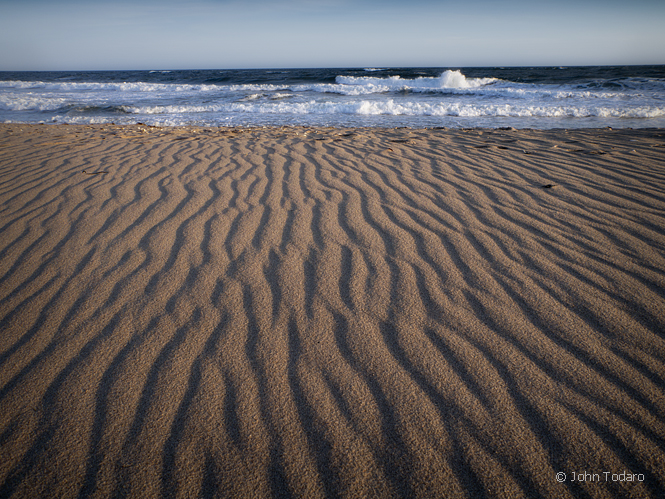
October Oceanscape

Here’s another from yesterday’s cloudless sunrise, this time looking west away from the sun. To the right is a clump of Seaside Goldenrod, a showy autumn wildflower which blooms right out onto the beach.

The colors here remind me of hand-colored postcards from 75 years ago.

Panasonic G3/14mm/wide converter

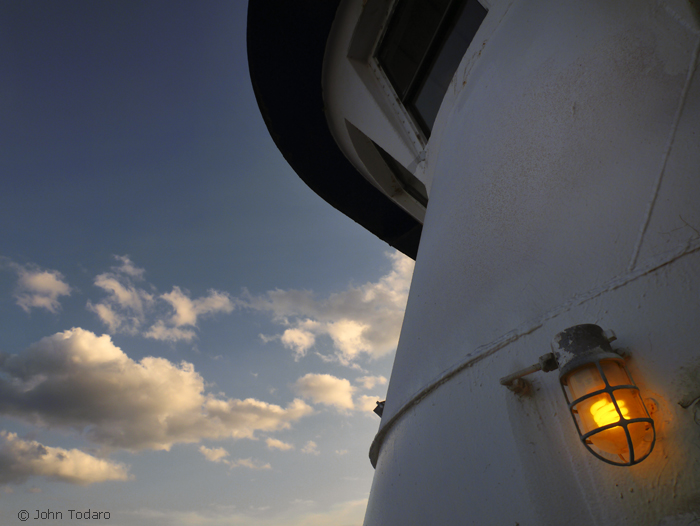
Ship Lantern At Dusk

I took this photograph about a month ago on the Cross Sound Ferry (a service that operates between New London and Orient).  The trip takes about an hour and a half,  passing just west of Fisher’s Island, and eventually skirting along the inside edge of Plum Island into the port at Orient.

I always book the trip for dusk or dawn because I love to explore the nooks and crannies of the ship in this sort of light.

Panasonic G3/14mm/wide converter

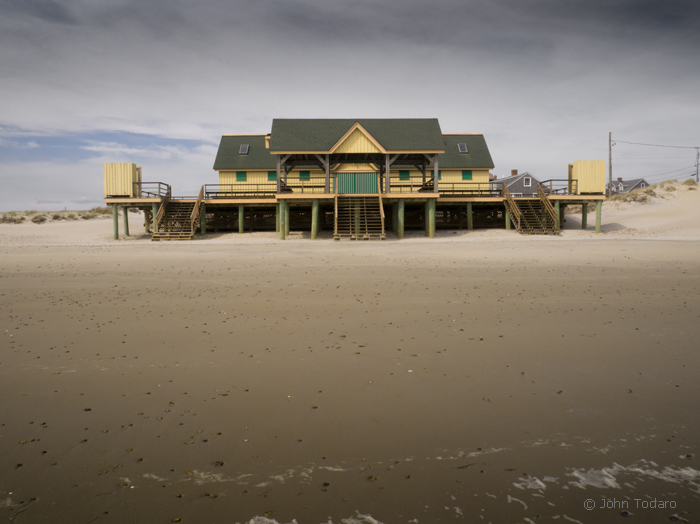
Beach Pavilion Off Season

I photographed this scene in Rhode Island last April on a stormy day with high winds. The pavilion was hunkered down on the beach looking like a spacecraft that had just made an emergency landing. Taking the picture involved a considerable amount of bracing in order to hold the camera still.

For me, beaches are most compelling in their off season clothes.

Sassafras

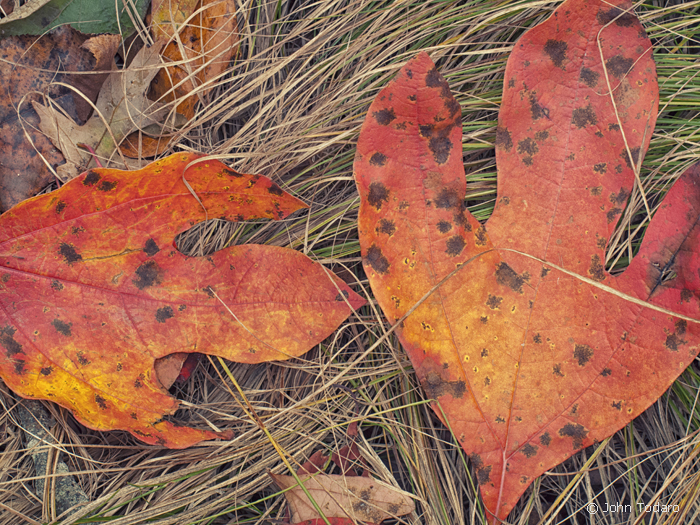
Sassafras leaves come in three shapes–all appearing on the same tree. Some are ovals, some are shaped like mittens and some are shaped like these (shall we call them three-fingered hands?)

The roots of the saplings smell like root beer.

Sphagnum Still Life

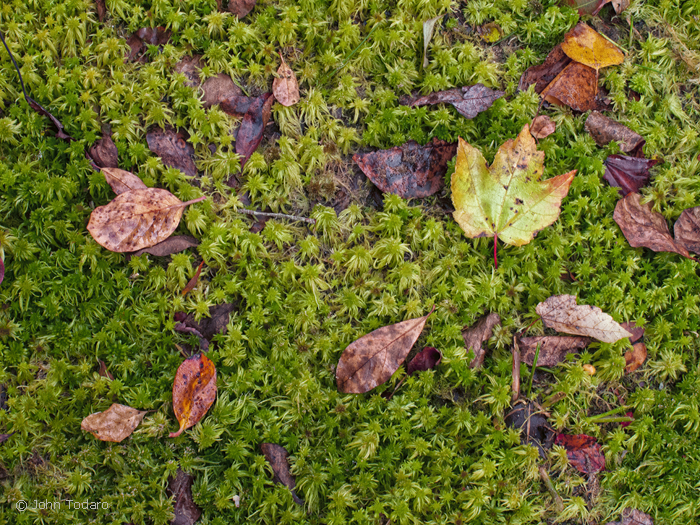
Fall’s here–so I’ll be switching gears for a bit, beginning with some images from the woods here on Long Island. This one’s from the wetlands in the Long Pond Greenbelt area, south of Sag Harbor.

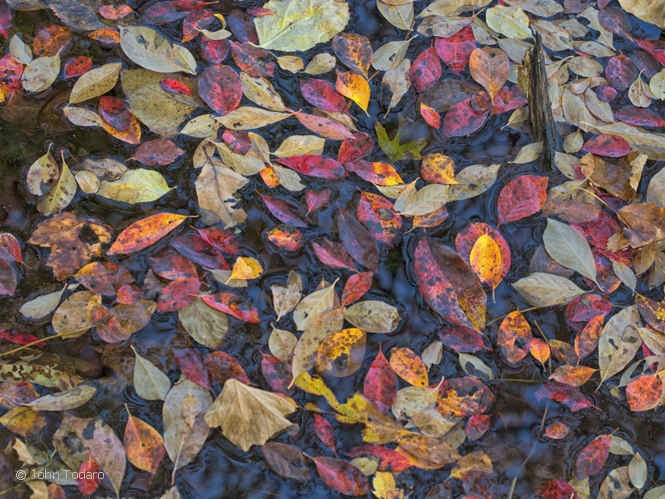
In this part of the country our wetland trees are typically Red Maple and Black Gum (aka Black Tupelo), and leaves from both species make guest appearances in my picture.

…a gallery of other Autumn pictures:

https://johntodaro.wordpress.com/gallery-6-fall/

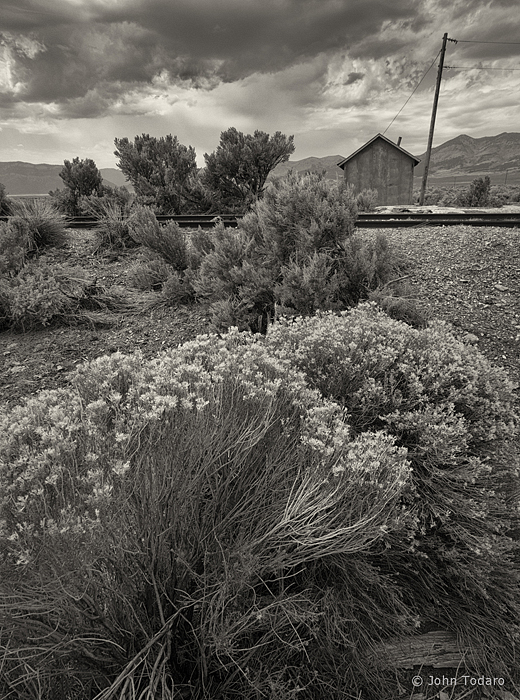
Rabbitbrush Depot

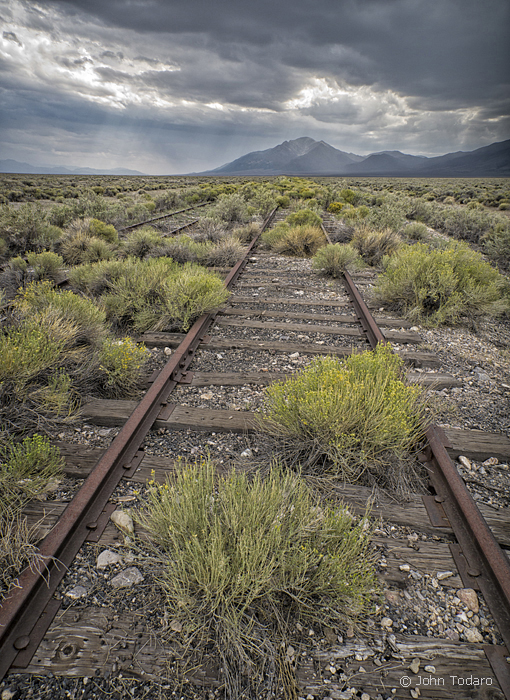
Rabbitbrush blooms in late summer throughout the Great Basin, and assuming there’s been enough rain, the yellow bushy flowers carpet the land for miles.

There was lots of it here–even  between the tracks of the rail bed. It’s an unsung plant in the West, not nearly as celebrated as Big Sagebrush which grows in the same habitat. (Rabbitbrush is in the foreground of this picture, and Sagebrush is behind.)

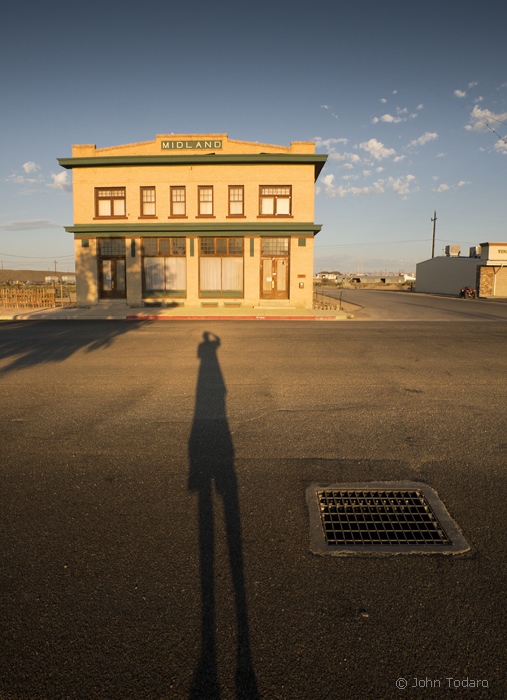
Self Portrait With Midland Building

Walking my shadow into a photograph feels a bit brushing up against the landscape. Maybe it’s the closest thing a photographer has to the way a cat marks territory.

Interacting  can be unpredictable, but on this occasion it resulted in an interesting dose of  surrealism.

The Midland Building is in Green River, Utah.

August 30th

Panasonic G3/14mm/wide converter

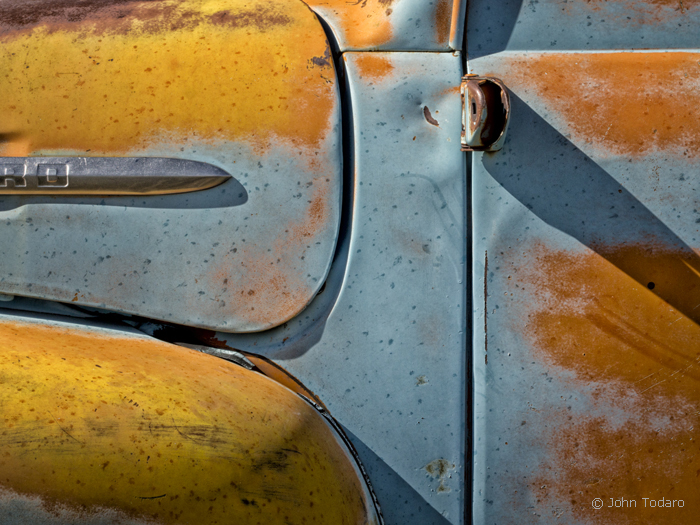
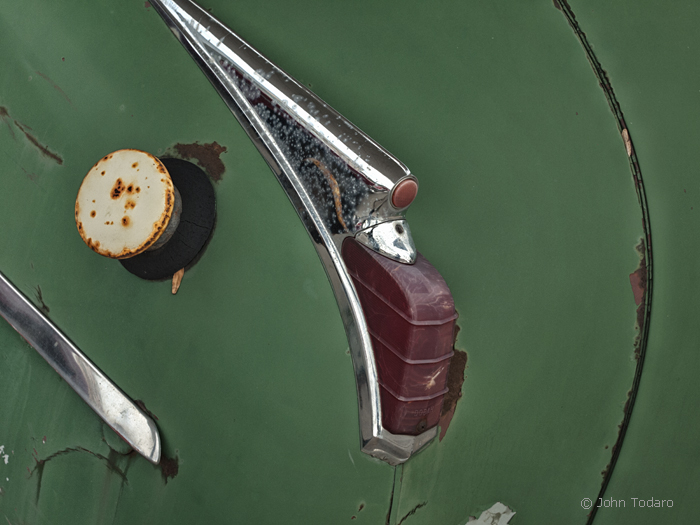
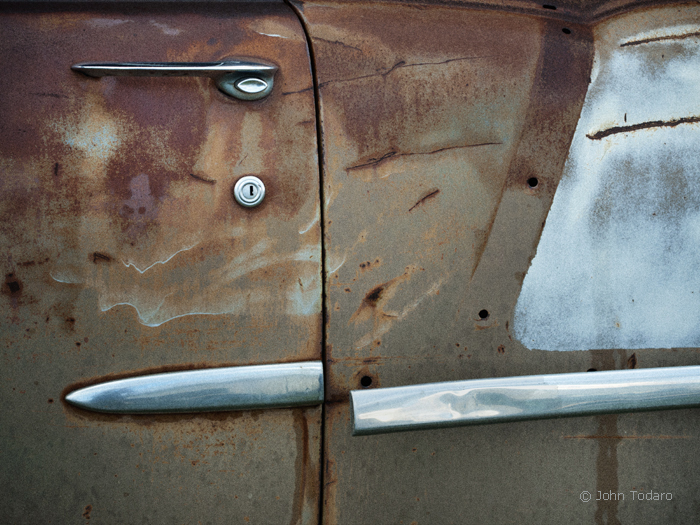
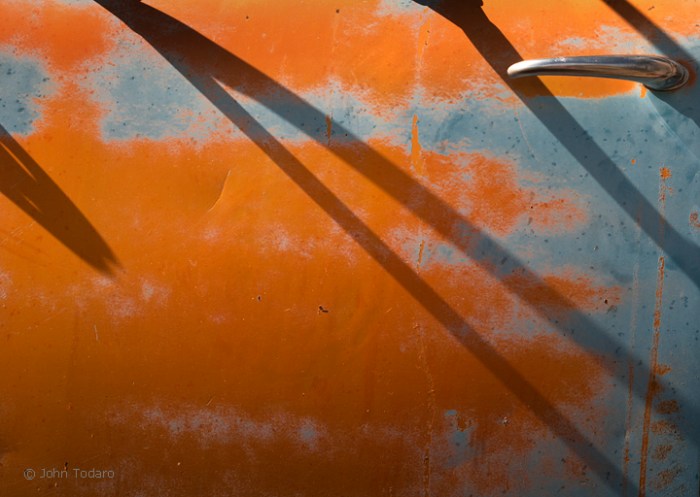
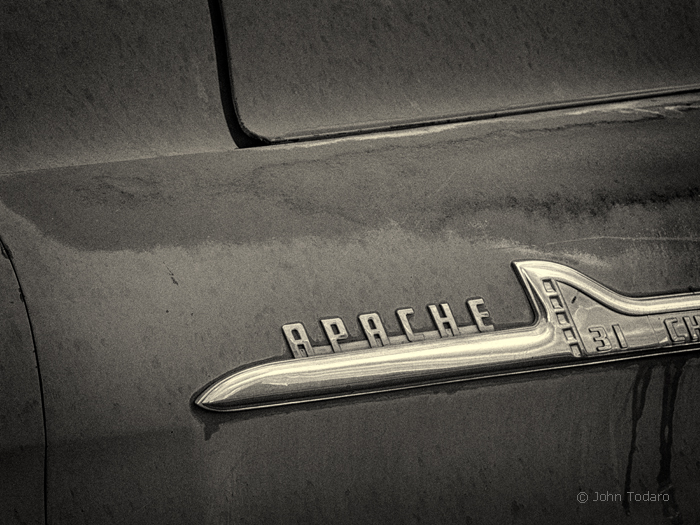
Apache Chrome Strip

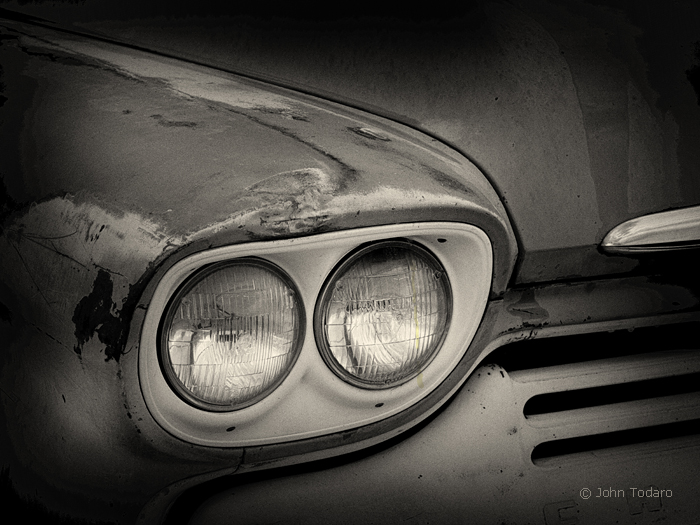
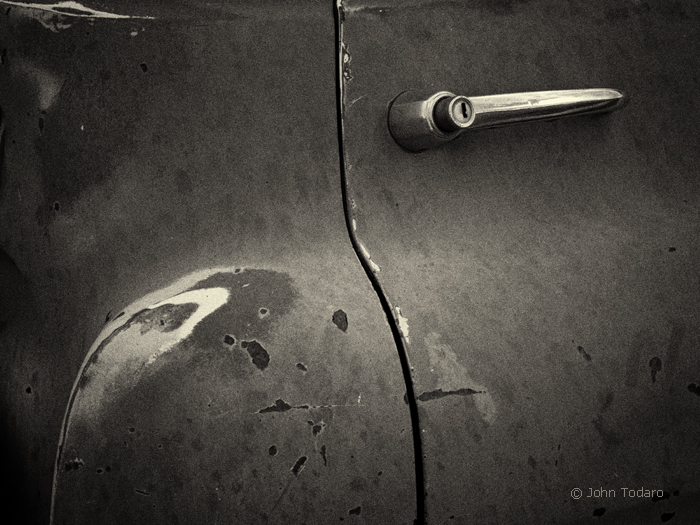
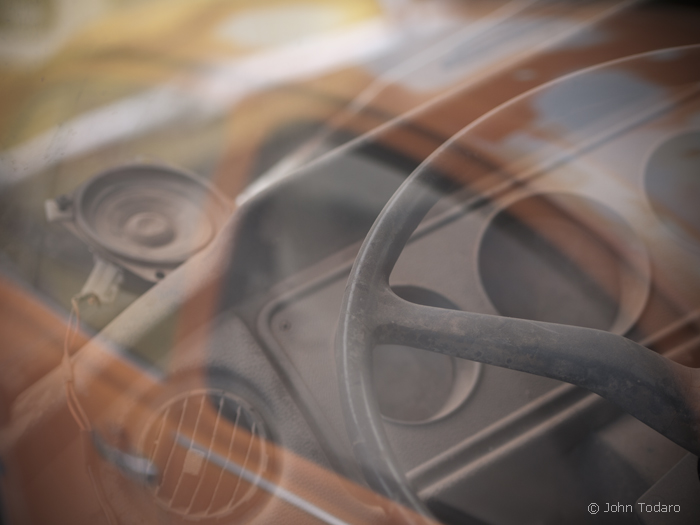
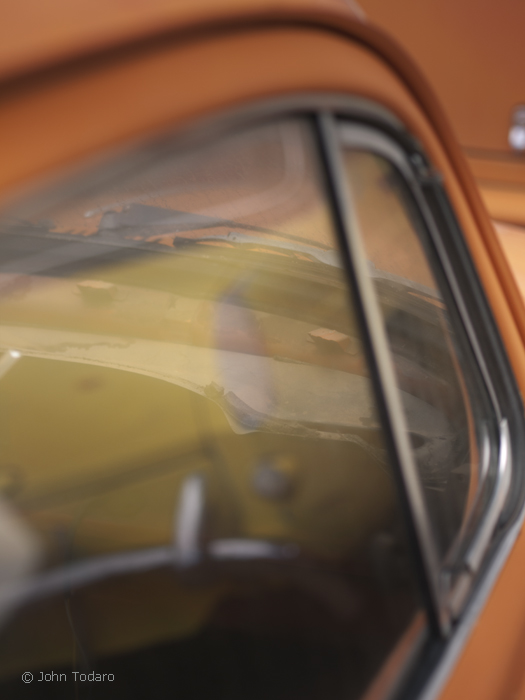
…a third picture from the same vehicle–and another with plenty of midrange grays.

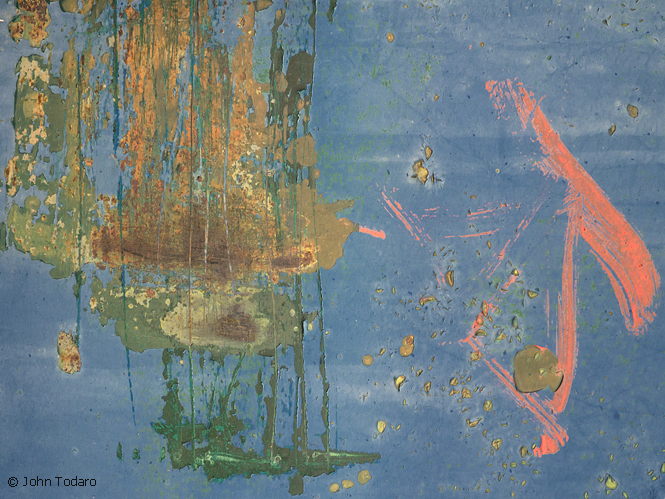
btw–I’ve added grain to all three of these pictures in order to make the surfaces more luminous and tactile.  Back in the old days, we did this by developing our film in Rodinal, and an image processed in this manner was said to have “high acutance”. You can get a better sense of what the grain looks like by clicking on the picture to enlarge it.

Photographed on August 27th with a Panasonic G3 /45mm Olympus M. Zuiko f1.8.

Processed in Silver Efex Pro 2.

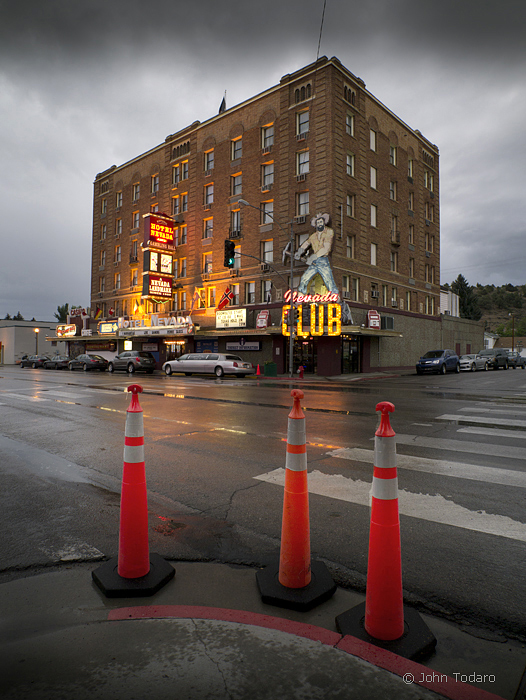
Hotel Nevada

When it was opened in 1929, Ely’s Hotel Nevada was the tallest building in the state. It still presides over the town in an uncanny way–being visible from just about everywhere.

Here, it’s seen in the rain along with a supporting array of traffic cones. I photographed it with an extra wide view in hopes of creating a “gothic” sense of the vertical.

August 19th-Panasonic G3/14mm lens with wide converter

Frosty Stand


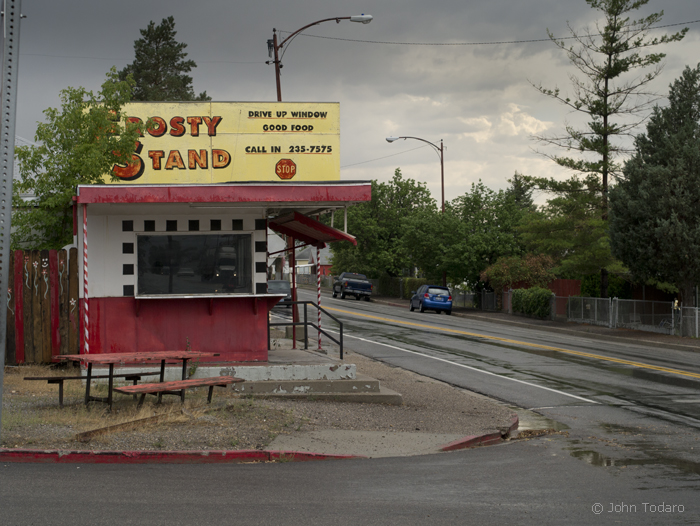
Frosty Stand, was photographed about three weeks ago during an afternoon thunderstorm in McGill, Nevada. The picture is framed by tall trees on the right, and on the far left, by the tilting pole from a street sign.

The picture is a sister, of sorts,  for the Central Theater image in the previous post.

McGill is one of those towns that seems to have bypassed the sterility and standardization that’s got a grip on much of the rest of the country. It’s an easy place to like, for that reason.

No residents are visible in the picture, but hopefully their place has spoken for them.

Central Theater

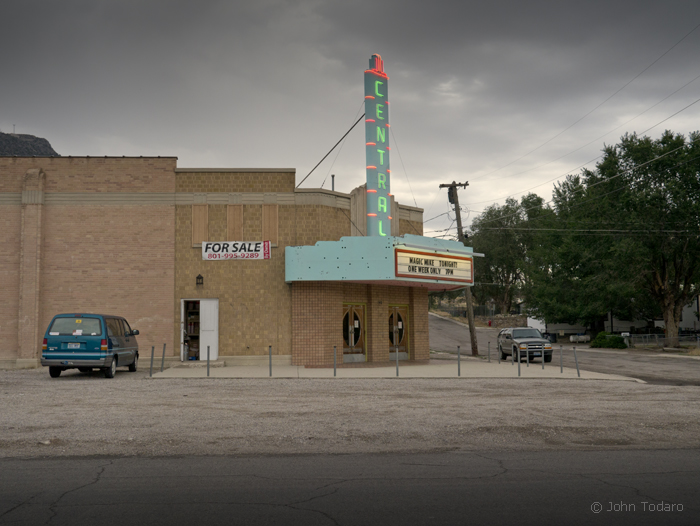
Central Theater was photographed in Ely, Nevada last month, on a quiet afternoon toward sunset.

This is a lonely scene….but for me, it’s a worthwhile memory of small moments and places.

About the Central Theater:

Despite being up for sale, the building has some credentials.  It was built in 1939 and is the most prominent example of Art Deco architecture in this sequestered part of the state.  It was placed on the National Register of Historic Places in 1993.

“Magic Mike” was performing at the theater that evening, but regrettably, I missed the show.

Widtsoe

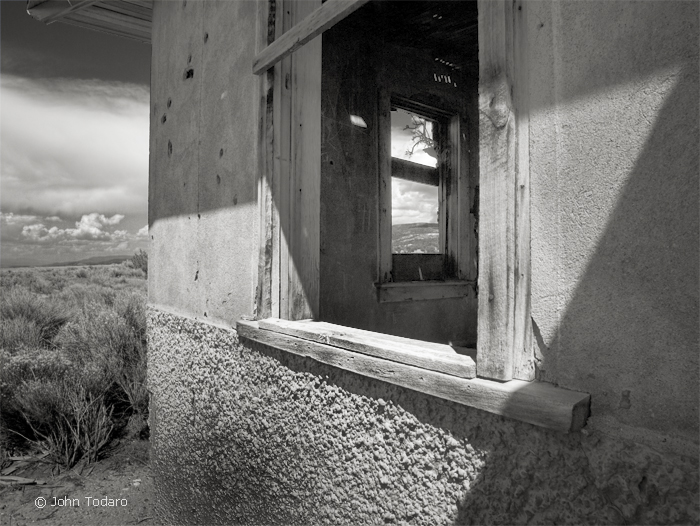
A view from the corner of one of the few remaining structures in Widtsoe, an historic Mormon ranching settlement in central Utah which dates to the 19th century.

The picture required a bit of contrast-muzzling, but once that was accomplished it seemed amplify the sense of space and mood. This is one of those places where the light can get under your skin…even at mid-day.

I’ll be posting more from Widtsoe next week. 

Ship Shadow

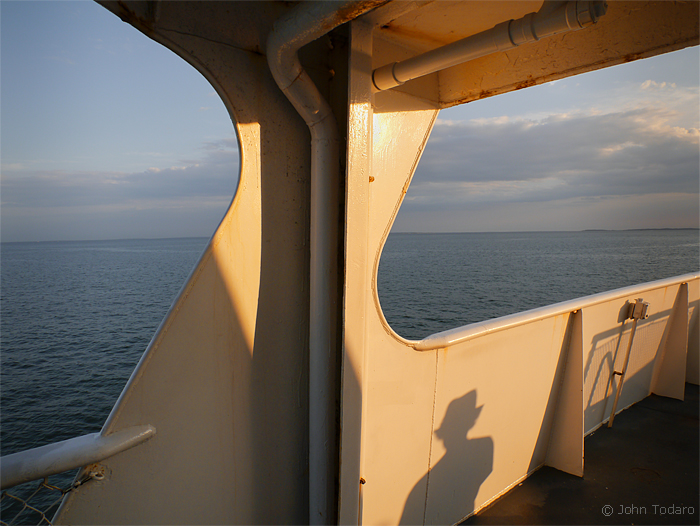
Stepping back from the junkyard closeups, this picture takes you to a view from the ferry. You can click on it to get in a little closer.

Shadows lurking around in landscapes were a theme I kept going back to in Utah so this picture ties in nicely with the next group of pictures I’ll be posting.

It took an hour and a half to make the crossing to New London and six more hours to fly to Salt Lake City.

Ship Shadow was photographed with a 14mm Panasonic lens attached to a wide converter.

Portal


Portal:

This is the first of a series of related close up views. Many of these pictures were photographed wide open with an F1.8 Olympus 45mm (which translates out to a 90mm on a 35mm camera).

If it’s possible to fall in love with a focal length, I’ve probably come close with that one.

For these pictures, I wanted a creamy look because these colors seem to crave it. I wanted some form, but without the distraction of sharpness. Portraits are shot wide open in order to convey a bit of lyricism so maybe the junkers deserve it just as much.

Shaved Ice

I’m back in town after a two-week circuit around Utah and Nevada. It was a trip which began (and ended) with a superfluous ferry ride between Long Island and Connecticut–admittedly, not the most direct way to get to Salt Lake City from here.

I was stubbornly avoiding the drive to the NYC airports on a hunch that maybe the original inhabitants had it right. The best way to leave this place is in a boat.

Out west there were lots of hikes and photographs although the two were rarely occurring at the same time. I visited several National Parks including Zion, Great Basin and Capitol Reef. The pictures in those places tended to be of subjects no more than ten feet away.

I managed to fill up several memory cards with pictures of limping towns, crumbling homes, junkyards, sign parts and lots of clouds. There were many closeups of aged vehicles and a number of photographs of my own shadow. There were fields of flowers and one that was full of Volkswagens. In case you haven’t heard, we Americans are a throw-away culture.

Up above, you’re looking at a shaved ice stand in Green River, Utah:  a skinny shack caught in the dry roast of an August sunrise several hours before opening time.  Nearby:  an abandoned cafe whose wonderful sign is still appealing to the road.

It’s a good picture to start off with because the shaved ice stand looks a bit like a friendly robot.

Green River is struggling along on the dubious lifeline of I 70. It’s surrounded by grey hills comprised of crunchy shale deposits, terrain where hardly anything grows (although it should be noted that there are fields of cantaloupes which thrive on the silty water of the river once navigated by John Wesley Powell).

A vacation here in August can feel like a holiday inside an oven.

The ice stand is located about fifty miles from Moab–the nearest neighboring community and one which has been rewarded with an abundant flow of tourism.

Hopefully some of those folks will find their way up to Green River.

 
Shaved Ice particulars:

The picture was taken with a Panasonic G3 with a wide extender mounted on the 14mm prime lens. I had a lot of fun looking at the many types of distorted views that are possible with this combination. You can click on the picture to enlarge it.

Runs Good and Sweet Pea

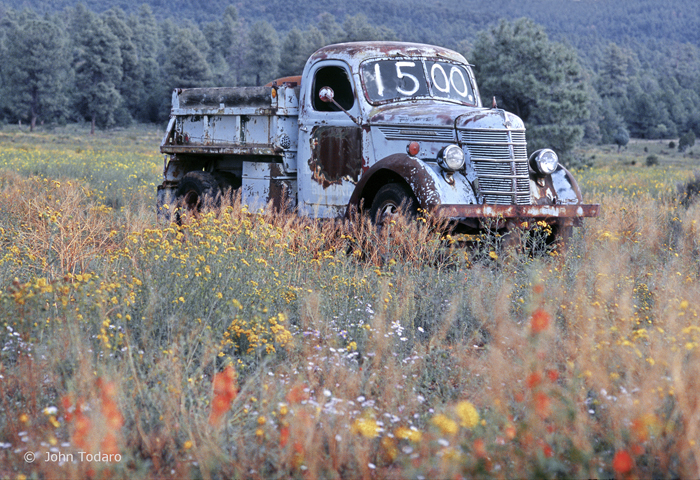
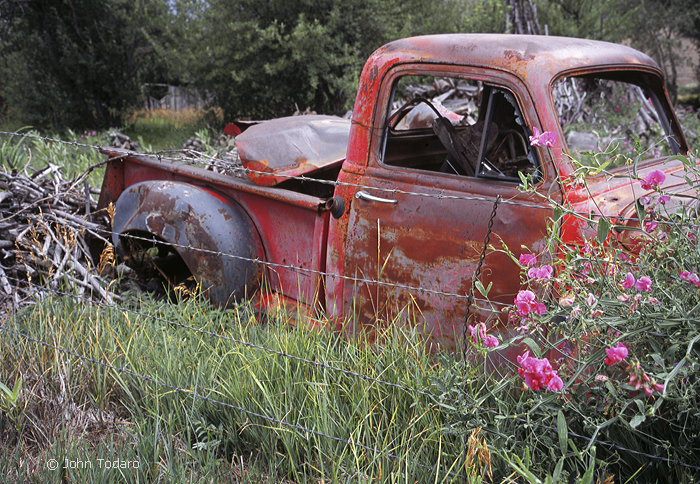
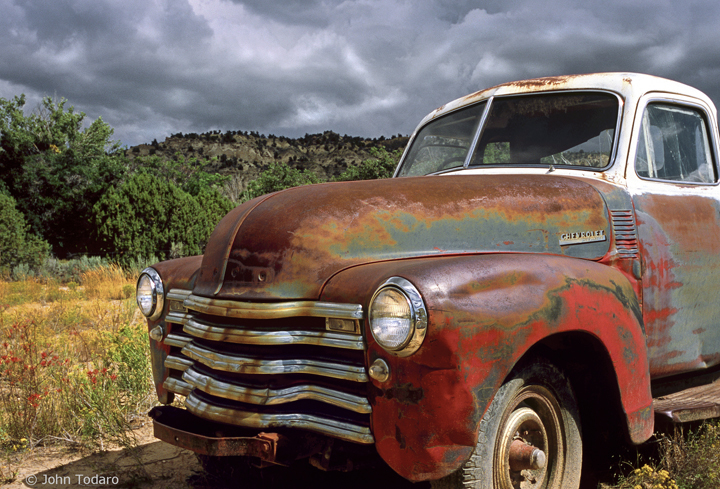
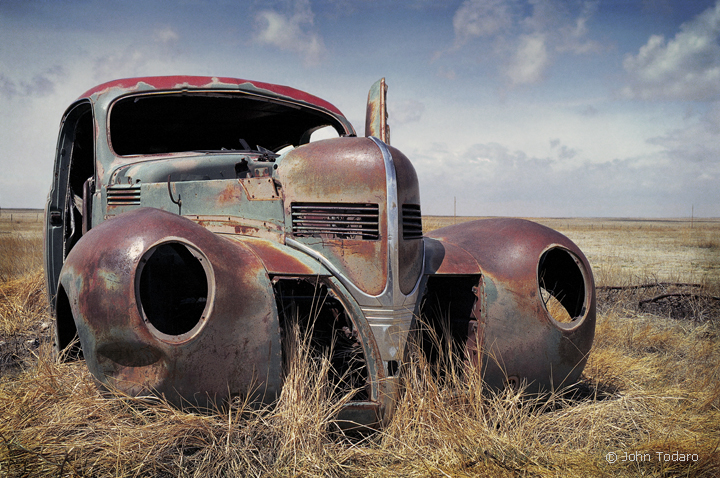
The old trucks are from New Mexico, a place with lots of aging Chevys and plenty of wildflowers.

The picture on top is called Runs Good and the other one is Sweet Pea. You can click on them for enlargements.

Paint endures out west,  mostly because of the lack of humidity. On occasion, you’ll find abandoned vehicles from the 1930’s with some original color. You might recall this one from a few weeks ago:

https://johntodaro.wordpress.com/2012/07/27/long-term-parking/

My own truck has spent far too many days on the salt lick of eastern Long Island. It’s got more rust than a box of wet nails…but it still “runs good”.

Getaway Car

Another car with a collection of bullet wounds–this one from the Comanche National Grassland in southeast Colorado–a place so far off the beaten path that I had no clue where I was.

Bonnie and Clyde drove a 1934 Ford Fordor Deluxe Sedan but I like to think it looked something like this.  I love my silver Toyota Echo, but in truth, I would’ve preferred this shade of green.

Photographing aged vehicles is a lot like photographing old folks. You have the opportunity to work with very engaging  characters. And just like centenarians, these aged cars have plenty of good stories, lots of texture, and very compelling lines.

I’ve never seen a car come off the assembly line with the ability to do this.

Flashback

It’s a midsummer’s night, so what better way to celebrate with than some more photographs of abandoned vehicles — (spoken like a true Luddite).

First up is a photograph of an ill-fated VW Van which I found on a back road outside Phoenix, Arizona. This was a remote place,  near nothing in particular. It was a hot day in April, and yes, those are bullet holes.

I owned a VW Van myself back in the 70’s and once drove it across the country in a trip that’s beginning to fade to the same extent as my high school picture. I do recall breakdowns and mechanical issues, and on the return trip we discovered that one of the spark plugs had fused to the engine block.

That was pretty bad news, because when we let the van idle, it would stall out.

We drove it home from Easton PA, all the way through NYC and then out to the suburbs on Long Island, gunning it in neutral at every toll booth and stop light in order to prevent stalling. If it stalled, it wasn’t likely to start. I didn’t check, but there must’ve been a pool of sweat under the driver’s seat.

I can’t remember what happened after that, except that my VW Van bit the dust. I always liked it, and it looked quite a bit like the one in the picture, minus the bullet holes.

This picture has become its elegy.

Outlaw


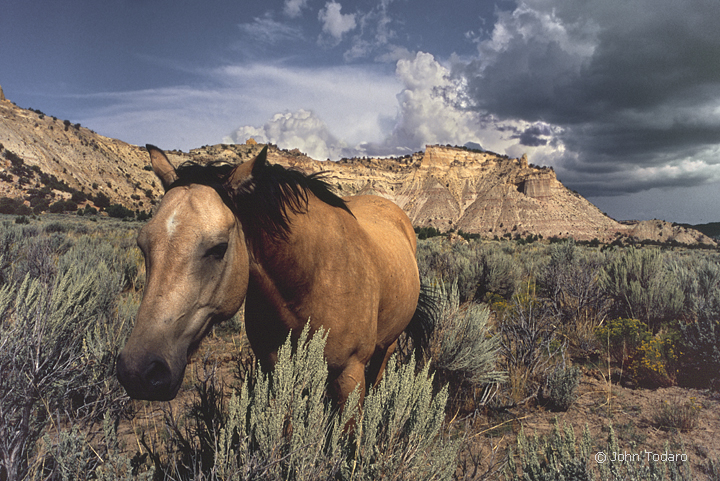
I found Outlaw not far from Old Red (the truck in the previous post).

In this part of the country, horses are a traditional means of transport–a point which invites comparison to the more prosaic pick up.

Horses consume less fuel (depending on whom you ask), and they require about the same amount of maintenance (although some would disagree). You won’t meet any ponies who are as red as pick ups, but a chestnut coat can be just as handsome as any factory paint.

One thing separates them flat out from trucks:  They crave more affection.

Click on him and he’ll come closer.

Photographed on transparency film using a Contax G2 and a 28mm Zeiss Biogon. Scanned with the Minolta Dimage Scan Elite II.

Old Red

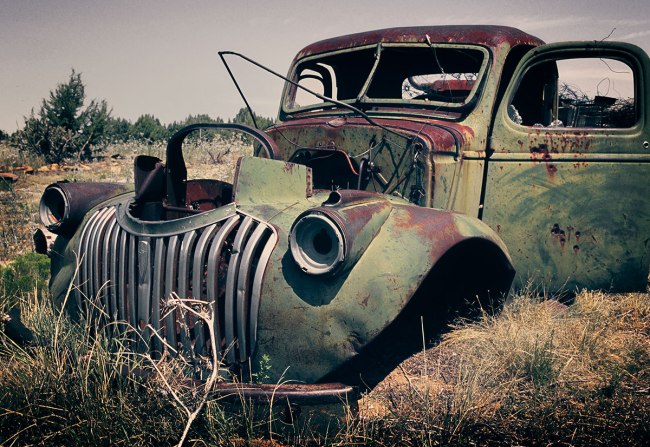
I found this exhausted truck in Utah, not too far from the crimson rocks of Bryce Canyon.  One wonders:  is everything is southern Utah turning this color?

A close up:

https://johntodaro.wordpress.com/2012/07/08/semi-abstract-photographs-rusty-red-trucks/detailing/

I’ve owned about fifteen vehicles but I’ve only owned one that was red—-a VW Bug that was my very first car.  The car was red, but I was closer to green because I was only 18.

Sadly, my recollections of all the rest of my vehicles are starting to fade. When I reflect back, that VW bug really stands out. It seems that all the red things in my memory have a much longer expiration date.

I like my red photographs, so I try to cut this one a lot of slack.  Problem is: I shot it on Fuji Velvia, so I had to decrease the red saturation.

Here’s some quotes about the color red from four different artists:

“Red is the ultimate cure for sadness.” –Bill Blass

“I love red so much that I almost want to paint everything red.”–Alexander Calder

“Red is one of the strongest colors, it’s blood, it has a power with the eye. That’s why traffic lights are red I guess, and stop signs as well…”–Keith Haring

“Red, of course, is the colour of the interior of our bodies. In a way it’s inside out, red.” –Anish Kapoor

Long Term Parking

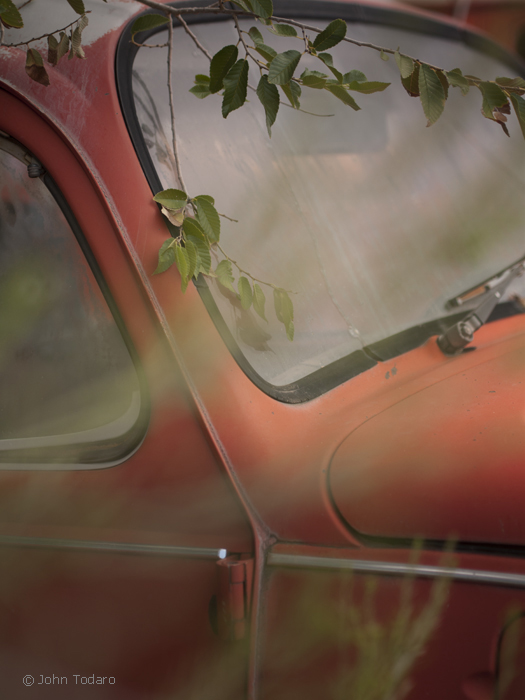
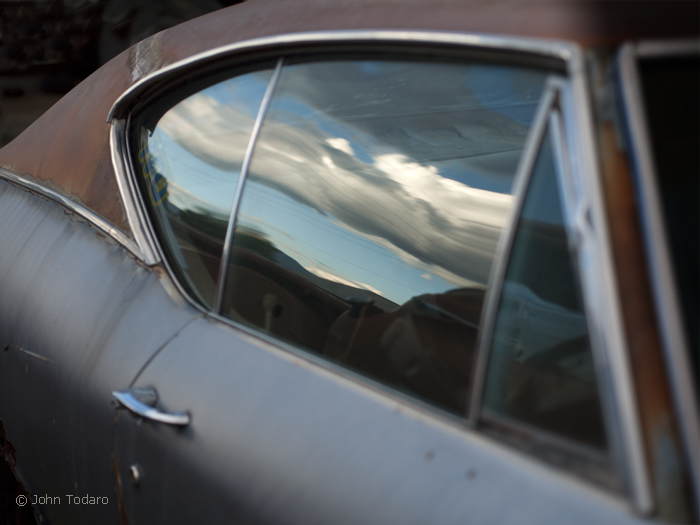
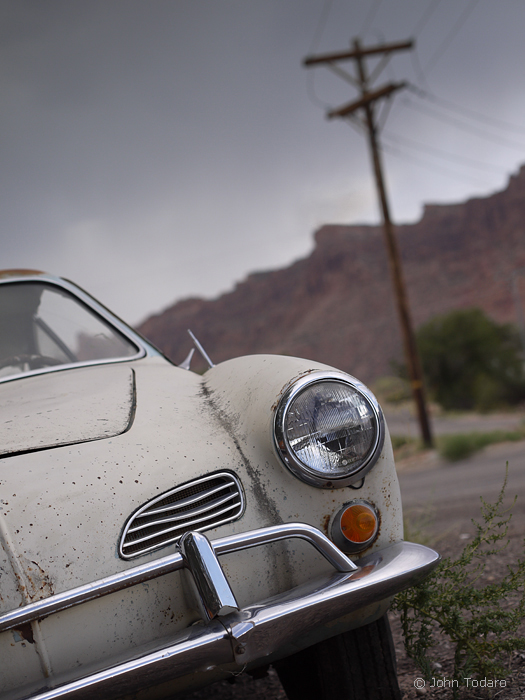
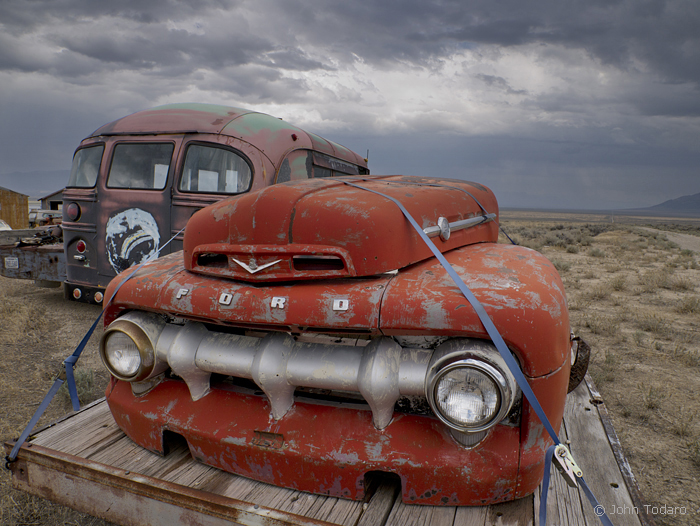
I have a group of pictures of abandoned vehicles which I’ll be posting intermittently.

There are people who find these old creatures and restore them, and their work can be painstaking and rewarding.

There might be something wrong with me, but I much prefer aged cars that look like cow skulls. In truth, they’re often found in the same places and are much more interesting to look at. Peeling paint works for me, and the fresh stuff never has.

Unless it’s my imagination, more light shines in when the window is missing.

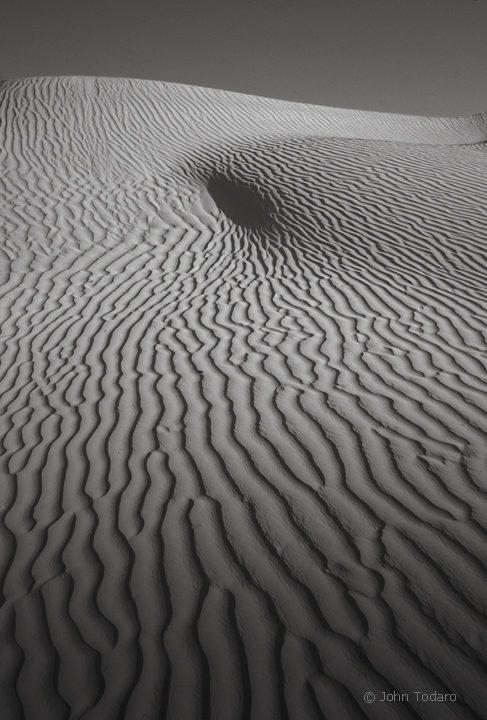
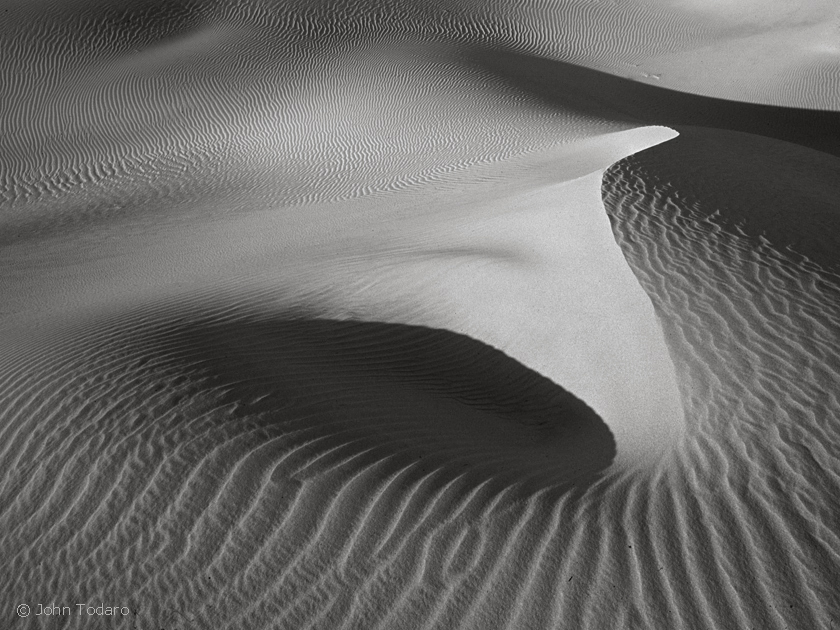
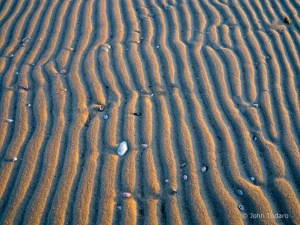
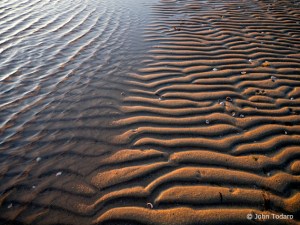
Black and White Dune Photography II

I’ve gotten absorbed with these dune photographs for the last week and ask for your patience, especially if this sort of image provides you with no ignition.

The pictures were taken at various times during the last twelve years and have been mothballed until now. They were recorded on archaic film with analogue equipment (none of which I’ve yet surrendered). I scanned the pictures using an obsolete Minolta Dimage Scan Elite (which I bought on eBay after my original was fried in a lightning strike). The good old stuff.

Once you’ve scanned your film and it’s been nestled into Photoshop, it has been rescued from obsolescence–a good thing, I suppose–although as a child of the previous century, I feel the pangs of resistance.

The picture is from the Little Sahara Recreation Area in north central Utah. I have some other images from this locale which I’ll be posting later.

(The camera: Contax G2; 28mm Zeiss Biogon)

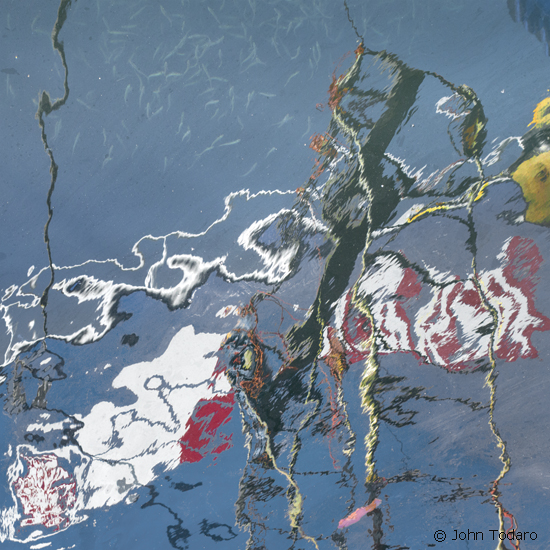
“Chimera” – Mid Week Art at Ashawagh Hall Tuesday and Wednesday July 24 and 25

The photograph of reflecting boats, ropes and buoys is entitled “Chimera” (and yes, that’s a small school of fish swimming in the upper part of the picture). I’ll be displaying this piece and other images at an upcoming show at Ashawagh Hall in East Hampton, in NY.

The show will take place on Tuesday and Wednesday July 24th & 25th, and will run from noon until 9pm on Tuesday (with a reception beginning at 5pm) and also from 10 am until 5 pm on Wednesday.

“Chimera” is being made as a limited edition pigment print in a 22 x 22 mat, and the first print in the edition is currently available.

Ashawagh Hall is located at 780 Springs-Fireplace Road in the historic area of Springs. It’s a short walk to Accabonac Harbor, The Springs General Store and the Pollock-Krasner House.

There’s free admission and kids are most certainly welcome!

I’ll be displaying with painters Cynthia Loewen, Phyllis Chillingworth and Anahi DeCanio and also the pressed-flower artist Deborah Anderson. The five of us participated in a very well-attended show at Ashawagh Hall this past February, and I’m really looking forward to showing again.

There’ll be a good mix of landscapes and abstractions at the show, with lots of new work from everyone. There’s plenty of visitors on the East End right now, so we’re hoping you stop by after a day at the beach, especially for our Tuesday evening reception.

Below, you’ll find some details on the artists with links to their sites. Please email me if you have questions.

Cynthia Loewen is a realist painter from East Hampton, who renders her subjects in minute detail. Her specialty is local landscapes and seascapes which she’ll be displaying as acrylics and watercolors. Cynthia has a talent for evoking a sense of place (a technique no doubt informed by her family’s long history in the area). She’s also the founder of the new Community Art Project in Springs which has been having quite a year. Here’s Cynthia’s work:

http://www.aaeh.org/Cynthia_Loewen.html

Phyllis Chillingworth is a painter whose watercolors and oils evoke the transient moods of light from Montauk and nearby areas. Her paintings are bold, beautiful–full of the flavor of local light.  She’s a graduate from the Yale School of Art and Architecture and also the Illinois Institute of Technology, and she also attended the Art Students League and NYU and exhibits frequently in the NY area. She’ll be showing new oils from Montauk and Napeague.  Here’s a link to Phyllis’ work:

http://www.phyllischillingworth.com/

Anahi DeCanio’s abstractions and multimedia works have won many awards and have been exhibited worldwide. Her abstractions demonstrate a sophisticated sense of color and line, and her work often ties in themes of women’s issues in very creative ways. Her work has been displayed at Pen And Brush (NYC), and the International Museum of Women and also at The Milan Film Festival and the Boca Raton Museum of Art. Here’s a link to Anahi:

http://fineartamerica.com/profiles/anahi-decanio.html

Deborah Anderson is the creator of “Pressed Petals Of Sag Harbor”. Deborah’s art involves detailed arrangements of dried flowers, butterflies and other botanicals which she fashions into a variety of framed formats. Her work recalls elegant botanical art and design from the 19th century. Deborah has showed extensively here on the East End and will be displaying many new framed pieces at the show.
Cadillac Ranch, Redux

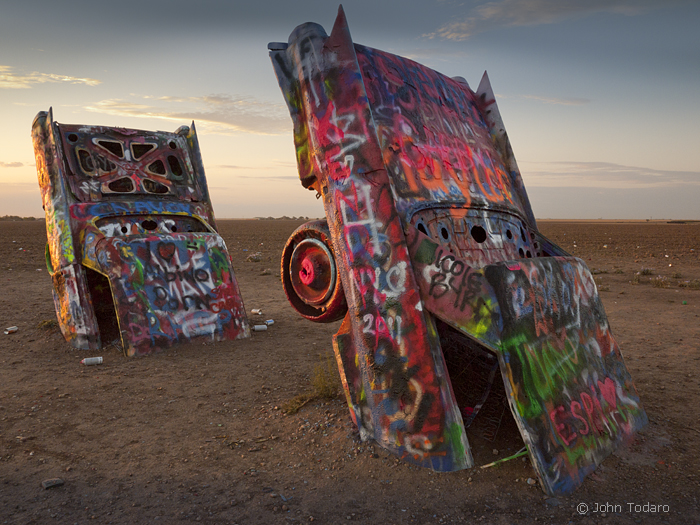
I’m back at Cadillac Ranch again, but only because photographs sometimes travel with memories.

Last summer when I made the trip I was hungry for the details. The story goes like this: It was 1974 when the junked Caddies were interred into the plains of Amarillo. The act was committed by a wily group of artists who called themselves The Ant Farm. Since then, visitors have begun to leave their marks. Over the years we’ve unleashed a monument unlike any other.

A hundred yards north, the east-bound lanes of Interstate 40 funnels a river of vehicles toward a distant Atlantic coast. Out here in the heartland, the bloated roar of eighteen-wheelers is virtually non-stop.  On the other side of the fence are the three lanes of the western artery. Either way you travel, it’s fifteen hundred miles to an ocean.

The traffic keeps flowing here because that’s the way desire works. There’s a thirst in this place that never really gets quenched. The Cadillacs are buried in the heart of the continent and it’s from that spot that we reflect on the backwash of our dreams.

At sunrise, I was alone with my cameras, but within a few moments a dingy car pulled in behind mine. A young couple walked across the field to where I was setting up my tripod. There was a boy with hair knotted up in a blue bandana and arms blazoned with tattoos. He wasn’t much older than my fifteen year old son. His short-haired girlfriend was wearing a white hoodie because the heat had yet to arrive.  She approached me shyly asking if I would agree to take their picture with her phone.

I did what she asked because it mattered more than what I was doing.

They explained that they were eloping.  They’d driven all night from Tennessee en route to Las Vegas where they hoped to make it official. I took their picture and gave her the phone back. They happily looked at their portrait.  The boy asked me if it was okay to spray paint one of the Cadillacs.

“Yeah, everyone does,” I said, feeling like the curator.
“I always wanted to see this place,” he explained.
“Me too,” I said.

He pulled a can of paint from his hip pocket and walked behind a Cadillac at the far end of the row. His girlfriend smiled and followed.  For a few minutes they were out of sight but I could hear their muted voices. Once, between the Cadillacs, I could see her stepping backwards. She was angling for a picture with her cell phone, trying to find the best position to photograph her boyfriend. This was body language which I understood.  After a while they waved to me and walked off to their car.
There was the crank of ignition and then they pulled away. For the second time that morning, I was alone with the Cadillacs.

I looked at the view from my tripod but my heart was no longer with it. My thoughts had gone with those kids. They were young and it was a really long way to Vegas. There was a door that was about to swing open into the rawness of their lives and I had been ambushed by an unexpected wave of sorrow.
•••

My earlier post about Cadillac Ranch can be found here:

https://johntodaro.wordpress.com/2011/09/22/amarillo-twelve-megabytes-for-the-ant-farm/

Abandoned Farm House, Eastern Colorado

I’ve queued up another image from the archives–one with a similar story to the glowing gate from the previous post. In both cases, the capture involved archaic weaponry: a roll of Kodak negative film and an obscure 120 film camera. For this one, it was the Fuji 645W, an odd plastic camera known for its unusually sharp lens. I also owned the 645S–similarly designed with the addition of a “roll bar”. I liked them both because they were undersized. I could travel light and shoot without a tripod. Nowadays they’re stored in the basement in a shoe box near my record collection.
The abandoned house was discovered after an afternoon of zig-zagging through the plains. As usual, we were out on the greyest roads on the map.  Once you get into this part of the country you begin asking yourself,  “Now what do we do?”

My companion took no pictures, but I was engaging the question.

The plains are the least photographed part of North America–a fact which is even more astonishing when you realize that they represent about a third of the United States.

As I’ve written before, this is a place which is currently reexamining a number of historic assumptions–having had a lengthy quarrel with invading Europeans. At the moment, the plains are back in charge, especially west of the 100th meridian where the middle of North America is filling up with ghost towns. It’s the same story from Saskatchewan to the Texas panhandle.

There have been books which tell the of the struggle, and Willa Cather’s My Antonia is a personal favorite. But the contest has also being written into the the photographic record. Two photographers come to mind: John Vachon and David Plowden.

Vachon was an artist employed by the FSA seventy years ago during the depression, and was one of the first photographers to focus a lens on the life and landscapes of the farming population of the Dakotas.  By the 1930’s it was already apparent that this was not an easy place for a gig. He took many images, but none is more deeply felt than the one of school children playing in a snow storm.  It was recess. It looks cold, and the children are constructing a fort. Behind them: a one-roomed schoolhouse in blowing sheets of snow. A few decades later, Plowden published The Floor of The Sky. This time, many of the photographs were in color.  The photographer wisely chose to make C Prints. They were warm-toned, bittersweet and full of lonely grass.
Both photographers looked closely at the people as well.  As I flip through their books nowadays, it’s hard not to notice the similarity between the furrows in the fields and the deep lines in the faces.

There’s a link for Vachon’s image (at the Library of Congress) below in the comments.

And, keeping within this theme–two related posts from a few months ago:

https://johntodaro.wordpress.com/2010/12/06/one-room-schoolhouse-western-south-dakota/

https://johntodaro.wordpress.com/2011/01/26/abandoned-home-approaching-storm-north-dakota/

Photography from the Sea Kayak: Bullhead Bay, Southampton

A few years ago, I paddled up to this dinghy while exploring the wetlands of Bullhead Bay in my sea kayak.  The bay is a good place for this sort of exploration and much of the land from there up to Scallop Pond has been preserved by the Town of Southampton and The Nature Conservancy. The picture was taken in November–a time of the year when you pretty much have the estuary to yourself. In this setting, the boat seemed appropriately named.

The picture was captured on transparency film using  a Contax G2 with a 90mm lens. In order to do this, some preparations were needed.

Once I was positioned close to the dinghy, I inflated a paddle float and placed it on my paddle. Holding the paddle behind my back, I braced myself against the water. By using a paddle float in this fashion, you create a relatively stable outrigger from which you can then carefully take some photographs.

The 90mm is a fast lens, and this situation is a good example of when you might prefer a fast prime to a zoom. A slower zoom would’ve been unusable at ISO 100, and also would’ve been very difficult to stabilize while trying to shoot one-handed.

Because I was willing to take an expensive camera out onto the bay without any waterproof housing, I was taking some chances. To minimize the risk of water damage, I sealed my equipment in a water-tight dry bag which I then sat on top of my lap. I also stashed a bottle of fresh water in my cockpit so that I could wash my hands before handling the camera. The deflated paddle float was bungeed to the boat. After taking a few pictures the camera went back into the dry bag and I continued on my way.

Attempting this procedure in rougher surf requires a bit more attention to bracing properly, but I’ve done it successfully several times.

The picture at the link below was taken near Cedar Point with the same camera and the same film.  On that occasion,  I was bracing myself against a fast moving tidal rip in thirty feet of water:

https://johntodaro.com/buoy-6-profile.htm

The red dinghy up above required a bit of post-processing. The first step was to make a high-res scan on my Epson V 700. After a bit of clean-up work I settled on a cropped square image which made it very compatible with a number of my full-frame images from the Hasselblad. One thing I’ve noticed about scans from Provia F is that the intensely blue bias of the film often benefits from a bit of desaturation in Photoshop.

View From the Haerter Bridge: Panasonic Wide Converter (DMW-GWC1)

Here’s a photograph captured with my new Panasonic Wide Converter…a Micro 4/3 camera accessory which is also known as the DMW-GWC1. If you ask me, better names must certainly exist.

As I’ve explained in other posts, the converter attaches to the Panasonic 14mm f/2.5 and presto—you have an 11mm lens. This is equipment for those who occupy a very specific niche: The Micro 4/3 completist, or at least anyone in possession of the 14mm Panasonic lens who’s curious about a wider field of view (and doesn’t want to fork up the $600-plus for the comparable Olympus lens).

The picture was captured as a RAW file (handheld, and using a Panasonic GF2). The RAW was converted to JPEG in order to publish it here at my site. No color adjustments were made, and the file hasn’t been sharpened. A slight reduction in contrast was employed in order to make the image more internet-friendly. (Keep in mind–you really should be checking out at these photographs on a MAC monitor anyway if you want them to be spot-on, a point which is especially relevant when it comes to highlight detail.)

If you’re wondering, the gradation from the upper left to the upper right in this photograph is entirely natural (the sun was shining a few degrees starboard). Happily the files from converter photos show only a slight (but acceptable) amount of vignetting. If you’re horrified by any vignetting, the post-processing fix will cost you all of four seconds. Barrel distortion is present, but can be likewise dealt with in Photoshop. If you’re not shooting architectural subjects it may not matter anyway. Overall, the optics of the converter seem  comparable to the 14mm lens it attaches to.

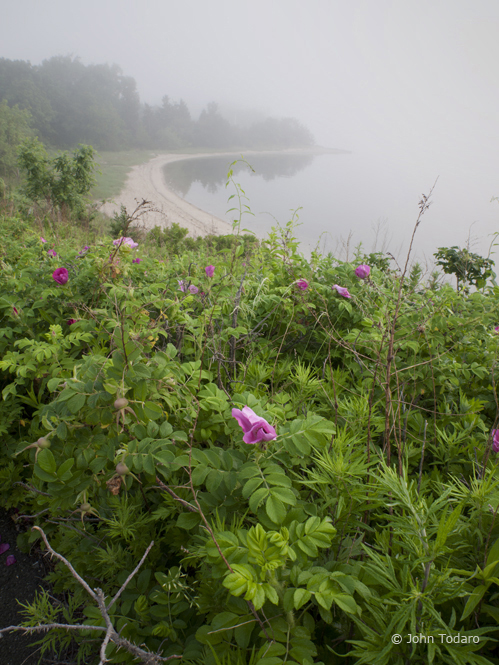
The location of the picture:  Sag Harbor, USA…on the eastern end of fish-shaped Long Island where our wild roses are now blooming.

Several more of my converter photographs along with additional comments may be found at the following links:

https://johntodaro.wordpress.com/2012/05/18/swan-at-havens-beach-panasonic-wide-converter-dmw-gwc1/

https://johntodaro.wordpress.com/2012/06/04/sag-harbor-photography-wall-and-flowers-shooting-with-the-dmw-gwc1/

My friend Peter (at .documenting.the.obvious) has  published a more thorough review of the DMW GWC1, (especially as regards vignetting, barrel distortion and corner sharpness). Visit his post at the link below but please take some time to enjoy his many unusual photographs:

http://dothob.wordpress.com/2012/06/23/into-the-great-wide-open/

Sag Harbor Photography: Wall and Flowers – Shooting with the DMW-GWC1

I’ve been working with my Panasonic wide converter, a recently introduced accessory which is also known as the DMW-GWC1. If you ask me, there are gasoline additives with sexier names–but don’t let that scare you off.

As I noted several posts back, the DMW-GWC1 is screwed onto the front of Panasonic’s popular 14mm Micro 4/3 lens. Once attached, the lens is persuaded to yield a wider field of view (about the same as a 22mm lens on a 35mm camera). If you’re accustomed to using a 28mm, the converter is decidedly more expansive.

The first thing you notice is the increased depth of field, something which opens up many new creative possibilities. This is especially true when used on cameras like the Panasonic G3 with it’s full range of manual controls and live viewfinder. The second thing you notice is that whatever is close to your lens has an appearance of being much further away.

Over the last few days, I’ve been using the converter on subjects that are well below the horizon–a technique which is admittedly counterintuitive. A lens this wide has an enormous appetite for skies, but summer is on the way and  there’ll be plenty of time to go looking for clouds.

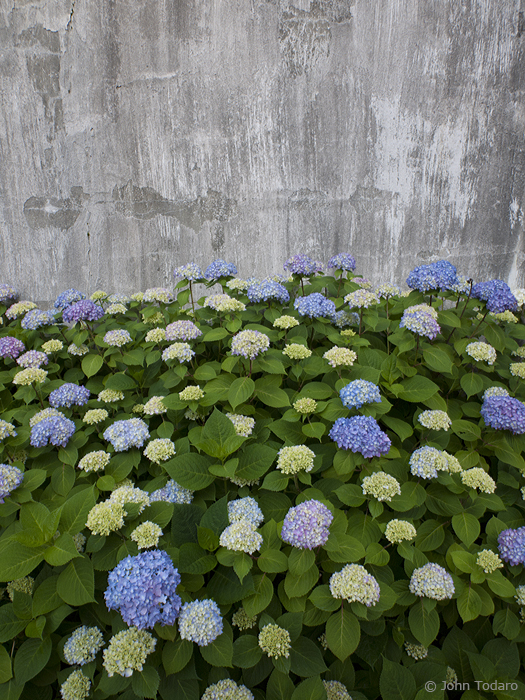
The Hydrangeas were discovered while walking up to the coffee shop a few mornings ago in Sag Harbor Village. The image was captured quickly without the need of a tripod.  I was in full shade. Everything’s in focus in the picture because there’s more depth of field than you can shake a stick at. Moments later I was sipping coffee and making sure my lens cap was affixed to my converter. The bulbous glass accepts no filters, so you have to be careful.

The image is essentially a copy of the RAW file with no further color or contrast correction.  To me, that’s a good sign.

As you can see, the converter performs well in low light, yielding images that are both bright and fully accurate in terms of color. I haven’t yet pushed this thing into more challenging light and contrast, but I can tell you that within the gentle gamut of shade, it’s fine.

Nice work, Panasonic.

My other two posts for the DMW-GWC1 may be found here:

https://johntodaro.wordpress.com/2012/05/18/swan-at-havens-beach-panasonic-wide-converter-dmw-gwc1/

https://johntodaro.wordpress.com/2012/06/06/view-from-the-haerter-bridge-panasonic-wide-converter-dmw-gwc1/

For those into the particulars, the image was handheld @ 200 ISO, f9.o @ 1/100. I was using the Panasonic G3.

Abstractions: New Photographs From New Bedford

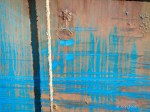
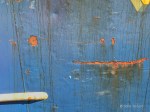
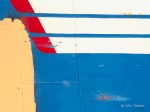
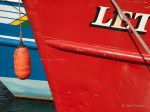
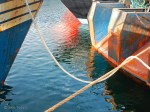
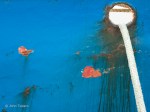
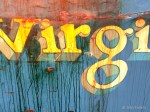
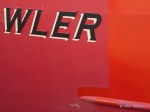
The photographs were taken last week at the commercial fishing docks in New Bedford, Massachusetts. There are close-up details (and reflections) of boats, and studies of metal and wood surfaces from around the docks. In truth, many of these images could be more accurately described as semi-abstract. All were shot without a tripod which encouraged a free-flowing sense of connecting ideas.

New Bedford is a city with a waterfront revitalization in progress and is worth visiting if you’re in southern New England. The National Park Service administers New Bedford Whaling National Historic Park which includes a museum and visitor center located within walking distance of where the pictures were made.

Any of the thumbnails above can be enlarged by clicking on them. Email me if you have any questions about what you’re looking at.

View From Long Wharf, Sag Harbor

This image was found on the east side of Long Wharf recently, on a calm morning with unsettled skies. One hundred and seventy years ago (around the same time Fox Talbot was perfecting the photographic process) this very same wharf was the locale of Sag Harbor’s formidable whaling fleet.  Sag Harbor had notoriety in those days, both for its industry and for its multifarious collection of sailors. There are several references to the village in Moby Dick.

These days, the only thing being processed out on the wharf is restaurant orders and the data for an occasional photograph. From the northern end there’s about 300 degrees of water to take in, along with North Haven and Barcelona Neck (in East Hampton) which are visible beyond. Straight out past the breakwater is a prominent beacon.  There’s some rocks near there where the seals like to sun, and beyond that are several thousand acres of Mashomack Preserve.

For those in tune with the tides, Long Wharf still can still whet the taste for adventure.

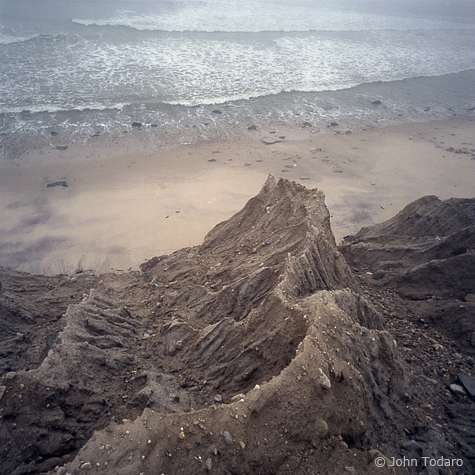
Another Hoodoo…Montauk

I rarely make these statements, but I’d have to say that this picture is my favorite of all my own hoodoo images, east, west or anywhere in between. I do concede that it’s a gloomy scene, but for me it evokes the place, and I can smell the tide and the crumbling earth and the oozing out of spring.

They don’t call them hoodoos for nothing.

Have you ever been at Shadmoor and asked yourself, “How did they get here?” These formations (unlike their more famous cousins in places like Bryce Canyon) are not comprised of eroded sedimentary rock.  What we have here is a mish-mash (my wife’s words) of sand, clay and gravel–also known as glacial till. Long Island itself is pretty much nothing more than a sandbar full of such debris left by retreating glaciers.

The formation of hoodoos here in Shadmoor occurs when water percolates down and begins to move horizontally in the ground. There it pushes out the softer deposits, which kicks off a process of slumping and erosion creating hoodoos out of the remaining harder sediments.  In spring, if you hike down in front of the bluffs on the beach, you’ll often find water leaching out of the clay. In some spots, it forms rivulets which flow onto the sand below. The ocean takes care of the finishing touches with its own brand of erosion, chomping off huge vertical sections after storms.