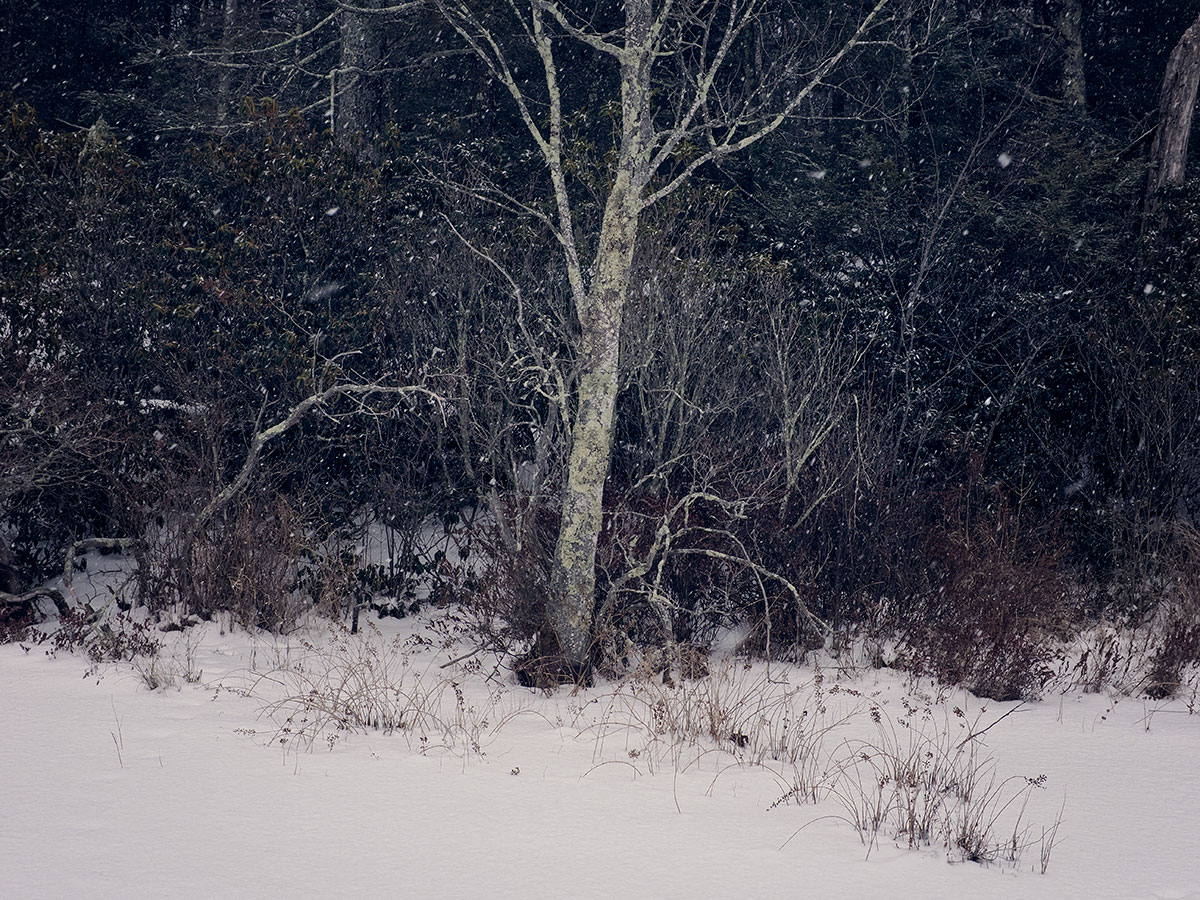
During yesterday’s walk on Phillips Pond it began to snow. I took a series of pictures with faster shutter speeds and and another group with shallow depth of field. One method freezes the flakes’ movement and the other blurs the flakes closest to the lens, such as is the case with this image. What I wanted to see is how enriched the real images of falling snow are when you compare them to the various apps and plug-ins that try to recreate it.
The pictures take in the wetlands across the ice with occasional glimpses into the surrounding woods; all with a veil of snow.
 JOHN TODARO
⭐️⭐️⭐️⭐️⭐️
Thanks, Philip. As always, your presence is much appreciated
Hi John and you’re welcome! Wishing you a great Tuesday afternoon…😊⭐️😊
You as well ❄
It is fascinating to see how different the snowflakes are portrayed, depending on distance, wind and of course the shutter speed. Here I am most captivated by the soft color scale in the entire image, the snow warms as the mice under it experience it. I did a little film experiment a few years ago with snowfall, where I recorded in slow motion with the same camera that I use every day. You can watch it on YouTube if you want; https://youtu.be/-BBSM99d_fE.
Your video is quite lovely, Hans; thanks for sharing. Falling snow in shallow depth of field is worth returning to.
Setting white balance involves a number of factors, including one’s emotional relationship with the subject. I’ve been looking at Andrew Wyeth’s winter paintings lately and I’m fascinated by his use of an antique palette for scenes that convey the coldest weather of the year
I had one of his prints hanging in the kitchen many years ago. Reminds me of the swedish painter Lars Lerin.
I’m unfamiliar with Lerin so I looked him up. Definitely some similarities; I’ll bet Wyeth would’ve loved to have painted in Sweden
It’s wonderful when it starts to snow while you’re out, especially if the camera is OK with it. 😉 I really like this photo and the shallow DOF method (but you know I’m a sucker for shallow DOF),. But apps or plug-ins to create falling snow? Please!
The more I look at this, the more I like it. The colors! So subtle. And the composition – the way a few smaller branches lead toward the line of grasses, while the tree front and center just doesn’t let you look away from it for long. There’s a spellbinding gentleness in the scene, like a mother’s embrace.
Thanks Lynn; a welcome comment. The fact that you’ve found some meaning in these falling snow pictures means a lot
Good.
I felt like I could just crawl into this one. 🙂