A lively conversation going on between those two. 🙂 When I was driving Dorry & Bud around (Joe’s sister & brother-in-law) one of them remarked that they had yet to see any color change where they live in Port Washington. Inland CT is a different story and I’m glad you’re making the best of it.
We were on LI for the first time since June last Saturday, and you’re right; almost no color. We’re situated in the coldest and highest part of CT (about the same latitude as much of Ulster County in NYS). The deciduous woods here are much pretty much what you’d find elsewhere in southern New England. The northwest corner has enough elevation to support remnant pockets of Black spruce. You need to know where to look for them, but they can be found within 50 miles of LI Sound
That’s what I thought for the most part – but that’s interesting about Black spruce. I like thinking about you out there learning new things all the time about your new environment.
I didn’t know that much about native trees when I lived in NY/CT/NJ. It’s easier to learn about native plants here because a) I’m retired! and b) there aren’t as many different species, especially if I confine myself to the island. There’s one spruce here, Sitka spruce. I knew it was coastal but just saw this: “…is mostly found along the moist coasts of southeastern Alaska, south to northern California. It lends its name to the Picea Sitchensis Ecological Zone, a long narrow zone that stretches along these coasts. It is distinguished by frequent summer fogs and proximity to the ocean.”
Looking at Black spruce’s range, in the West it’s way inland.
In 1995 we visited the national champion Sitka spruce (somewhere in eastern WA). I recall an impossibly massive tree which had recently lost a branch which demolished most of the boardwalk encircling the tree. Black spruce is the species you see growing in dense wetland stands in the coldest parts of the Adirondacks.
 JOHN TODARO
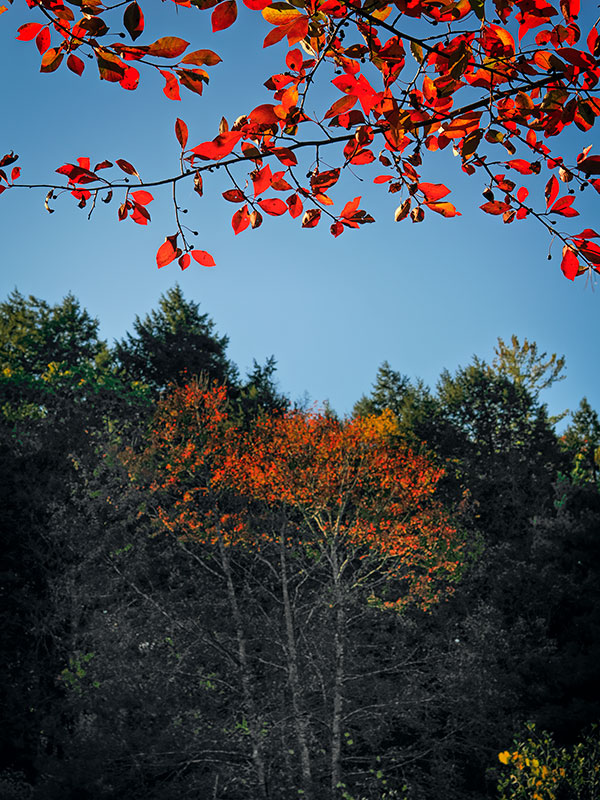
beautiful picture 👌
thanks!
A lively conversation going on between those two. 🙂 When I was driving Dorry & Bud around (Joe’s sister & brother-in-law) one of them remarked that they had yet to see any color change where they live in Port Washington. Inland CT is a different story and I’m glad you’re making the best of it.
We were on LI for the first time since June last Saturday, and you’re right; almost no color. We’re situated in the coldest and highest part of CT (about the same latitude as much of Ulster County in NYS). The deciduous woods here are much pretty much what you’d find elsewhere in southern New England. The northwest corner has enough elevation to support remnant pockets of Black spruce. You need to know where to look for them, but they can be found within 50 miles of LI Sound
That’s what I thought for the most part – but that’s interesting about Black spruce. I like thinking about you out there learning new things all the time about your new environment.
I didn’t know that much about native trees when I lived in NY/CT/NJ. It’s easier to learn about native plants here because a) I’m retired! and b) there aren’t as many different species, especially if I confine myself to the island. There’s one spruce here, Sitka spruce. I knew it was coastal but just saw this: “…is mostly found along the moist coasts of southeastern Alaska, south to northern California. It lends its name to the Picea Sitchensis Ecological Zone, a long narrow zone that stretches along these coasts. It is distinguished by frequent summer fogs and proximity to the ocean.”
Looking at Black spruce’s range, in the West it’s way inland.
In 1995 we visited the national champion Sitka spruce (somewhere in eastern WA). I recall an impossibly massive tree which had recently lost a branch which demolished most of the boardwalk encircling the tree. Black spruce is the species you see growing in dense wetland stands in the coldest parts of the Adirondacks.