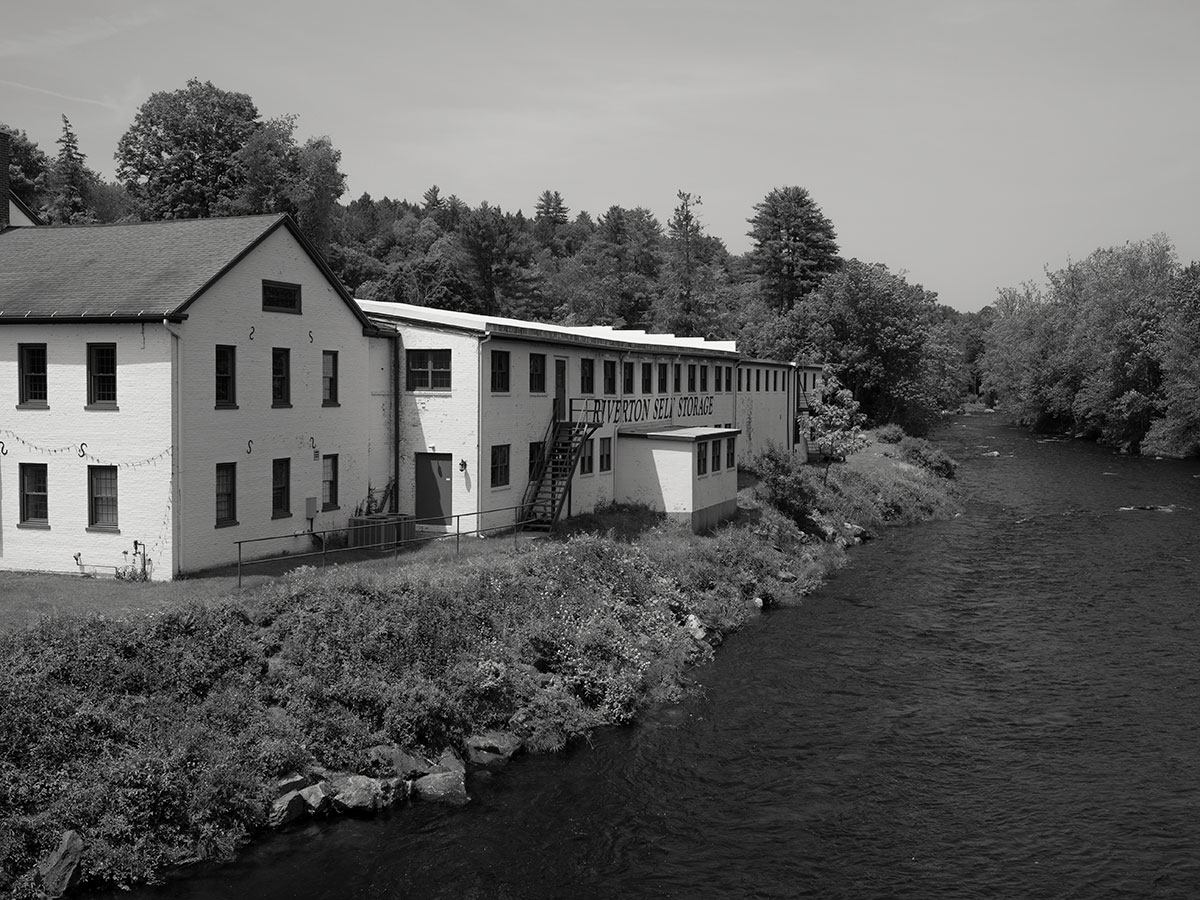
Pausing on the bridge in Riverton CT, the Farmington River is seen curving into the woods to the north. These buildings are evidence of a long history of mills, beginning with Hitchcock chairs and a fabric printing operation in the 19th century. A short walk north along the river leads to an interpretive trail and abandoned cellars and mill walls dating to the 1840’s. Before the arrival of Europeans in the 1700’s, the river was a trade route and fishing area for Native Americans.
What interests me with the photograph is how rivers can convey a sense of place and adventure much like roads. But their stories are richer; and they span millenia, not just a few decades.
 JOHN TODARO
Another interesting picture and story. Great
Many thanks Phyllis. Happy you liked 👍🏼
We are lucky in this area to have the Genesee River flow right down the middle of the city and beyond and it’s beautiful all year long. This is a really nice shot, John.
Thanks Ken. I’m not too familiar with your part of NYS, although my wife went to college in Syracuse. The Genesee River looks like it visits some nice small towns.
I’m a pushover for road photos so what you said about them and river photos is interesting, I’ve never thought about that. And all of what you write here is intriguing. I want to see the old cellars and mill walls (maybe I will, if vicariously).
My grandparents had a set of Hitchcock chairs with rush seats. One of them was in my hands for a while but it didn’t make it beyond a period of domestic turmoil back in the 1990s. Lots of history on that river!
That is so interesting that there were a set of those chairs back in your family. The stone walls found throughout New England never cease to amaze me. All the sweat and labor and land-clearing only to pack it up and move west to a new horizon. The woods throughout this region are finally reverting to some semblance of what it might’ve looked like in the early 18th century when the Puritans first arrived. Although with the current die off of American Beech, White Ash (and the previous one for the Chestnut), it’ll never be quite the same…
I used to love those stone walls when driving around CT & MA. I think we’ve talked about stone walls before. Once I took a brief workshop about drywall building. The choosing and placing is so interesting, so elemental. But I never thought about leaving the labor behind in that way. That puts a different light on it. New horizons. The walls are still well-loved by many people and any that aren’t appreciated are providing space for plants and creatures.
As impressive as the forests can be here, you can’t get away from the realization that what you see is nothing compared to what it was. The stumps are mute witnesses now. You can see the deep hatch marks where springboards were inserted to get high enough to saw the tree. It’s heartbreaking.
I didn’t know about the Beech and Ash tree decline. I loved seeing a big, smooth, gray-barked beech in the winter with crinkly, golden leaves still hanging on. I don’t have a memory of Ash trees but I spent a lot of years in the city! 😉
I remember seeing a clear cut in 1995 that went straight up to the border of Olympic NP. Incredible, seeing that straight line of 200′ foot trees.
The White Ash are dying from the Emerald Ash Borer and the American Beech from a leaf disease caused by a nematode. I think there’s research tying both events to climate change. No surprise there…